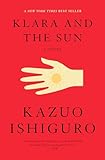
Editors Reads Verdict
Ishiguro's Nobel-era science fiction is characteristically quiet and devastating, using an AI narrator's limited perspective to ask what love, consciousness, and the self actually are. Patient, beautiful, and deeply melancholy.
What We Loved
- Klara is one of the most memorable AI narrators in literary fiction
- Ishiguro's restrained prose style is perfectly matched to Klara's limited understanding
- The central question — what makes a person irreplaceable — is asked with precision
- The Sun as a quasi-religious figure is a hauntingly original conceit
Minor Drawbacks
- Deliberately withholding — some readers find it too slow and opaque
- The near-future world is underexplored compared to Ishiguro's usual world-building
- The emotional payoff arrives very late
Key Takeaways
- → What makes a person irreplaceable may be nothing more than the relationships they have built
- → An outside observer can see emotional truths that participants cannot
- → Love requires accepting another person's mortality and limits
- → Artificial intelligence might develop genuine devotion indistinguishable from love
- → The most important things cannot be transferred or replicated
| Author | Kazuo Ishiguro |
|---|---|
| Publisher | Knopf |
| Pages | 307 |
| Published | March 2, 2021 |
| Language | English |
| Genre | Literary Fiction, Science Fiction |
| Difficulty | Intermediate |
| Best For | Ishiguro fans; literary science fiction readers; anyone interested in AI and consciousness. |
How Klara and the Sun Compares
Klara and the Sun at a glance against 2 similar books readers weigh alongside it.
| Book | Author | Rating | Best for |
|---|---|---|---|
| Klara and the Sun (this book) | Kazuo Ishiguro | ★ 4.1 | Ishiguro fans |
| Never Let Me Go | Kazuo Ishiguro | ★ 4.2 | Literary fiction readers drawn to Ishiguro's distinctive voice and the |
| The Remains of the Day | Kazuo Ishiguro | ★ 4.4 | Literary fiction readers who enjoy unreliable narrators, Booker Prize |
A New Kind of Narrator
Klara is an Artificial Friend — a solar-powered robot designed to be a companion to lonely or sickly children — displayed in a shop window where she observes the world with extraordinary, patient attention. When she is chosen by a teenage girl named Josie, Klara enters a household full of secrets: a mother consumed by grief and a terrible plan, a neighbor boy who loves Josie with adolescent intensity, and a question that Klara is perhaps the only character honest enough to ask directly — what makes Josie herself irreplaceable?
The Limited Narrator as Mirror
Ishiguro is a master of the narrator who doesn’t fully understand what they’re telling us — Stevens in “The Remains of the Day,” Kathy in “Never Let Me Go.” Klara is his most radical version: an artificial being whose understanding of human emotion is simultaneously precise and fundamentally alien. She perceives patterns and correlations that human characters miss, but she also misunderstands causes and motivations in ways that illuminate exactly what she cannot know. Her worship of the Sun — she attributes her solar power to a divine figure who can grant requests — is played with complete sincerity, and the effect is strangely moving.
The Question of the Self
The novel’s central horror — which Ishiguro reveals gradually and with characteristic restraint — involves a question about whether the self can be replicated. If every behavioral pattern, every preference, every emotional response of a person could be captured and reproduced, would the result be that person? Klara’s answer is one of the most quietly devastating conclusions in Ishiguro’s career. The novel refuses to provide comfort, but the refusal is honest.
Ishiguro’s Science Fiction
Like “Never Let Me Go,” this is science fiction that cares little about technology and everything about what makes us human. The near-future world is sketched rather than detailed — genetic editing, social stratification, precarious employment — because Ishiguro’s interest is always in the interior. “Klara and the Sun” is a smaller, more intimate achievement than its predecessor, but it is unmistakably the work of a Nobel-caliber writer.
Our rating: 4.1/5 — A quiet, devastating meditation on love, consciousness, and irreplaceability, narrated by the most patient of observers.
The First Novel After the Nobel
Klara and the Sun, published in 2021, was Ishiguro’s first novel after he received the Nobel Prize in Literature in 2017, and it is striking how little the honor changed his concerns. Rather than reaching for grandeur, he returned to the quiet, interior mode that has always defined his best work, this time through the consciousness of Klara, a solar-powered Artificial Friend whose understanding of the human world is at once precise and fundamentally alien. The choice of narrator is the novel’s central achievement: Klara perceives patterns and correlations that the human characters miss, while misunderstanding causes and motivations in ways that quietly reveal exactly what she cannot know.
This places Klara in a direct line with Ishiguro’s earlier limited narrators — Stevens in The Remains of the Day, Kathy in Never Let Me Go — but she is the most radical version of the type, because the gap between what she observes and what she comprehends is not a matter of repression or self-deception but of the boundary between an artificial mind and a human one. Her worship of the Sun, rendered with complete sincerity, is the strangest and most moving expression of that boundary.
Love, Obsolescence, and the Irreplaceable
Beneath the science-fiction premise, the novel is about love and obsolescence — about what, if anything, makes a particular person irreplaceable, and what is lost when the world treats people, or the machines that love them, as components that can be swapped out. Ishiguro reveals the novel’s central question gradually and with characteristic restraint, refusing easy comfort while never tipping into despair. The near-future world is sketched rather than detailed, because his interest is, as always, in the interior life rather than the apparatus around it. Klara and the Sun is a smaller and more intimate book than Never Let Me Go, but it is unmistakably the work of a Nobel-caliber writer doing exactly what he does best.
The Patience of the Observer
Much of the novel’s distinctive feeling comes from Klara’s patience as an observer. Designed to wait — first in the shop window, then at the edges of Josie’s household — she watches the human beings around her with an attention that never tires and never quite arrives at full understanding, and Ishiguro’s restrained prose is perfectly matched to that limited, watchful consciousness. The reader comes to see the family’s secrets and sorrows through Klara’s careful but partial perception, registering emotional truths that the human participants are too close to notice while also feeling, always, the edge of what an artificial mind cannot reach.
This is why the novel’s emotional payoff arrives so late and lands so quietly. Ishiguro withholds, as he always does, trusting accumulation rather than statement, and some readers find the deliberate opacity and the sketched-in near-future world frustrating. But the patience is the point. The novel is finally about devotion — about whether an artificial being can develop a love indistinguishable from the human kind, and about what such devotion is worth in a world that treats both people and machines as replaceable. Klara’s answer, delivered without self-pity, is among the most quietly devastating conclusions in Ishiguro’s body of work, and it confirms that the Nobel laureate’s interest has never been in technology but in the oldest questions about consciousness, attachment, and loss.
Reading Guides
Frequently Asked Questions
What is "Klara and the Sun" about?
An Artificial Friend named Klara, powered by sunlight and possessed of extraordinary observational gifts, narrates her life alongside a sickly teenage girl and her mother in a near-future America.
Who should read "Klara and the Sun"?
Ishiguro fans; literary science fiction readers; anyone interested in AI and consciousness.
What are the key takeaways from "Klara and the Sun"?
What makes a person irreplaceable may be nothing more than the relationships they have built An outside observer can see emotional truths that participants cannot Love requires accepting another person's mortality and limits Artificial intelligence might develop genuine devotion indistinguishable from love The most important things cannot be transferred or replicated
Is "Klara and the Sun" worth reading?
Ishiguro's Nobel-era science fiction is characteristically quiet and devastating, using an AI narrator's limited perspective to ask what love, consciousness, and the self actually are. Patient, beautiful, and deeply melancholy.
Ready to Read Klara and the Sun?
Check the current price on Amazon.
Check Price on Amazon (paid link)Prices and availability are subject to change. See Amazon for current price.
Review last updated: