Best Novels About Science and Scientists: Fiction That Thinks Like a Scientist
The best novels about science and scientists — from Frankenstein to The Martian to The Overstory. Fiction that puts scientific thinking at the centre of the story.
By Elena Marsh
The novel has always been interested in science — in the excitement of discovery, the ethics of what knowledge permits, and the question of what it means to be the kind of creature that asks questions about the universe. The best novels about science put scientific thinking at their centre: not just as background detail, but as the animating force of the story and the lens through which their characters understand the world. What follows are the novels that have done this most powerfully — from the foundational text of science fiction ethics to the most recent celebrations of scientific method as a mode of human survival.
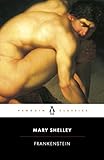
Frankenstein — Mary Shelley (1818)
The founding text of science fiction and the most philosophically serious novel about science ever written. Victor Frankenstein, a student of natural philosophy, discovers the principle of life and uses it to create a man — and then, horrified by his creation, abandons it. The novel’s central argument is about the ethics of creation: the creator’s responsibility to the being they bring into existence, the consequences of knowledge pursued without regard for its application, and the question of what the created being owes to the world that made it.
Two centuries on, the novel’s questions have become more urgent rather than less: genetic engineering, artificial intelligence, cloning, and the creation of new life forms have all revived the question Shelley was the first to ask in fiction. The essential starting point for anyone interested in the ethics of science.
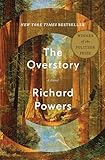
The Overstory — Richard Powers (2018)
The most recent Pulitzer Prize-winning novel about science — and a revelation for readers who have not previously thought of trees as a subject for fiction. Powers follows nine people whose lives are changed by their encounters with trees: a farmer whose family has photographed a chestnut tree for a century; a scientist who discovers that trees communicate through underground fungal networks; activists who spend two years living in a threatened redwood.
The novel is about the science of forest ecology (genuinely accurate and based on current research), the question of what we owe to non-human life, and the particular kind of attention that scientific study can teach. It changed many readers’ relationship to the natural world; it is the most accessible science-centred Pulitzer winner in recent memory.
Never Let Me Go — Kazuo Ishiguro (2005)
The most unsettling novel about scientific ethics on this list — because it refuses to make the science explicit or the characters rebellious. Kathy, Tommy, and Ruth grow up at Hailsham, a boarding school that seems slightly strange; as adults, they discover that they were created to donate their organs and that their lives are designed to end in this donation. The horror of the novel is not the cloning technology but the acceptance with which the characters meet their fate — an acceptance that indicts not just the scientists who created them but the society that has chosen not to look.
The most philosophically serious contemporary treatment of what science owes to the beings it creates.
Oryx and Crake — Margaret Atwood (2003)
Atwood’s most scientifically engaged novel — set after a catastrophe engineered by Crake, a brilliant geneticist, who has created a plague that kills most of humanity and engineered a species of gentle posthuman beings to replace it. Told in flashback by Jimmy/Snowman, one of the last humans, the novel traces the friendship between Jimmy (a humanist) and Crake (a scientist) and the increasing power that genetic engineering companies exert over human life. The corporate world of pigoons (disease-resistant pigs with human cortex material), ChickieNobs (massed chicken-breast flesh without brains), and pharmaceutical cities ruled by competing biotech corporations is one of Atwood’s most fully realized dystopian inventions.
The most comprehensive fictional treatment of corporate control of biological science.
The Martian — Andy Weir (2011)
The most life-affirming novel about science ever written — a celebration of the scientific method as a means of survival. Mark Watney, an astronaut, is accidentally left behind on Mars after a storm forces his crew to abort their mission. Alone on an uninhabitable planet with limited supplies, he must figure out how to survive: how to grow food in Martian soil, how to generate water, how to travel thousands of miles to a potential rescue point, how to communicate with Earth.
Weir researched every detail with care for scientific accuracy; the novel’s pleasure comes from watching Watney think through problems with the tools he has, apply the scientific method to an extreme survival situation, and find solutions that are ingenious precisely because they are real. One of the most technically accurate science fiction novels ever written.
Project Hail Mary — Andy Weir (2021)
Weir’s second major novel — equally scientifically rigorous, even more optimistic about what science and human ingenuity can achieve. Ryland Grace wakes up alone on a spaceship, millions of miles from Earth, with no memory of how he got there. The science of what he discovers — a microorganism that is consuming the sun, an alien species that has the same problem with their own star, the physics of interstellar travel — is rendered with the same pleasure in problem-solving that made The Martian so satisfying. The novel has been particularly praised by working scientists for its authentic portrayal of scientific reasoning and the joy of discovery.
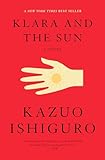
Klara and the Sun (2021) — Kazuo Ishiguro
Ishiguro’s most recent novel — narrated by an Artificial Friend (AF) named Klara, who observes the human world from the shop window she occupies before being bought by a teenager named Josie. The novel uses Klara’s solar-powered nature (she worships the sun as her source of energy) and her outsider’s perspective (she understands human behaviour without fully sharing human experience) to examine questions about consciousness, love, authenticity, and what it would mean to recreate a human being. Quieter than Ishiguro’s most celebrated novels; one of the most thoughtful fictional treatments of artificial intelligence.
Jurassic Park — Michael Crichton (1990)
Crichton’s most famous novel — and the most widely read treatment of the ethics of genetic engineering ever written. The premise is compelling: ancient DNA extracted from insects preserved in amber allows a biotech company to recreate dinosaurs and populate an island theme park. The chaos that results when the dinosaurs escape demonstrates what the mathematician Ian Malcolm calls chaos theory: the impossibility of controlling complex systems and the arrogance of those who try.
The novel is simultaneously a thrilling adventure and a serious argument about scientific hubris — the assumption that understanding how to do something confers the right to do it and the capacity to control its consequences.
The Magic Mountain — Thomas Mann (1924)
Mann’s most comprehensive novel — set in a Swiss tuberculosis sanatorium in the years before the First World War, where Hans Castorp comes to visit his cousin for three weeks and stays for seven years. The sanatorium is a world unto itself: the patients debate philosophy, politics, religion, and science; the doctors believe in the supreme authority of medicine and measurement; and the mountain air creates a peculiar suspension of ordinary time and ordinary concern.
The novel’s engagement with medicine — the culture of diagnosis, treatment, and the patient as object of scientific observation — is as serious as its engagement with European thought. The most psychologically and philosophically comprehensive novel on this list.
The Andromeda Strain — Michael Crichton (1969)
Crichton’s most technically detailed novel — structured as a scientific document, with appendices, diagrams, and the procedural detail of a real case report. A small satellite returns from space carrying a microorganism that kills everyone in the small Arizona town where it lands; a team of scientists in an underground facility must identify and contain the organism before it spreads. The novel is about scientific method under pressure: the procedures of isolation, the culture of scientific teams, the problem of what to do when the problem is unlike any problem encountered before.
The most procedurally accurate science fiction novel of its era; essential reading for anyone interested in how science actually works as a collective human activity.
Reading Novels About Science
The best fiction about science is not merely a delivery mechanism for scientific information — it is an exploration of what scientific thinking does to human beings: how it opens the world up (the wonder of discovery in The Martian and Project Hail Mary), how it closes it down (the reductive view of human beings as biological material in Never Let Me Go), and how it interacts with the values that science itself cannot provide (the ethics of Frankenstein, the humanism of Jimmy in Oryx and Crake). Begin with The Martian for the most optimistic and the most thrilling; with Frankenstein for the most enduringly important; with The Overstory for the most recent Pulitzer-level treatment of scientific wonder.
Frequently Asked Questions
What are the best novels about scientists?
The best novels about science and scientists include: Frankenstein by Mary Shelley (the first and most philosophically serious science fiction novel, about the ethics of creation); The Overstory by Richard Powers (a Pulitzer Prize-winning novel about the scientific study of trees and the people changed by it); Never Let Me Go by Kazuo Ishiguro (a novel about the ethics of cloning and what science owes to those it creates); and The Martian by Andy Weir (a celebration of the scientific method as a means of survival). Oryx and Crake and Jurassic Park both deal with genetic engineering and its consequences; Project Hail Mary is a recent favourite among scientists for its authentic portrayal of scientific problem-solving.
What is the most scientifically accurate novel?
The Martian by Andy Weir is widely regarded as one of the most scientifically accurate science fiction novels ever written — Weir researched the real physics, chemistry, and biology of a Mars mission in exhaustive detail, and the novel's problem-solving sequences (how to grow food, how to generate water, how to communicate with Earth) are essentially worked examples of real science. Project Hail Mary, also by Weir, is similarly praised for its authentic portrayal of scientific reasoning. Both books were written with deliberate attention to scientific plausibility, and both have been praised by actual scientists for their accuracy.
What are the best novels about the ethics of science?
The most powerful novels about scientific ethics include: Frankenstein (the ethics of creation and the responsibility of the creator to what they make); Never Let Me Go (the ethics of using human beings as biological resources); Oryx and Crake (the ethics of genetic engineering and corporate control of biology); and Jurassic Park (the ethics of scientific ambition that outstrips scientific wisdom). These novels engage with the philosophical and moral dimensions of scientific power — what scientists owe to the beings they create, the people they experiment on, and the world they alter.
Are science novels accessible to non-scientists?
The best science novels are accessible to non-scientists — they use their scientific content as a starting point for human stories about wonder, ethics, survival, and the limits of human knowledge, rather than as technical exposition. The Martian and Project Hail Mary make science feel like an adventure; Frankenstein and Never Let Me Go make it feel like a moral question; The Overstory makes it feel like a revelation. None requires a science background to read and enjoy. Jurassic Park and The Andromeda Strain are particularly designed for readers who want the excitement of scientific problem-solving without the technical background.