Best Popular Science Books for Beginners: Start Here
The best popular science books for beginners — from A Brief History of Time and The Selfish Gene to The Immortal Life of Henrietta Lacks and Sapiens. Start here.
By Elena Marsh
Popular science books do for science what the best journalism does for current events: they make complex, specialised knowledge accessible to readers who are not specialists, without sacrificing accuracy or treating readers as less intelligent than they are. The books below are the essential starting points — covering physics, biology, evolution, medicine, and the history of humanity.
The Essential Starting Points
The Immortal Life of Henrietta Lacks — Rebecca Skloot (2010)
The best popular science book for readers new to science writing — Henrietta Lacks, a Black woman from Baltimore, died of cervical cancer in 1951, and her cancer cells became the most important cell line in biomedical research. Skloot tells both stories: the science (what HeLa cells are and what they’ve been used for, explained with exceptional clarity) and the human story (Henrietta’s life, her family’s decades of ignorance about their mother’s contribution, the medical ethics of using tissue without consent). No prior scientific knowledge required.
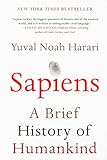
Sapiens: A Brief History of Humankind — Yuval Noah Harari (2011)
The most popular science book of the past decade — a history of Homo sapiens from the cognitive revolution (70,000 years ago) to the present, covering evolution, agriculture, empire, capitalism, and the direction of current research. Harari synthesises across disciplines (archaeology, biology, history, economics, philosophy) with consistent clarity and provocation. The most ambitious in scope and the most immediately engaging.
Physics and Cosmology
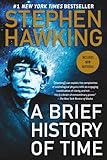
A Brief History of Time — Stephen Hawking (1988)
The most important popular science book of the twentieth century — Hawking’s account of modern physics (the Big Bang, black holes, quantum mechanics) for general readers. More demanding than the others in this list (the physics is genuinely difficult) but essential for its historical importance and its demonstration that science writing can be a form of literature.
The Elegant Universe — Brian Greene (1999)
Greene’s account of string theory — the attempt to unify quantum mechanics and general relativity in a theory that requires ten or eleven dimensions. The best introduction to the physics of the very small and the very large for readers who want to go beyond A Brief History of Time.
Pale Blue Dot — Carl Sagan (1994)
Sagan’s meditation on Earth’s place in the universe — provoked by the photograph of Earth taken by Voyager 1 from four billion miles away, in which our planet appears as a pale blue dot in a sunbeam. Sagan’s prose is the most beautiful in popular science, and his combination of cosmological perspective and ethical argument (if Earth is a dot, we cannot afford to fight over it) is the most humanly compelling in the genre.
Biology and Medicine
The Selfish Gene — Richard Dawkins (1976)
The most intellectually influential popular science book of the past fifty years — Dawkins’s presentation of gene-centred evolution (natural selection acts on genes, and organisms are their survival machines) transformed how biologists and non-biologists think about evolution. The concept of the meme (introduced here) has become ubiquitous. The most demanding in this list; also the most rewarding.
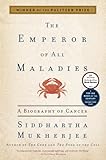
The Emperor of All Maladies — Siddhartha Mukherjee (2010)
The Pulitzer Prize-winning history of cancer — from the first recorded cases in ancient Egypt through the development of chemotherapy, radiation, and targeted therapies to the current state of cancer research. Mukherjee combines the history of medicine with the stories of individual patients; the result is the most complete popular account of a disease in the literature.
What Makes Science Writing Great
The books on this list succeed at a genuinely difficult task, and understanding what distinguishes great popular science from the merely competent helps a beginner choose and appreciate them. The challenge of the genre is to convey complex, specialized knowledge to readers without scientific training, while neither sacrificing accuracy nor condescending to the audience — a balance that requires rare gifts. The best science writers, all represented here, share several qualities. They possess genuine mastery of their subject, which allows them to know what can be simplified and what cannot, and to distinguish the essential from the merely technical. They are gifted at analogy and narrative, finding the comparison or story that makes an abstract concept suddenly intuitive — Hawking explaining curved spacetime, Dawkins reframing organisms as the survival machines of genes, Sagan rendering cosmic scale through a single photograph. They respect their readers’ intelligence, refusing to dumb material down even as they make it accessible, trusting that a non-specialist can grasp difficult ideas if they are explained with sufficient clarity and care. And crucially, the finest of them are also literary writers, treating prose as an art rather than a mere vehicle for information, so that books like Pale Blue Dot or The Emperor of All Maladies are as rewarding for their writing as for their content. This combination — expertise, narrative skill, respect, and literary quality — is what separates the genre’s masterpieces from forgettable textbooks, and every book on this list possesses it, which is precisely why they serve so well as gateways for readers new to science writing.
Science as Story
A striking feature of the most accessible science books, and a key to why they work so well for beginners, is how thoroughly they marry scientific content to compelling human narrative — recognizing that even readers intimidated by equations are drawn irresistibly to a good story. The genre’s great insight is that science is not a body of static facts but a human endeavor, full of drama, personality, struggle, and discovery, and the best popular science exploits this fully. Skloot’s The Immortal Life of Henrietta Lacks is the supreme example for newcomers: it teaches genuine cell biology and medical ethics while telling the deeply human story of a woman, her family, and the injustice done to them, so that the science arrives wrapped in narrative the reader cannot put down. Mukherjee turns the history of cancer into an epic narrative of human struggle against a relentless adversary, populated by brilliant researchers and suffering patients, so that the reader absorbs the science of oncology almost without noticing. Even the more conceptual books use narrative devices — Hawking the historical story of humanity’s changing understanding of the cosmos, Sagan the emotional journey of cosmic perspective. This fusion of science and story serves the beginner perfectly, providing the emotional engagement and forward momentum that carry a reader through difficult material, and demonstrating that science, far from being dry or impersonal, is among the most dramatic of human pursuits. For the reader who has always found science forbidding, these narrative-driven books are the ideal correction, proving that learning about the natural world can be as gripping as any novel.
Building Scientific Literacy
Beyond their individual pleasures, the books on this list serve a purpose that has become genuinely important in the modern world: cultivating scientific literacy, the capacity to understand and reason about the scientific issues that increasingly shape public life and personal decisions. We live in an age defined by science and technology — by questions of climate, medicine, genetics, artificial intelligence, and much more — yet many citizens feel locked out of these subjects, intimidated by their apparent complexity and dependent on others to tell them what to think. Popular science writing is the great democratizing remedy, and these books are the ideal place to begin. They build not only specific knowledge but something more valuable: an understanding of how science actually works, its methods of evidence and reasoning, its self-correcting nature, its appropriate confidence and its genuine uncertainties. A reader who absorbs Dawkins on evolution, Mukherjee on disease, or Hawking on the cosmos gains not just facts but a feel for scientific thinking that equips them to evaluate claims, resist pseudoscience, and engage thoughtfully with the scientific questions that bear on their lives and their society. This literacy is increasingly a requirement of informed citizenship and good personal decision-making alike. The books gathered here, spanning physics, biology, medicine, evolution, and the history of humanity, offer a broad and accessible foundation, chosen precisely because they require no prior background and reward curiosity rather than credentials. For any reader who has wished to understand more about the natural world but feared the subject was beyond them, this list is the proof that it is not, and the gateway to one of the richest and most consequential bodies of knowledge available to the curious mind.
Reading Order
Start here: The Immortal Life of Henrietta Lacks → Sapiens → The Selfish Gene.
Physics: A Brief History of Time → The Elegant Universe → Pale Blue Dot.
Medicine: The Immortal Life of Henrietta Lacks → The Emperor of All Maladies.
Frequently Asked Questions
What is the best popular science book to start with?
The Immortal Life of Henrietta Lacks (2010) by Rebecca Skloot is the best popular science book for readers new to science writing — a narrative of the woman whose cancer cells, taken without her knowledge in 1951, became the HeLa cell line used in virtually every biomedical laboratory in the world. Skloot combines the science (what HeLa cells are, what they've been used for, what cell biology actually involves) with the human story (Henrietta Lacks's life and death, her family's ignorance of their mother's contribution) in a way that requires no prior scientific knowledge. Sapiens (2011) by Yuval Noah Harari is the most popular starting point overall — a history of humanity that covers everything from evolution to economics in 450 readable pages.
What is A Brief History of Time about?
A Brief History of Time (1988) by Stephen Hawking is the most famous popular science book ever published — an account of the physics of the universe, from the Big Bang through quantum mechanics and black holes to the possibility of a unified theory that would explain all physical phenomena. Hawking wrote it for readers with no physics background, and it was the first popular science book to make quantum mechanics and general relativity accessible to general readers. Some readers find it harder than expected (the physics is genuinely difficult) but it is essential for its historical importance and for the clarity of its explanation of what modern physics has discovered.
What is The Selfish Gene about?
The Selfish Gene (1976) by Richard Dawkins presents evolution from the perspective of the gene rather than the individual or the species — the argument that natural selection acts on genes, and that individual organisms are 'survival machines' built by genes to propagate themselves. This reframing (known as gene-centred evolution) is the most influential idea in popular biology of the past fifty years. Dawkins also introduces the concept of the 'meme' (a unit of cultural transmission, analogous to the gene) in this book. The most intellectually stimulating entry in this list.
What is The Immortal Life of Henrietta Lacks about?
The Immortal Life of Henrietta Lacks (2010) by Rebecca Skloot tells the story of Henrietta Lacks, a Black woman from Baltimore who died of cervical cancer in 1951 — and whose cancer cells, taken without her knowledge or consent, became the HeLa cell line, the first human cells that could be grown indefinitely in a laboratory. HeLa cells have been used in the development of the polio vaccine, cancer research, AIDS research, and thousands of other applications. Skloot combines the history of cell biology with the story of Henrietta's family (who did not know their mother's cells were being used until decades after her death) and with questions about medical ethics, race, and consent. The most humanly engaging science book in this list.