Best Books About Evolution and Biology: Essential Popular Science
The best books about evolution and biology — from The Selfish Gene and The Blind Watchmaker to The Gene and The Emperor of All Maladies. Essential popular science.
By Elena Marsh

Biology and evolution sit at the centre of the most important questions available to science: What is life? How do organisms change over time? What makes us human? How do diseases arise and how can they be treated? The best popular science books about biology do not simplify these questions but make the complexity legible — and in doing so, they change how we understand ourselves and the natural world.
The books listed here range from the foundational (Dawkins on evolution, Mukherjee on genetics) to the comprehensive (Bryson on all of science) and the specific (Mukherjee’s biography of cancer). They share a commitment to scientific rigour without sacrificing the clarity and narrative drive that make science accessible to general readers.
The Essential List
The Selfish Gene — Richard Dawkins (1976)
The most influential popular science book of the past fifty years. Dawkins’s argument — that natural selection operates at the level of genes rather than organisms, that organisms are vehicles built by genes for their own replication, and that apparent altruism is explained by kin selection and reciprocal altruism — changed how biologists and non-biologists understood evolution. The concept of the ‘meme’ (introduced in the final chapter) has entered ordinary language. Still the best single account of modern evolutionary biology for a general reader.
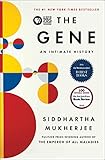
The Gene — Siddhartha Mukherjee (2016)
The comprehensive history of genetics — from Mendel’s peas through Morgan’s fruit flies, Watson and Crick’s double helix, the Human Genome Project, and CRISPR. Mukherjee is a brilliant scientific writer who uses his own family’s history of mental illness to give the history of genetics a personal and ethical dimension; the book’s final sections, on the possibilities of genetic intervention, are essential reading for anyone thinking about the future of medicine. The standard popular account of genetics.
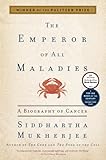
The Emperor of All Maladies — Siddhartha Mukherjee (2010)
The definitive history of cancer medicine. Mukherjee traces human attempts to understand and treat cancer from ancient surgical procedures through the development of chemotherapy (which grew from World War I poison gas research), the discovery of oncogenes, and the development of targeted molecular therapies. The book is structured around individual patients and researchers; the science is rigorous but never dry. Won the Pulitzer Prize.
The Blind Watchmaker — Richard Dawkins (1986)
Dawkins’s account of how evolution by natural selection — without any guiding intelligence or purpose — produces organisms of extraordinary complexity. The ‘watchmaker’ of the title refers to William Paley’s eighteenth-century argument from design: that the complexity of biological organisms implies a designer, just as the complexity of a watch implies a watchmaker. Dawkins’s argument is that cumulative selection — small changes compounding over millions of generations — can produce any level of complexity without design. The definitive rebuttal to creationism and intelligent design.
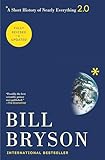
A Short History of Nearly Everything — Bill Bryson (2003)
The most accessible comprehensive popular science book available. Bryson surveys the history of science from the Big Bang through quantum mechanics, the origins of life, evolution, and geology — asking how scientists came to know what they know and how the process of discovery actually works. The book is animated by Bryson’s wit and his genuine wonder at the improbability of human existence; it is the ideal introduction to science for readers without a science background.
The Story of the Human Body — Daniel Lieberman (2013)
Lieberman’s account of human evolutionary history as it applies to modern health — arguing that many of the chronic diseases of affluence (obesity, type 2 diabetes, flat feet, lower back pain) are ‘mismatch diseases’ produced by the collision between our evolved bodies and modern environments. The book traces the evolution of the human body from our primate ancestors through the development of agriculture and industrialisation, asking why bodies designed for Palaeolithic conditions produce the health problems they do in contemporary ones.
The Immortal Life of Henrietta Lacks — Rebecca Skloot (2010)
Skloot’s account of HeLa cells — the first human cells to survive and replicate outside the body, taken without consent from Henrietta Lacks in 1951 — is simultaneously a science book, a work of narrative nonfiction, and a study of race and medicine. The HeLa cells have contributed to almost every major medical advance of the past seventy years; the family from whom they were taken received nothing. The book’s account of the science is accessible and accurate; its portrait of the Lacks family and their relationship to the medical establishment is what makes it essential.
The Grandest Story Science Has to Tell
The theory of evolution and the science of biology offer what may be the grandest and most profound story that science has to tell — the epic account of how life arose and developed across billions of years, how the staggering diversity and complexity of living things came to be, and how human beings themselves emerged from this immense process — and the books on this list make this magnificent story accessible, revealing the wonder and the explanatory power of the science of life. The story of evolution is one of the great achievements of human understanding, an account of breathtaking scope and depth that explains the origin and development of all living things, the emergence of the vast diversity and intricate complexity of life from simple beginnings, and the place of human beings within the grand process of evolution. The best books on evolution and biology make this magnificent story accessible to the general reader, conveying both the substance of the science and the wonder it inspires, and revealing how the theory of evolution explains, with extraordinary power and elegance, the profusion and complexity of life that surrounds us. This is a story of genuine grandeur, encompassing billions of years and the entire history of life on earth, explaining the emergence of everything from the simplest organisms to the human mind, and revealing the deep connections that unite all living things in a single vast family descended from common ancestors. The books that tell this story well convey not merely the facts of biology but the wonder and the profundity of the evolutionary account, the awe-inspiring scope of the history of life, and the remarkable power of the theory that explains it. To engage with the science of evolution and biology is to encounter the grandest story science has to tell, the epic account of life’s origin and development, and the books on this list make this magnificent story accessible, conveying both its substance and its wonder, and revealing the profound understanding of life that the science of evolution provides.
Understanding Ourselves Through Biology
The science of evolution and biology illuminates not only the natural world but human beings themselves, for we too are products of evolution and creatures of biology, and the books on this list reveal how the understanding of our evolutionary origins and biological nature deepens our understanding of ourselves — our bodies, our behaviors, our minds, and our place in the natural world. Human beings are not separate from the natural world but a part of it, products of the same evolutionary process that produced all living things, and the science of evolution and biology, in illuminating the origin and nature of life, illuminates the origin and nature of human beings themselves. The understanding of our evolutionary past reveals how we came to be, tracing the long process through which human beings emerged from earlier forms of life and acquired the characteristics that define us. The understanding of our biology illuminates the workings of our bodies and the biological foundations of our behavior, our emotions, and even our minds, revealing the extent to which we are shaped by our evolutionary heritage and our biological nature. And the understanding of our place within the broader history and diversity of life situates us within the natural world, revealing our kinship with all living things and our place within the grand process of evolution. This biological understanding of ourselves is both humbling and illuminating, for it reveals human beings as products of nature rather than as creatures apart, shaped by the same evolutionary forces and biological processes that produced all life, and it deepens our understanding of our own bodies, behaviors, and minds by revealing their evolutionary origins and biological foundations. The books on evolution and biology, in illuminating the nature of life, illuminate the nature of human beings, offering a profound understanding of ourselves as products of evolution and creatures of biology, and revealing how the science of life deepens our understanding of our own origins, nature, and place in the natural world.
Science Writing as an Art
The best books on evolution and biology are not merely accurate but beautifully written, demonstrating that science writing at its finest is an art — the art of conveying complex science with clarity, elegance, and a sense of wonder, of making difficult ideas accessible without distorting them, and of communicating not merely the facts of science but the beauty and the excitement of understanding. The communication of science to the general reader is a demanding art, requiring not only mastery of the science but the skill to convey it clearly, accessibly, and engagingly to those without specialized knowledge, and the best science writers are masters of this art, achieving works that are both scientifically sound and beautifully written. The art of science writing involves several challenges and achievements. There is the challenge of clarity, of explaining complex and difficult science in terms that the general reader can understand, without either oversimplifying to the point of distortion or overwhelming the reader with technicality. There is the challenge of engagement, of conveying the science in a way that captures and holds the reader’s interest, communicating not merely the facts but the excitement and the wonder of scientific understanding. And there is the achievement of elegance, of writing about science with a beauty and grace that match the beauty of the science itself, producing works that are pleasures to read as well as sources of understanding. The best books on evolution and biology achieve all these things, conveying the science with clarity and accessibility, engaging the reader with the excitement and wonder of the subject, and achieving a beauty and elegance of writing that make them works of art as well as of science. This artistry of science writing is essential to the books’ value and appeal, for it is what makes the magnificent story of evolution and biology accessible, engaging, and moving to the general reader, and what transforms the communication of science from mere instruction into an art that conveys not only understanding but wonder, excitement, and beauty. The best science writing demonstrates that the communication of science is an art, and the finest books on evolution and biology, in achieving both scientific soundness and literary beauty, exemplify this art at its best.
Why These Books
Biology is the science of what we are — our evolutionary history, our genetic inheritance, our bodies’ responses to disease and environment. The books listed here make that science legible by grounding it in narrative: in the stories of individual scientists, patients, and organisms, and in the history of human attempts to understand living things. What they share is the conviction that scientific understanding is not an alternative to humanistic concern but its deepest expression — that knowing how we came to be, and how our bodies work, is essential to understanding what we are.
Frequently Asked Questions
What is the best book about evolution to start with?
The Selfish Gene (1976) by Richard Dawkins is the best starting point — the gene-centred view of evolution, which argues that natural selection operates at the level of genes rather than organisms, and that organisms are 'survival machines' built by genes to replicate themselves. The book introduced the concept of the 'meme' to popular discourse and remains the most accessible serious account of evolutionary biology available. A Short History of Nearly Everything (2003) by Bill Bryson is the other ideal starting point for general readers — a comprehensive, witty survey of science from the Big Bang to the present.
What is The Selfish Gene about?
The Selfish Gene (1976) by Richard Dawkins argues that evolution operates at the level of the gene rather than the organism — that genes are the unit of selection, and that organisms (including humans) are vehicles built by genes to ensure their own replication. The book explains why apparently altruistic behaviour (cooperation, parental sacrifice) is consistent with selfish gene theory (kin selection, reciprocal altruism), and introduces the concept of the 'meme' — a unit of cultural replication analogous to the gene. One of the most influential popular science books of the twentieth century.
What is The Gene about?
The Gene (2016) by Siddhartha Mukherjee is the most comprehensive popular account of genetics — tracing the history of the gene from Mendel's peas through the discovery of the double helix, the Human Genome Project, and CRISPR. Mukherjee, who also wrote The Emperor of All Maladies, weaves the history of genetics through his own family's history of mental illness, asking what the gene's growing legibility means for our understanding of identity, illness, and what it means to be human. The standard popular account of genetics.
What is The Emperor of All Maladies about?
The Emperor of All Maladies (2010) by Siddhartha Mukherjee is 'a biography of cancer' — a history of human attempts to understand and treat the disease, from ancient Egypt to the present. Mukherjee traces the development of cancer surgery, chemotherapy, radiation therapy, and targeted molecular therapies, using individual patients and researchers to humanise what would otherwise be a purely scientific narrative. Won the Pulitzer Prize. The most complete and readable account of the history of cancer medicine available.