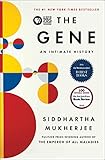
Editors Reads Verdict
Mukherjee's ambitious history of genetics is as moving as it is informative. The interweaving of his family's mental illness history with the science of heredity gives the book an emotional depth rare in science writing.
What We Loved
- Integrates personal family history with the history of genetics in an unusual and powerful way
- The most comprehensive narrative history of genetics available for general readers
- The sections on CRISPR and genetic medicine are clear and important
- Mukherjee's scientific precision and narrative skill are both exceptional
Minor Drawbacks
- At 600 pages, it demands sustained commitment
- The personal narrative device works better in some sections than others
- The ethical questions about genetic manipulation are raised more than resolved
Key Takeaways
- → The gene is the fundamental unit of hereditary information and the key to understanding biology
- → The history of genetics is inseparable from the history of eugenics and its horrors
- → CRISPR represents an unprecedented ability to edit the human genome — with immense promise and risk
- → Gene-environment interaction (not genes alone) determines most complex traits
- → Our growing genetic power demands proportional ethical seriousness
| Author | Siddhartha Mukherjee |
|---|---|
| Publisher | Scribner |
| Pages | 608 |
| Published | May 17, 2016 |
| Language | English |
| Genre | Science, History, Biology |
| Difficulty | Intermediate |
| Best For | Anyone interested in biology, the history of genetics, and the ethical questions raised by our expanding ability to read and edit the genome. |
How The Gene Compares
The Gene at a glance against 3 similar books readers weigh alongside it.
| Book | Author | Rating | Best for |
|---|---|---|---|
| The Gene (this book) | Siddhartha Mukherjee | ★ 4.6 | Anyone interested in biology, the history of genetics, and the ethical |
| Behave | Robert M. Sapolsky | ★ 4.6 | Intellectually ambitious readers interested in the biological foundations of |
| The Emperor of All Maladies | Siddhartha Mukherjee | ★ 4.7 | Anyone touched by cancer — patients, families, or medical professionals — and |
| The Selfish Gene | Richard Dawkins | ★ 4.5 | Anyone with intellectual curiosity about evolution, genetics, and the nature of |
A History Both Scientific and Personal
Siddhartha Mukherjee is an oncologist and Pulitzer Prize-winning author (The Emperor of All Maladies) whose family includes multiple members with schizophrenia and bipolar disorder. His investigation of the gene is simultaneously a scientific and personal history: he wants to understand the science of heredity partly because he wants to understand his own family’s story.
This dual structure — rigorously scientific and deeply personal — gives The Gene an emotional weight that most science histories lack. Mukherjee’s interest in genetics is not abstract; it is an attempt to understand the biological forces that shaped people he loves, and that may shape his own future.
From Mendel to CRISPR
The book’s historical arc spans from Gregor Mendel’s meticulous pea experiments in an Augustinian monastery in 1856 to the CRISPR-Cas9 gene-editing revolution of the 2010s. In between, Mukherjee covers the discovery of DNA’s structure by Watson and Crick (and the largely uncredited Rosalind Franklin), the development of genetic sequencing, the Human Genome Project, and the emerging science of epigenetics.
The history of genetics is not a triumphalist narrative. Mukherjee is unflinching about the devastating chapter of eugenics — the scientifically dressed ideology of genetic improvement that provided intellectual cover for forced sterilisations and, ultimately, the Holocaust. The gene’s history is inseparable from this horror, and Mukherjee insists on remembering it as genetic power rapidly expands.
The CRISPR Revolution
The book’s final sections on CRISPR are among the clearest and most ethically serious accounts of gene editing available for general readers. CRISPR-Cas9 — discovered and developed through a series of brilliant collaborations involving researchers across several countries — allows precise, targeted editing of any DNA sequence in any cell. Its implications for medicine, agriculture, and eventually human germline editing are genuinely unprecedented.
Mukherjee approaches these implications with appropriate seriousness. The question of whether to edit heritable human genetic variants — to eliminate disease predispositions in future generations — is one the book explores carefully without pretending to resolve.
The Personal Thread
What separates The Gene from a competent textbook history is the family story braided through it. Mukherjee opens and returns to the experience of mental illness in his own family — uncles and a cousin afflicted with schizophrenia and bipolar disorder across generations — and this thread transforms an account of heredity into a deeply personal inquiry. The science of the gene is, for Mukherjee, never abstract; it is an attempt to understand the biological forces that shaped people he loves and that may shape his own future and his children’s. This framing gives the book its emotional gravity and its urgency: the abstract question of how traits pass from parent to child becomes the intimate question of what he himself carries and might transmit. It is a model of how to humanize science writing without sacrificing rigor, and it is part of why the book reaches readers who would never pick up a conventional genetics primer.
The History of an Idea
Mukherjee structures The Gene as the biography of a concept, tracing how humanity’s understanding of heredity evolved from Mendel’s pea plants in a monastery garden through Darwin’s theory of inheritance, the rediscovery of Mendel, the identification of DNA, Watson and Crick’s double helix, the Human Genome Project, and into the era of editing. This long arc lets him show science as a human, halting, often contentious process rather than a smooth march of discovery, and he is scrupulous about restoring credit to figures the popular narrative has slighted, most notably Rosalind Franklin, whose crystallography was essential to the double-helix breakthrough. The result is a history that conveys both the intellectual excitement of each advance and the contingency behind it, the false starts and rivalries and lucky breaks. Readers come away understanding not just what we know about genes but how that knowledge was painstakingly, and imperfectly, won.
The Shadow of Eugenics
The book’s moral center is its unflinching treatment of eugenics, the pseudoscientific ideology of genetic “improvement” that gave intellectual cover to forced sterilizations in the United States and, ultimately, to the racial exterminations of the Holocaust. Mukherjee refuses to treat this as a closed historical chapter; he insists that the history of genetics is inseparable from its abuses, and that remembering them is essential precisely because genetic power is now expanding faster than ever. As CRISPR makes it conceivable to edit the human germline — to alter traits in ways that pass to all future generations — the questions that eugenics answered so monstrously return in new form, and Mukherjee argues that scientific capability has outrun our ethical frameworks. This refusal to separate the triumphs of genetics from its temptations is the book’s most important contribution, lending its science a moral seriousness rare in the genre.
A Sequel in Spirit
The Gene is in many ways a companion to Mukherjee’s Pulitzer-winning The Emperor of All Maladies, his “biography of cancer,” and the two books share a method: the biography of a scientific subject told through history, reportage, and memoir, written with a clinician’s precision and a novelist’s feel for narrative. Where the earlier book traced humanity’s long struggle against a disease, The Gene traces our deepening power over the code of life itself, and the progression between them charts Mukherjee’s growing concern with the ethical weight of medical knowledge. Together they have established him as perhaps the foremost physician-writer of his generation, capable of making the most technical science legible and urgent to a general audience. For readers who admired the first book, The Gene delivers the same fusion of comprehensiveness, clarity, and moral seriousness, applied to a subject whose stakes for the human future may be even higher.
Final Verdict
The Gene is a masterwork of science writing — comprehensive, precise, personal, and morally serious. Required reading for anyone who wants to understand the biology of inheritance and the ethical landscape of the genomic era.
Our rating: 4.6/5 — One of the best science books of the decade. The intersection of personal and scientific history is handled with extraordinary skill.
Frequently Asked Questions
What is "The Gene" about?
A comprehensive history of the gene from Mendel's peas to CRISPR — and a searching investigation of what our growing power over the genome means for humanity.
Who should read "The Gene"?
Anyone interested in biology, the history of genetics, and the ethical questions raised by our expanding ability to read and edit the genome.
What are the key takeaways from "The Gene"?
The gene is the fundamental unit of hereditary information and the key to understanding biology The history of genetics is inseparable from the history of eugenics and its horrors CRISPR represents an unprecedented ability to edit the human genome — with immense promise and risk Gene-environment interaction (not genes alone) determines most complex traits Our growing genetic power demands proportional ethical seriousness
Is "The Gene" worth reading?
Mukherjee's ambitious history of genetics is as moving as it is informative. The interweaving of his family's mental illness history with the science of heredity gives the book an emotional depth rare in science writing.
Ready to Read The Gene?
Check the current price on Amazon.
Check Price on Amazon (paid link)Prices and availability are subject to change. See Amazon for current price.
Review last updated: