Where to Start with Siddhartha Mukherjee: A Reading Guide
Where to start with Siddhartha Mukherjee — whether to begin with The Emperor of All Maladies, The Gene, or The Song of the Cell. A complete reading guide.
By Elena Marsh
Siddhartha Mukherjee (born 1970) is the Indian-American physician, oncologist, and assistant professor of medicine at Columbia University whose popular science books — combining historical research, clinical experience, and literary ambition — have made him one of the most acclaimed science writers of his generation. The Emperor of All Maladies: A Biography of Cancer (2010) won the Pulitzer Prize for General Non-Fiction and was adapted as a Ken Burns documentary series for PBS; The Gene: An Intimate History (2016) was a New York Times bestseller and finalist for the Wellcome Book Prize. His work is distinguished by an extraordinary range of reference (literature, philosophy, history, and clinical medicine all appear in the same paragraph) and by a moral seriousness about what medical science reveals about human life.
Where to Start: The Emperor of All Maladies (2010)
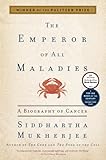
The essential Mukherjee — and one of the finest works of popular science of the past twenty years. The Emperor of All Maladies is structured as a biography of cancer: following the disease through its history, from the ancient Egyptian descriptions of breast tumours through the surgeons who developed increasingly radical operations, the chemotherapy pioneers who fought for drug-based treatment in the 1950s and 1960s, the epidemiologists who proved the causal link between smoking and lung cancer, and the molecular biologists who revealed, over the past three decades, what cancer actually is at the genetic level.
Mukherjee weaves his own clinical experience through the historical narrative: he is an oncologist, and the book opens with his treatment of a patient in the wards of Massachusetts General Hospital. The patient’s story — her specific disease, her treatment, her responses — runs through the book alongside the history, connecting the abstract science to the specific human experience of having cancer.
The title is accurate: cancer is the emperor — the defining disease of the modern age, responsible for one in six deaths worldwide, and in some sense the dark mirror of life itself (cancer cells are cells that have learned to be too alive, to grow and proliferate without restraint). Mukherjee’s ‘biography’ of this enemy is both scientifically rigorous and genuinely moving.
The Gene (2016)
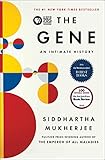
Mukherjee’s most ambitious book — a history of genetics from Mendel through CRISPR, framed by his family’s history of mental illness. The history of eugenics — genetic science applied to population control, first in the United States, then catastrophically in Nazi Germany — is given its full moral weight; the current possibilities of CRISPR gene editing are approached with corresponding caution. The book asks: what do we do with the knowledge that specific genes influence specific traits, when the history of acting on that knowledge is so dark? His most philosophically searching work.
The Song of the Cell (2022)
Mukherjee’s most technically current book — a history and future of cell biology, covering the cellular basis of disease and the emerging field of cellular therapy. CAR-T cell cancer treatment (engineering a patient’s own immune cells to attack their cancer), stem cell research, and CRISPR applications at the cellular level are covered with the same combination of scientific precision and narrative skill that characterises his earlier books. More focused on the future of medicine than the history; rewarding for readers who have followed his work through the earlier two books.
Why The Emperor of All Maladies Is the Ideal First Book
For a reader new to Siddhartha Mukherjee, The Emperor of All Maladies is the ideal first book because it is his Pulitzer Prize-winning masterwork and the fullest expression of his distinctive gifts, the masterful blend of science, history, and storytelling, the clarity, and the deep humanity. The Emperor of All Maladies is a sweeping biography of cancer, tracing the disease, our understanding of it, and the long struggle to treat and cure it, from ancient times to the present. As an entry point it is ideal, for it is his most celebrated book and a perfect example of his rich, humane, and illuminating science writing. It welcomes the newcomer with its fascinating subject, its masterful storytelling, and its deep humanity, drawing the reader into the history and science of a defining disease. It is among his major works and the one that best represents his gifts, so the new reader encounters Mukherjee at his finest. For the newcomer, then, The Emperor of All Maladies is the natural and ideal starting point.
What to Expect as a New Reader
As a new reader, you can expect The Emperor of All Maladies to be a sweeping, masterful, and deeply humane work of science writing. You can expect a grand subject, for the book is a biography of cancer, tracing the disease and our long struggle to understand and treat it. You can expect a blend of science, history, and story, for Mukherjee weaves the science of cancer with its history and the human stories of patients and researchers. You can expect clarity, for Mukherjee makes complex science accessible and compelling. You can expect deep humanity, for the book is grounded in compassion for patients and a profound sense of the human stakes. You can expect masterful, narrative storytelling. You can expect a substantial but absorbing and illuminating read. Expect, in short, a sweeping, masterful, and deeply humane work of science writing, a superb introduction to Mukherjee’s gifts.
Going Deeper After Your First Book
Once The Emperor of All Maladies has introduced you to Mukherjee’s gifts, the reader who wishes to go deeper can explore his other books, which continue his masterful blend of science, history, and storytelling, and his deep humanity. His acclaimed book on the gene traces the history and science of heredity and its profound implications, while his later work on the cell explores the fundamental unit of life and the new medicine it makes possible, each marked by his clarity, narrative skill, and humanity. Reading these after The Emperor of All Maladies deepens your appreciation of Mukherjee’s distinctive gifts, the blend of science, history, and storytelling, the clarity, and the deep humanity. His characteristic strengths run through his work, and the reader who has admired The Emperor of All Maladies will find them across his books. Building your reading journey through Mukherjee is a matter of following his science writing from The Emperor of All Maladies into his other books. The reader who begins here and continues will find one of the finest science writers working today.
Reading Siddhartha Mukherjee
Begin with The Emperor of All Maladies — it is the most fully realised of his books and the one most likely to sustain a reader who is not already interested in the specific subject. The Gene is the natural sequel; The Song of the Cell follows as the most current account of where the science is going. Read them in order for the fullest sense of how biology has shaped medicine across the past century.
Frequently Asked Questions
Where should I start with Siddhartha Mukherjee?
The Emperor of All Maladies: A Biography of Cancer (2010) is the essential starting point — Mukherjee's Pulitzer Prize-winning 'biography' of cancer as a disease: its history, its biology, the history of attempts to understand and treat it, and the trajectory of oncology from ancient Egyptian descriptions of tumours to targeted therapy and immunotherapy. The book is both a history of cancer medicine and a meditation on what cancer reveals about life itself. The Gene is the natural sequel for readers who want to follow the story into genomics.
What is The Gene about?
The Gene: An Intimate History (2016) is Mukherjee's account of the history of genetics — from Mendel's peas through the discovery of DNA's structure, the Human Genome Project, and CRISPR gene editing — framed by Mukherjee's family history of mental illness (schizophrenia and bipolar disorder run in his family, raising questions about genetic determinism and the ethics of genetic intervention). The book covers the history of eugenics with appropriate moral weight; the current possibilities of genetic engineering with appropriate caution. His most ambitious book.
What is The Song of the Cell about?
The Song of the Cell: An Exploration of Medicine and the New Human (2022) is Mukherjee's third major book — a history of cell biology and a meditation on what understanding cells has revealed about human life, disease, and the possibility of cellular therapy (including CAR-T cell cancer treatment and cellular reprogramming). The book is the most technically current of his three works and the most focused on the future; it covers the latest developments in gene therapy and cell-based medicine with Mukherjee's characteristic combination of clinical detail and literary reflection.
Is Mukherjee's writing accessible without a scientific background?
Mukherjee is one of the most gifted science writers working today; his books are accessible to educated general readers with no scientific background. He is an oncologist and researcher at Columbia University, so the science is accurate and not oversimplified, but he writes with a literary sensibility — using metaphor, narrative, and biography to make complex biological concepts intelligible. He is sometimes compared to Oliver Sacks as a writer who can render the experience of medicine from the inside. The Emperor of All Maladies in particular requires no prior knowledge of oncology; it is history and biography as much as science.