Best Books About AI and Technology: Essential Reading List
The best books about artificial intelligence and technology — from technical explainers to ethical investigations. Whether you want to understand AI or interrogate it, this list covers both.
By Daniel Fry

The books about artificial intelligence and technology divide into two broad categories: those written from inside the industry (optimistic, solution-oriented, often ideologically committed to technological progress) and those written from outside (critical, investigative, concerned with consequences). Both are necessary. The best understanding of AI and technology requires both the insider’s knowledge of how these systems work and the critic’s willingness to ask what they are for and who benefits.
The list below covers both perspectives, organised by purpose: understanding AI, understanding the tech industry, and fiction that uses AI as a lens on what it means to be human.
Understanding Artificial Intelligence
Algorithms to Live By — Brian Christian & Tom Griffiths (2016)
The most accessible explanation of how computer algorithms work and why they matter for human decision-making. Christian and Griffiths take the core algorithms of computer science — optimal stopping, explore/exploit, sorting, scheduling, caching — and show that they describe strategies humans already use intuitively, often imperfectly. The result is a book that explains both how computers work and how our own minds solve similar problems.
For readers who want to understand AI without getting lost in technical detail, Algorithms to Live By is the best starting point. It makes abstract computational concepts concrete without dumbing them down.
The Age of Surveillance Capitalism — Shoshana Zuboff (2019)
The most important book about what AI systems are actually doing in the contemporary world. Zuboff, a Harvard Business School professor, spent years investigating how companies like Google and Facebook harvest behavioural data — what she calls “behavioural surplus” — to build models that predict and modify human behaviour, then sell those predictions to advertisers and other clients.
The book is long (700 pages) and dense, but it is the most thorough account available of the specific mechanisms by which tech companies have built a new form of capitalism based on the extraction of human experience. Essential reading for anyone who uses a smartphone.
Understanding the Tech Industry
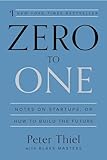
Zero to One — Peter Thiel with Blake Masters (2014)
The canonical statement of Silicon Valley ideology, by the PayPal co-founder and Facebook investor. Thiel argues that the best companies create monopolies (a product that goes from zero to one, not one to n) and that competition is for losers. The worldview is coherent, internally consistent, and in many ways the opposite of what conventional economics teaches about markets. Reading it explains why tech founders think the way they do — and why that thinking has produced the industry it has.
Not an endorsement — a necessary text for understanding the beliefs that built the modern technology industry.
The Hard Thing About Hard Things — Ben Horowitz (2014)
The most honest account of what building a technology company actually involves — the layoffs, the failed pivots, the moments of near-collapse, and the decisions that have no good options. Horowitz, co-founder of Andreessen Horowitz, writes without the triumphalism that characterises most startup memoirs. If Zero to One is the ideology, The Hard Thing About Hard Things is the reality.
The Lean Startup — Eric Ries (2011)
The methodology that has shaped how most technology startups operate: build, measure, learn. Ries argues for rapid iteration and validated learning over long planning cycles, using minimum viable products to test assumptions before committing to them. The book is more practical than most business books and more honest about failure: its central insight is that most startup assumptions are wrong, and the only question is how quickly you discover that.
Fiction That Engages With AI and Technology
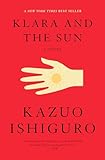
Klara and the Sun — Kazuo Ishiguro (2021)
Ishiguro’s most recent novel is narrated by Klara, an Artificial Friend — a sophisticated android companion sold to children and adolescents — who observes human behaviour from the inside, at close range, without ever fully understanding it. The novel asks what consciousness is, what love is, whether a being who loves perfectly is more or less human than a person who loves imperfectly, and what it would mean for a person to be “replaceable.”
It is also, characteristically for Ishiguro, a novel about what people choose not to see. Klara and the Sun is the best literary fiction currently available about artificial intelligence.
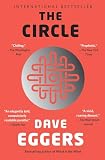
The Circle — Dave Eggers (2013)
Mae Holland takes a job at the Circle, a tech giant that has combined social media, commerce, and identity into a single platform. As the company pushes toward total transparency — everything seen, everything shared, nothing private — Mae’s enthusiasm and the company’s momentum carry her toward something that looks less and less like freedom. The Circle is a dystopia that extrapolates from the tech industry’s stated values (openness, sharing, connection) rather than from authoritarianism. The horror is banal.
Machines Like Me — Ian McEwan (2019)
An alternative 1980s London in which synthetic humans — Adams and Eves — have been developed and are available for purchase. Charlie buys an Adam; Charlie and his upstairs neighbour Miranda begin a relationship; Adam, who has better moral reasoning than either of them, becomes a third presence that neither can fully account for. McEwan uses the AI as a mirror for human self-deception: the android who cannot lie exposes what the humans who can lie prefer not to see.
Reading by Purpose
To understand what AI is doing now: The Age of Surveillance Capitalism → Algorithms to Live By.
To understand Silicon Valley: Zero to One → The Hard Thing About Hard Things → The Lean Startup.
For fiction that thinks seriously about AI: Klara and the Sun → Machines Like Me → The Circle.
Frequently Asked Questions
What is the best book about artificial intelligence for non-technical readers?
The Age of Surveillance Capitalism by Shoshana Zuboff is the most important book about what AI and data systems are actually doing in the world — a rigorous investigation of how tech companies harvest behavioural data to predict and modify human behaviour. For a more technical overview, Algorithms to Live By by Brian Christian and Tom Griffiths explains how computer algorithms work and what they reveal about human decision-making, in language any reader can follow. Neither requires technical background.
Are there good fiction books about AI?
Klara and the Sun by Kazuo Ishiguro (2021) is the most acclaimed recent literary novel about AI — narrated by an Artificial Friend (an android companion for children) observing human behaviour from the outside. It raises questions about consciousness, love, and what makes a person irreplaceable. Machines Like Me by Ian McEwan (2019) imagines an alternative 1980s Britain where synthetic humans exist and asks what happens when they have better moral reasoning than we do. The Circle by Dave Eggers covers surveillance and tech monopoly rather than AI specifically.
What is Surveillance Capitalism?
Surveillance capitalism is the term coined by Shoshana Zuboff for the economic system in which companies extract personal data from users' behaviour (what they click, where they go, what they buy, what they feel) and sell predictions about that behaviour to advertisers. The key insight is that this data is not compensation for free services — it is raw material extracted from human experience and converted into profit. Zuboff argues this represents a new and fundamentally threatening form of capitalism distinct from anything before.
What book should I read to understand how tech companies work?
Zero to One by Peter Thiel explains the ideology behind Silicon Valley — why tech founders think they're building monopolies and why Thiel thinks that's a good thing. The Hard Thing About Hard Things by Ben Horowitz covers what actually happens when you're building a technology company. For a critical perspective on what tech companies have done to society, The Age of Surveillance Capitalism is essential. Reading Thiel and Zuboff together gives you the full picture.