Best Books About Technology: Essential Reading on the Digital Age
The best books about technology — from The Innovators and Zero to One to The Age of Surveillance Capitalism and The Shallows. How technology shapes our world.
By Daniel Fry

Books about technology divide into histories (how the digital world was built and by whom), analyses (what technology is doing to society, politics, and human cognition), and cautionary accounts (what happens when technology fails or is misused). The best books in each category are below.
The History
The Innovators — Walter Isaacson (2014)
The most comprehensive account of how the digital revolution happened — a history from Ada Lovelace’s conception of programming in the 1840s through the invention of the transistor, the microchip, the personal computer, and the internet. Isaacson’s argument: the most important technological innovations were collaborative rather than individual — made by teams with diverse skills, often at institutional nodes where multiple disciplines met. The book is the best answer to the question of why the digital revolution happened in America when it did.
Steve Jobs — Walter Isaacson (2011)
The authorised biography of Apple’s co-founder — based on extensive interviews with Jobs, his family, colleagues, and rivals. The book is as useful as a portrait of Silicon Valley culture (the intensity, the perfectionism, the reality distortion field) as it is as a biography. Jobs cooperated fully, insisted on no editorial control, and the result is more honest about his cruelty and complexity than most authorised biographies manage.
The Analysis
The Age of Surveillance Capitalism — Shoshana Zuboff (2019)
The most important analysis of what the major technology companies are actually doing — not providing services in exchange for data, but harvesting behavioural data as raw material, processing it into predictions about future behaviour, and selling those predictions in markets that operate invisibly and without user consent. Zuboff calls this ‘surveillance capitalism’ and argues it is a fundamentally new form of power that threatens human autonomy and democratic governance. Dense and long (over 700 pages) but the most serious account of the technology industry’s actual business model.
The Shallows — Nicholas Carr (2010)
Carr’s argument — that habitual internet use is rewiring the brain’s attention circuits, reducing the capacity for sustained concentration and deep reading — remains the most carefully argued version of the case against digital distraction. Carr draws on neuroscience, his own experience of finding it harder to read books, and the history of how writing technologies have shaped thought. Whether or not you find his argument fully persuasive, the book forces a serious engagement with what constant connectivity is doing to human cognition.
The Cautionary Stories
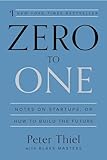
Zero to One — Peter Thiel (2014)
Thiel’s argument for why the most successful technology companies build monopolies rather than competing in existing markets. See the full review in our startup books guide — included here because Thiel’s framework for thinking about technology companies is essential for understanding Silicon Valley’s self-image and its critics’ arguments.
Bad Blood — John Carreyrou (2018)
The definitive account of Theranos and Elizabeth Holmes — a technology company that raised $700 million without a working product, misled investors, and most dangerously, allowed medical tests with false results to reach patients. Carreyrou’s investigation, which brought down the company, is a masterclass in investigative journalism and essential reading on how the ‘fake it till you make it’ culture of Silicon Valley can have real-world consequences.
From Celebration to Critique
The arc of technology writing over the past few decades, and the spread of perspectives on this list, tells an important story about how our collective relationship to the digital world has changed. For a long time, the dominant mode of technology writing was celebratory: histories of brilliant innovation, admiring biographies of visionary founders, accounts of how garage tinkerers changed the world. Isaacson’s The Innovators and Steve Jobs belong substantially to this tradition, chronicling the genuine achievements and fascinating personalities behind the digital revolution with admiration tempered by honesty. But as technology moved from the periphery of life to its center — as a handful of companies came to mediate how billions of people communicate, shop, date, work, and form their understanding of reality — the writing shifted decisively toward critique. Zuboff’s The Age of Surveillance Capitalism and Carr’s The Shallows represent this turn: serious, rigorous attempts to reckon with what the technologies we adopted so eagerly are actually doing to our autonomy, our attention, and our democracy. And the cautionary investigations, like Bad Blood, expose the dark side of the very founder-worship the earlier biographies helped create. Reading across this list is therefore a way of tracing our changing consciousness — from the wonder of the digital revolution to a more sober, more anxious, and more necessary scrutiny of its consequences. The most clear-eyed technology readers hold both registers at once, neither dismissing the real achievements nor ignoring the real costs.
The Founder Myth and Its Discontents
A theme that emerges powerfully when these books are read together is the cult of the founder — the Silicon Valley myth of the visionary genius who, through sheer brilliance and will, conjures world-changing companies from nothing — and the increasingly evident dangers of that myth. The technology industry has produced and promoted this archetype assiduously, and Isaacson’s biography of Steve Jobs is in many ways its defining text, portraying a figure whose perfectionism, charisma, and famous “reality distortion field” produced both extraordinary products and considerable cruelty. The myth is seductive and not entirely false; genuine visionaries have built genuinely transformative companies. But the books on this list, read in dialogue, reveal its perils. Bad Blood is the essential corrective: Elizabeth Holmes consciously modeled herself on the Jobs archetype, down to the black turtleneck, and the reality-distortion field that is celebrated in a successful founder becomes, in a fraudulent one, simply fraud — with patients’ lives placed at risk. The line between visionary confidence and dangerous delusion, between “faking it till you make it” and outright deception, is far thinner than the founder myth admits. Even Isaacson’s admiring portrait contains the materials for this critique, documenting how Jobs’s certainty could shade into the bullying dismissal of inconvenient truths. The lesson the list teaches is to read the founder story skeptically: to admire genuine achievement while recognizing that the same cultural worship that elevates the visionary also enables the con artist, and that a healthy technology culture needs less mythology and more accountability.
Becoming a Critical Technology Reader
Perhaps the most valuable outcome of engaging seriously with these books is the development of technological literacy — not the ability to code or to follow product launches, but the deeper capacity to understand the forces shaping the digital world and to think critically about one’s own place within it. This literacy has become a genuine civic necessity. We live inside systems most of us do not understand: algorithmic feeds that shape what we see and believe, business models that monetize our attention and behavior, infrastructures of surveillance and prediction that operate invisibly. The books on this list provide the conceptual tools to make these systems legible. From Zuboff, one learns to ask not what a free service does for us but how it actually makes money, and at whose expense. From Carr, one gains a framework for noticing what constant connectivity may be doing to one’s own capacity for sustained thought. From the histories, one understands that the current configuration of the digital world was not inevitable but the product of specific choices that could have been made differently — and might yet be. This critical literacy matters because technology is not a force of nature to be passively endured; it is built by people and companies making decisions, subject to public scrutiny, regulation, and individual choice. Readers who absorb the perspectives gathered here emerge better equipped to use technology deliberately rather than compulsively, to participate in the urgent public debates about its governance, and to resist the twin errors of uncritical enthusiasm and reflexive technophobia. In an age defined by the digital, that literacy is among the most important an engaged citizen can possess.
Reading Order
Start analytical: The Innovators → The Age of Surveillance Capitalism → The Shallows.
Silicon Valley culture: Steve Jobs → Bad Blood → Zero to One.
Complete picture: The Innovators → Zero to One → The Age of Surveillance Capitalism → Bad Blood.
Frequently Asked Questions
What is the best book about technology?
The Innovators by Walter Isaacson is the best historical account of how digital technology was created — a comprehensive narrative from Ada Lovelace through the invention of the transistor, the personal computer, and the internet that answers the question of why these things happened in America when they did. Zero to One by Peter Thiel is the best book about how technology companies should think about competition and monopoly. The Age of Surveillance Capitalism by Shoshana Zuboff is the most important analytical account of what technology companies are actually doing with the data they collect.
What is The Innovators about?
The Innovators (2014) by Walter Isaacson traces the history of the digital revolution from Ada Lovelace (who conceived of programming in the 1840s) through the invention of the transistor, the microchip, the personal computer, and the internet. Isaacson's central argument is that the most important innovations happened through collaboration — the digital revolution was made by teams, not lone geniuses — and that the interplay between technical innovation and humanistic creativity has been essential throughout. The book is compulsively readable as a history of ideas and of the specific personalities who carried them.
What is The Age of Surveillance Capitalism about?
The Age of Surveillance Capitalism (2019) by Shoshana Zuboff argues that the dominant technology companies (Google, Facebook, and their successors) have developed a new economic logic: they extract behavioural data from users as a raw material, process it to predict and modify user behaviour, and sell those predictions to advertisers and others. This is not merely a business model but a new form of power — 'surveillance capitalism' — that fundamentally threatens human autonomy and democratic governance. The book is long and dense but is the most serious analytical account of what the technology industry is actually doing.
What is The Shallows about?
The Shallows (2010) by Nicholas Carr argues that the internet — specifically the hyperlinked, multi-tasking, attention-fragmenting structure of web browsing — is changing the way the human brain processes information. Carr draws on neuroscience to argue that the brain's plasticity means habitual internet use rewires the circuits responsible for sustained attention and deep reading, and that we may be losing the cognitive capacity for the kind of concentrated thought that produced the culture we value. The book is more carefully argued than its thesis might suggest and remains the most persuasive version of the case against digital distraction.