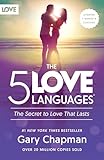
Editors Reads Verdict
Chapman's simple, memorable framework has genuinely helped millions of couples communicate better, even if the original research base is more anecdotal than empirical. Its longevity proves it addresses a real problem with an actionable solution.
What We Loved
- A genuinely useful framework for understanding relationship communication mismatches
- Simple and memorable — the five categories are easy to apply immediately
- Based on decades of real counseling experience
- Has demonstrably helped many readers improve their relationships
Minor Drawbacks
- The research base is anecdotal rather than scientifically rigorous
- The five categories may be oversimplifications of more complex individual variation
- The Christian framing may not resonate with all readers
Key Takeaways
- → People have different primary ways of expressing and feeling loved
- → Most relationship conflict stems from speaking different love languages
- → Learning your partner's love language requires observation and conversation
- → Expressing love in your partner's language is more effective than your own
- → Love is not just a feeling but a choice to act in ways that communicate care
| Author | Gary Chapman |
|---|---|
| Publisher | Northfield Publishing |
| Pages | 208 |
| Published | January 1, 1992 |
| Language | English |
| Genre | Self-Help, Relationships |
| Difficulty | Beginner |
| Best For | Couples; anyone in a relationship; therapists and counselors. |
How The 5 Love Languages Compares
The 5 Love Languages at a glance against 3 similar books readers weigh alongside it.
| Book | Author | Rating | Best for |
|---|---|---|---|
| The 5 Love Languages (this book) | Gary Chapman | ★ 4.4 | Couples |
| Daring Greatly | Brené Brown | ★ 4.3 | Readers interested in the psychology of shame and vulnerability, particularly |
| Emotional Intelligence | Daniel Goleman | ★ 4.4 | Parents, educators, managers, and anyone interested in understanding the |
| The Gifts of Imperfection | Brené Brown | ★ 4.3 | Readers who want a practical, accessible framework for releasing perfectionism |
The Mismatch Problem
Gary Chapman spent years as a marriage counselor before noticing a pattern: couples who clearly loved each other and were equally clearly failing to communicate that love to each other. The person who cooked dinner every night felt invisible to a partner who wanted to hear “I love you.” The person who planned romantic getaways felt unappreciated by a partner who wanted help with the dishes. The love being expressed was real; it was simply being expressed in a language the recipient didn’t read.
The Five Languages
Chapman identifies five primary ways people express and receive love. Words of Affirmation: verbal expressions of appreciation, encouragement, and love. Quality Time: focused, undivided attention and shared experience. Receiving Gifts: thoughtful physical tokens of care and remembrance. Acts of Service: actions that ease burdens or express care through doing. Physical Touch: physical affection and connection. Each person has a primary language — the one they naturally speak and the one they most need to receive.
The Framework in Practice
The book’s practical value is in the application: once you identify your own primary language and your partner’s, you can redirect your effort toward what will actually be received as love rather than what feels natural to express. The person whose love language is Acts of Service will feel unloved if they receive gifts but their partner never helps around the house. Understanding this is not a complete solution to relationship difficulties, but it is a genuinely useful diagnostic tool.
The Love Tank and Love as a Choice
Underpinning the five categories are two ideas that give the book its emotional staying power. The first is Chapman’s metaphor of the “love tank” — the notion that each of us carries an emotional reservoir that must be kept full, and that when a partner’s tank runs empty (because love is being poured in a language they don’t read), resentment, distance, and conflict follow almost automatically. The second is his insistence that love, after the initial euphoria fades, is fundamentally a choice and an action rather than a feeling we passively wait to recur. Chapman is candid that the “in-love” obsession of early romance is temporary by design, and that lasting love requires the deliberate, sometimes effortful decision to meet a partner’s needs in their language even when you don’t feel like it. This reframing — love as a verb, a daily practice rather than a mood — is genuinely useful, and it is the heart of why the book has helped so many couples who felt stuck.
A Tool for Self-Knowledge, Not Just Couples
Although it was written for married couples (and from an explicitly Christian, pastoral perspective that some readers will need to translate), the framework has spread far beyond its original frame. People now apply it to friendships, to parent-child relationships, and to self-understanding — recognising, for instance, that the way you instinctively give love is often a clue to how you most want to receive it. The free online quiz that accompanies the book has been taken by tens of millions of people, and “what’s your love language?” has become a normal question on first dates and in group chats. That diffusion is itself evidence that Chapman named something real: the everyday, painful mismatch between sincere effort and felt appreciation.
The Franchise It Built
Few self-help books have spawned a larger ecosystem. The 5 Love Languages has sold well over twenty million copies and been translated into fifty languages, and Chapman has extended the concept across an entire shelf: The 5 Love Languages of Children, of Teenagers, for Singles, for Men, a military edition, and The 5 Apology Languages (later When Sorry Isn’t Enough), among others. The brand now encompasses quizzes, journals, and study guides. This relentless extension is partly commercial, but it also reflects the framework’s genuine flexibility — the underlying insight that people experience care in different “currencies” travels well across contexts.
What the Critics Say
A fair review has to be clear about the book’s limitations, because they are real. The five languages are not the product of controlled research; they emerged from Chapman’s pastoral observation, and subsequent academic studies have struggled to confirm that people actually sort neatly into five discrete categories or that “matching” a partner’s language reliably predicts relationship satisfaction. In practice, most people value several of the languages and don’t have a single dominant one, and critics argue the model can oversimplify the messy, evolving reality of intimacy. The 1992 framing also carries dated assumptions about gender and marriage, and the prose, by general agreement, is serviceable rather than elegant. None of this erases the book’s value, but it does mean it should be taken as a helpful heuristic — a shared vocabulary for a real problem — rather than a validated science of love.
Verdict
The 5 Love Languages endures because it does one thing exceptionally well: it gives ordinary couples a simple, memorable, non-blaming language for a frustration almost everyone has felt — loving someone sincerely and somehow failing to make them feel it. Read it not as proven psychology but as distilled counseling wisdom, take the diagnostic spirit rather than the rigid categories, and it can genuinely improve how you show up for the people you love. Three decades and twenty million copies on, that practical usefulness — not scientific rigour — is the secret to its remarkable staying power.
Our rating: 4.4/5 — A simple, memorable, and practically useful framework for understanding how people communicate love — imperfect as science, valuable as applied wisdom.
Frequently Asked Questions
What is "The 5 Love Languages" about?
Marriage counselor Gary Chapman identifies five distinct ways people express and receive love — words of affirmation, quality time, receiving gifts, acts of service, and physical touch — and argues that mismatches cause most relationship conflict.
Who should read "The 5 Love Languages"?
Couples; anyone in a relationship; therapists and counselors.
What are the key takeaways from "The 5 Love Languages"?
People have different primary ways of expressing and feeling loved Most relationship conflict stems from speaking different love languages Learning your partner's love language requires observation and conversation Expressing love in your partner's language is more effective than your own Love is not just a feeling but a choice to act in ways that communicate care
Is "The 5 Love Languages" worth reading?
Chapman's simple, memorable framework has genuinely helped millions of couples communicate better, even if the original research base is more anecdotal than empirical. Its longevity proves it addresses a real problem with an actionable solution.
Ready to Read The 5 Love Languages?
Check the current price on Amazon.
Check Price on Amazon (paid link)Prices and availability are subject to change. See Amazon for current price.
Review last updated: