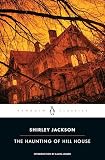
Editors Reads Verdict
The greatest of all haunted-house novels and a masterclass in psychological dread. Jackson makes terror from suggestion, ambiguity, and a lonely woman's unraveling mind — proof that what is never shown frightens most.
What We Loved
- A masterclass in dread built from suggestion rather than gore
- Eleanor is a haunting, deeply human study of loneliness and need
- The famous opening and closing passages are among the finest in the genre
Minor Drawbacks
- Quiet and ambiguous; readers wanting explicit scares may be frustrated
- The deliberate uncertainty about what is 'real' resists tidy resolution
Key Takeaways
- → The most effective horror works through suggestion and the unseen
- → A haunting can be indistinguishable from a mind in crisis
- → Loneliness and the desperate need to belong are their own kind of terror
| Author | Shirley Jackson |
|---|---|
| Publisher | Penguin Classics |
| Pages | 246 |
| Published | January 1, 1959 |
| Language | English |
| Genre | Horror, Gothic, Classic Literature |
| Difficulty | Intermediate |
| Best For | Readers of literary horror and the Gothic, and anyone who appreciates psychological dread over explicit scares. |
How The Haunting of Hill House Compares
The Haunting of Hill House at a glance against 3 similar books readers weigh alongside it.
| Book | Author | Rating | Best for |
|---|---|---|---|
| The Haunting of Hill House (this book) | Shirley Jackson | ★ 4.5 | Readers of literary horror and the Gothic, and anyone who appreciates |
| Mexican Gothic | Silvia Moreno-Garcia | ★ 4.0 | Readers of gothic and literary horror, fans of historical fiction set outside |
| Rebecca | Daphne du Maurier | ★ 4.5 | Readers drawn to gothic atmosphere, psychological suspense, and literary |
| The Turn of the Screw | Henry James | ★ 4.1 | Literary fiction readers, horror enthusiasts interested in psychological |
The Greatest Haunted House
Shirley Jackson’s The Haunting of Hill House, published in 1959, is widely regarded as the finest haunted-house novel ever written, and few who have read it would dispute the claim. It is a masterpiece of psychological horror that achieves its terror almost entirely through suggestion, atmosphere, and ambiguity, never resorting to the explicit shocks that lesser ghost stories rely on. Stephen King has called it one of the most important horror novels of the twentieth century, and its influence — on the genre, on the haunted-house story specifically, on the very idea that horror could be serious literature — is immense. It is a quiet, unsettling, deeply intelligent book, and its power lies precisely in what it withholds.
The premise is the stuff of a hundred ghost stories, but Jackson makes it new. Dr. Montague, a scholar of the supernatural, rents the notorious Hill House for a summer and invites a small group to join him as subjects and observers: Theodora, a confident, faintly mocking bohemian; Luke, the heir to the house; and Eleanor Vance, a fragile, lonely woman in her thirties who has spent years caring for a sick, demanding mother who has just died, and who arrives at Hill House starved for connection, purpose, and a place to belong. The house itself, with its subtly wrong angles, its history of death, and its oppressive, watchful presence, soon begins to manifest disturbances — sounds in the night, cold spots, writing on the walls — and these manifestations seem, increasingly, to be directed at Eleanor, reaching into the deepest, most desperate recesses of her mind.
Terror from Suggestion
What makes The Haunting of Hill House so effective, and so superior to most of its imitators, is its absolute restraint. Jackson almost never shows the reader anything explicit. The horrors are sounds heard through a door, a hand held in the dark that turns out to belong to no one, a presence felt rather than seen, a wrongness in the architecture that the mind cannot quite resolve. The famous bangings in the night, the thing pounding down the corridor — we never see it, and the not-seeing is unbearable. Jackson understood, more deeply than almost any writer in the genre, that the imagination supplies horrors more terrible than any description, and that dread sustained is far more frightening than shock delivered. The result is a slow, mounting, almost intolerable tension that works on the nerves rather than assaulting them.
The novel’s opening paragraph, describing Hill House as “not sane,” and its closing lines, which echo it, are among the most celebrated passages in all of horror — perfect, chilling, and quietly devastating. Between them, Jackson builds an atmosphere of pervasive wrongness so complete that the reader, like the characters, comes to feel the house as a malevolent consciousness.
Eleanor, and the Question of What Is Real
At the novel’s center is Eleanor, and she is what lifts the book from a brilliant ghost story to a work of literature. Jackson renders her with extraordinary psychological depth: her loneliness, her stunted life, her aching need to be wanted and to belong, her fragile grip on a self that years of servitude have nearly erased. As the haunting intensifies and seems to focus on her, the novel poses its central, unanswerable question: is Hill House reaching into Eleanor, or is Eleanor’s disintegrating mind generating the haunting from within? Is the house possessing her, or is she — desperate, unmoored, longing to be claimed by something — surrendering to it, even welcoming it? Jackson keeps this ambiguity perfectly poised. The supernatural and the psychological become indistinguishable, and the terror is doubled: we fear both the house and what is happening inside Eleanor’s head. Her need to belong, finally, becomes a kind of horror in itself, as the house offers her the belonging she has never found anywhere else.
Quiet, Ambiguous, and Profound
Readers should know that this is not a novel of jump-scares or explicit frights. It is quiet, slow-building, and deeply ambiguous, and it never resolves the question of what is “really” happening. Readers who want their horror overt and their mysteries solved may find it frustrating; the book deliberately denies the comfort of explanation, leaving the reader, like Eleanor, suspended in uncertainty. But for readers attuned to its method, this ambiguity is the source of its lasting power — it lodges in the mind precisely because it cannot be resolved or dismissed.
The Haunting of Hill House has been adapted many times, most recently and freely in the acclaimed Netflix series, but the novel remains incomparable — subtler, stranger, and more frightening than any screen version, because its horrors live in suggestion and in the reader’s own imagination. It is also, beneath the dread, a profound study of loneliness and the human need for belonging, which is what gives the terror its weight.
For readers of literary horror and the Gothic, it is essential and unsurpassed — the haunted-house novel against which all others are measured, and a demonstration that the genre, in the right hands, can achieve genuine art.
Final Verdict
Our rating: 4.5/5 — The greatest haunted-house novel and a masterclass in psychological dread. Jackson builds unbearable terror from suggestion, ambiguity, and the unraveling mind of the unforgettable Eleanor. Quiet and deliberately unresolved, but profound, chilling, and unsurpassed.
For more literary dread and Gothic unease, see Mexican Gothic, Rebecca, and The Turn of the Screw.
Frequently Asked Questions
What is "The Haunting of Hill House" about?
Shirley Jackson's masterpiece of psychological horror. A doctor studying the supernatural invites a small group to spend the summer in Hill House, a mansion with a sinister history — and the fragile, lonely Eleanor finds the house reaching into the deepest recesses of her mind.
Who should read "The Haunting of Hill House"?
Readers of literary horror and the Gothic, and anyone who appreciates psychological dread over explicit scares.
What are the key takeaways from "The Haunting of Hill House"?
The most effective horror works through suggestion and the unseen A haunting can be indistinguishable from a mind in crisis Loneliness and the desperate need to belong are their own kind of terror
Is "The Haunting of Hill House" worth reading?
The greatest of all haunted-house novels and a masterclass in psychological dread. Jackson makes terror from suggestion, ambiguity, and a lonely woman's unraveling mind — proof that what is never shown frightens most.
Ready to Read The Haunting of Hill House?
Check the current price on Amazon.
Check Price on Amazon (paid link)Prices and availability are subject to change. See Amazon for current price.
Review last updated: