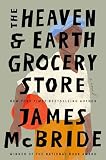
Editors Reads Verdict
McBride's sprawling, joyful, devastating novel about the Black and Jewish communities of Pottstown, Pennsylvania is one of the finest American novels of recent years — comic, tragic, and deeply human.
What We Loved
- One of the richest ensemble casts in recent literary fiction
- Balances comedy and tragedy in proportions that feel genuinely alive
- The Jewish-Black community solidarity is rendered with historical specificity
- McBride's voice is singular — funny and heartbreaking in the same paragraph
Minor Drawbacks
- The large cast requires attentiveness in the early chapters
- The plot's momentum builds slowly before it catches
- Some subplots are more fully realised than others
Key Takeaways
- → Black and Jewish communities in early 20th-century America often shared neighbourhoods and mutual aid networks out of shared exclusion
- → The forced institutionalisation of disabled people was one of the era's most widespread cruelties
- → Community is the only real protection against the state — a recurring theme in the novel
- → Survival requires moral compromise, and the novel refuses to judge those who make it
- → History's most excluded people often build the most generous communities
| Author | James McBride |
|---|---|
| Publisher | Riverhead Books |
| Pages | 400 |
| Published | August 8, 2023 |
| Language | English |
| Genre | Fiction, Literary Fiction, Historical Fiction |
| Difficulty | Intermediate |
| Best For | Literary fiction readers who value voice-driven storytelling and historical depth. Particularly recommended for readers of Colson Whitehead, Toni Morrison, and Nathan Englander. |
How The Heaven & Earth Grocery Store Compares
The Heaven & Earth Grocery Store at a glance against 3 similar books readers weigh alongside it.
| Book | Author | Rating | Best for |
|---|---|---|---|
| The Heaven & Earth Grocery Store (this book) | James McBride | ★ 4.6 | Literary fiction readers who value voice-driven storytelling and historical |
| Beloved | Toni Morrison | ★ 4.5 | Serious readers of literary fiction with the patience for challenging, |
| The Alchemist | Paulo Coelho | ★ 4.7 | Anyone at a crossroads, seeking purpose, or wondering whether their dreams are |
| The Color Purple | Alice Walker | ★ 4.7 | Readers who want powerful, voice-driven fiction about female experience and |
The Skeleton in the Well
The novel begins with a mystery: in 1972, construction workers digging in Chicken Hill — a neighbourhood in Pottstown, Pennsylvania where Black and Jewish residents once lived side by side — discover a skeleton at the bottom of a well. The identity of the skeleton, and how it got there, only becomes clear at the novel’s end. What fills the intervening pages is the story of the community that surrounded that well in the 1930s: its people, its arguments, its kindnesses, its catastrophes.
James McBride is not interested in delivering that mystery cleanly. He is interested in the community itself.
Chicken Hill and Its World
The neighbourhood at the heart of the novel is a real place — a section of Pottstown where Jewish immigrants and Black residents lived in close proximity, tolerated by white Protestant society precisely because they were kept away from it. The grocery store of the title is run by Chona Ludlow, a Jewish woman who has quietly sustained the entire neighbourhood for years: extending credit, keeping confidences, serving as a kind of unofficial social worker for everyone who can’t access official ones.
Chona is the moral centre of the novel, even when she’s absent. Her husband Moshe is her complement: a theatre owner with big ambitions, a good heart, and a talent for avoiding the things he’d rather not see. Around them circulate dozens of characters — Black residents, Jewish neighbours, a travelling showman, a corrupt county official, a deaf boy named Dodo whose fate becomes the novel’s hinge.
The Deaf Child and the State
Dodo’s story is where McBride turns comic to devastating. A Black deaf child in Depression-era Pennsylvania exists outside every system — excluded from white schools for being Black, excluded from Black schools for being deaf, excluded from deaf schools for being Black. When state officials decide to institutionalise him, the entire community must decide what it is willing to risk to stop it.
This storyline represents historical fact: the forced institutionalisation of disabled people — particularly disabled people of colour — was widespread and catastrophic throughout the first half of the 20th century. McBride never lectures about this; he dramatises it instead through characters who are terrified and improvising and sometimes wrong.
The community’s response to Dodo’s situation is the novel’s emotional core. It is not a story of heroic resistance but of imperfect people doing imperfect things for love, and of how those imperfect acts accumulate into something that matters.
Comedy as a Survival Strategy
One of McBride’s most distinctive qualities is his ability to be funny in situations that should not be funny. The Heaven & Earth Grocery Store has passages of genuine comedy — characters who talk too much, schemes that go wrong in escalating ways, a recurring cast of neighbourhood eccentrics who would be at home in a Bellow novel. This comedy is not tonal inconsistency; it’s accuracy. People under extreme pressure are often very funny, and communities facing exclusion develop rich comic cultures because laughter is one of the few pleasures that can’t be taxed or taken.
The novel’s humour is warmest around the jazz and entertainment world that Moshe’s theatre connects them to. There are passages involving Haint (a one-armed musician) and various theatrical productions that read like the best kind of picaresque, and they give the novel a lightness that makes its darker passages land harder by contrast.
Voice and Structure
McBride writes with a voice that feels like an achieved distinctive style rather than a worked-up one. He moves between perspective and register easily — from close third-person to near-omniscient community narration — and the ensemble structure means that no single tragedy overwhelms the reader because no single character carries everything.
The novel’s structure requires patience in the first quarter. McBride deliberately delays clarifying who the main characters are and what the central conflict will be, instead building an intricate social map that becomes essential once the main storyline locks into place. Readers who persist through the initial apparent sprawl will find themselves richly rewarded.
What It Says About America
At its deepest level, The Heaven & Earth Grocery Store is about what marginalized communities give each other and what the state takes away. The Jewish-Black solidarity in the novel is not the product of idealised multiculturalism but of practical necessity: both groups were excluded from mainstream American society, and both had developed traditions of mutual aid in response. When Dodo is threatened by the state, the community that rallies around him is made up of people who have every reason to know that institutions are not their friends.
This is a novel about American history that loves its characters too much to be simple about what that history did to them.
Our rating: 4.6/5 — McBride’s finest novel — an ensemble masterpiece that finds joy and grief in the same moment and makes you believe in community as an act of survival.
Frequently Asked Questions
What is "The Heaven & Earth Grocery Store" about?
In a small Pennsylvania town in the 1930s, a Black and Jewish community is bonded by need and mutual aid — until a murder, a deaf child, and a decades-old secret bring everything to a crisis point.
Who should read "The Heaven & Earth Grocery Store"?
Literary fiction readers who value voice-driven storytelling and historical depth. Particularly recommended for readers of Colson Whitehead, Toni Morrison, and Nathan Englander.
What are the key takeaways from "The Heaven & Earth Grocery Store"?
Black and Jewish communities in early 20th-century America often shared neighbourhoods and mutual aid networks out of shared exclusion The forced institutionalisation of disabled people was one of the era's most widespread cruelties Community is the only real protection against the state — a recurring theme in the novel Survival requires moral compromise, and the novel refuses to judge those who make it History's most excluded people often build the most generous communities
Is "The Heaven & Earth Grocery Store" worth reading?
McBride's sprawling, joyful, devastating novel about the Black and Jewish communities of Pottstown, Pennsylvania is one of the finest American novels of recent years — comic, tragic, and deeply human.
Ready to Read The Heaven & Earth Grocery Store?
Check the current price on Amazon.
Check Price on Amazon (paid link)Prices and availability are subject to change. See Amazon for current price.
Review last updated: