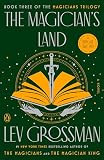
Editors Reads Verdict
The best book in the trilogy and a genuinely moving finale. Grossman finally lets Quentin grow up, braids the series' threads with real craft, and earns a conclusion about loss, adulthood, and what magic was ever for.
What We Loved
- Quentin finally matures into someone worth rooting for, redeeming the whole trilogy's arc
- Grossman braids multiple timelines and characters with confident, satisfying craft
- A genuinely moving meditation on adulthood, loss, and disenchantment
Minor Drawbacks
- Newcomers will be lost; it depends entirely on the first two books
- The literary melancholy that defines the series won't suit readers wanting pure escapism
Key Takeaways
- → Magic was never the answer to unhappiness — Quentin's arc completes the trilogy's argument that meaning is made, not found in another world
- → Growing up means accepting loss and disenchantment without surrendering to despair
- → Endings can be both elegiac and hopeful; Grossman lets Fillory die and Quentin live
| Author | Lev Grossman |
|---|---|
| Publisher | Plume |
| Pages | 416 |
| Published | August 5, 2014 |
| Language | English |
| Genre | Fantasy, Literary Fiction, Contemporary Fantasy |
| Difficulty | Intermediate |
| Best For | Readers finishing the Magicians trilogy and fans of literary fantasy that interrogates the genre even as it loves it. |
How The Magician's Land Compares
The Magician's Land at a glance against 3 similar books readers weigh alongside it.
| Book | Author | Rating | Best for |
|---|---|---|---|
| The Magician's Land (this book) | Lev Grossman | ★ 4.3 | Readers finishing the Magicians trilogy and fans of literary fantasy that |
| The Magician King | Lev Grossman | ★ 4.1 | Fantasy |
| The Magicians | Lev Grossman | ★ 4.0 | Readers who grew up loving Narnia and Harry Potter and are ready for a novel |
| The Night Circus | Erin Morgenstern | ★ 4.4 | Fantasy readers who prioritise immersive atmosphere and beautiful prose over |
Where the Trilogy Finally Pays Off
Lev Grossman’s Magicians trilogy has always been a divisive proposition, and most of the division traces back to a single problem: Quentin Coldwater, its protagonist, spent two books being difficult to like. Brilliant, depressive, entitled, perpetually convinced that happiness was just over the next horizon — in Brooklyn, then at the magical college Brakebills, then in the Narnia-like land of Fillory — Quentin was a deliberate anti-hero, a portrait of the kind of clever, dissatisfied young man who believes the world owes him wonder. The Magician’s Land is the book where Grossman’s long gamble on that character finally pays off, and the result is not only the best volume in the trilogy but a genuinely moving conclusion that retroactively justifies the whole journey.
When the novel opens, Quentin has been cast out of Fillory and stripped of the magical kingship he had achieved, returned to the ordinary world older, humbler, and unexpectedly competent. He takes a dangerous, morally murky job — a magical heist, essentially — alongside a sharp young magician named Plum, and for the first time in the series he is good at something, not because the universe handed it to him but because he has earned a hard-won mastery. Watching Quentin work, teach, and finally take responsibility is quietly thrilling after two books of his flailing. Grossman has been playing a very long game with this character, and here it comes good.
A Master of Structure
What is most impressive about The Magician’s Land on a craft level is how confidently Grossman braids his threads. The novel moves between Quentin’s present-day heist, the deepening crisis in Fillory — where his old friends face the literal end of the world — and flashbacks that fill in the history of the land and its creators. In lesser hands this structure would feel busy; here it is woven with real assurance, each strand commenting on the others, all of them converging on a finale that ties off the trilogy’s many loose ends without feeling mechanical. After the looser construction of the earlier books, this one reads like a writer in full command of his material.
The Fillory material, in particular, achieves something the series had been circling for two books: a genuine reckoning with the Narnia myth that inspired it. Grossman has always written Fillory as both a real magical wonderland and a critique of the childhood fantasy of escape — the dream that some other, better world is waiting to rescue you from your own life. In The Magician’s Land, with Fillory itself dying, that critique reaches its culmination. The land’s apocalypse is not just a plot crisis but a thematic one: the final, total disenchantment that Quentin has to survive in order to grow up.
The Argument the Trilogy Was Making
By the end, it is clear what Grossman has been arguing all along. Magic was never going to fix Quentin. Brakebills did not make him happy; Fillory did not make him happy; kingship did not make him happy. The trilogy is, underneath its spell-slinging and its Fillory adventures, a sustained meditation on the lie of escapism — the belief that meaning is something you find by being transported somewhere magical, rather than something you build, imperfectly, in the life you actually have. The Magician’s Land completes that argument with surprising tenderness. Quentin’s maturity, when it finally arrives, is not a triumphant acquisition of power but an acceptance of loss and limitation, a willingness to stop waiting for the world to enchant him and to make meaning himself.
That makes for a finale that is both elegiac and hopeful. Grossman lets Fillory end; he lets the dream of the perfect other world die. But he lets Quentin live, and live better — not magically rescued, but genuinely grown. The closing movements of the book carry a melancholy beauty, a sense that something has been lost and something more durable gained, that is rare in fantasy and rarer still in fantasy that started as a deconstruction.
Who It’s For
This is emphatically not a place to start; The Magician’s Land depends entirely on the two books before it, and its emotional payoffs are meaningless without them. It also retains the literary melancholy that has always defined the series — readers looking for uncomplicated magical escapism will find Grossman’s disenchanted, often sad register an awkward fit. But for readers who stuck with Quentin through his difficult early years, this conclusion is a reward. It is the book where the trilogy’s prickliness resolves into wisdom, and where a protagonist who spent two volumes being hard to love finally becomes someone worth caring about.
Its Place in the Genre
The Magician’s Land arrived as the so-called “grimdark” and deconstructionist turn in fantasy was cresting, and it stands among the smartest examples of the mode precisely because it never curdles into mere cynicism. Where many revisionist fantasies are content to strip the genre of its wonder, Grossman performs a harder trick: he interrogates the consolations of magic and Narnia-style escape while still, finally, believing in them. The trilogy loves the thing it critiques, and this last volume earns the right to its closing note of restrained hope. The later television adaptation broadened the story’s audience and necessarily simplified its melancholy, but the books remain the fuller statement — particularly this one, where Grossman’s argument about disenchantment and adulthood reaches its most considered form. For readers who want fantasy that thinks about itself without sneering at itself, the conclusion of the Magicians trilogy is close to a model of how it should be done.
Final Verdict
Our rating: 4.3/5 — The finest volume of the Magicians trilogy and a genuinely moving finale. Grossman finally lets Quentin grow up, braids his threads with confident craft, and lands a conclusion about adulthood, loss, and the limits of escape that elevates the entire series. A literary fantasy that earns its melancholy and its hope.
This completes the trilogy that began with The Magicians and continued in The Magician King.
Frequently Asked Questions
What is "The Magician's Land" about?
The conclusion of the Magicians trilogy. Exiled from Fillory and adrift in the ordinary world, Quentin Coldwater takes a dangerous job and begins to find, at last, a kind of mastery — even as Fillory itself faces the end of all things.
Who should read "The Magician's Land"?
Readers finishing the Magicians trilogy and fans of literary fantasy that interrogates the genre even as it loves it.
What are the key takeaways from "The Magician's Land"?
Magic was never the answer to unhappiness — Quentin's arc completes the trilogy's argument that meaning is made, not found in another world Growing up means accepting loss and disenchantment without surrendering to despair Endings can be both elegiac and hopeful; Grossman lets Fillory die and Quentin live
Is "The Magician's Land" worth reading?
The best book in the trilogy and a genuinely moving finale. Grossman finally lets Quentin grow up, braids the series' threads with real craft, and earns a conclusion about loss, adulthood, and what magic was ever for.
Ready to Read The Magician's Land?
Check the current price on Amazon.
Check Price on Amazon (paid link)Prices and availability are subject to change. See Amazon for current price.
Review last updated: