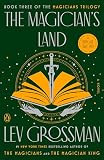
Where to Start with Lev Grossman: A Reading Guide
Where to start with Lev Grossman — whether to begin with The Magicians or The Magician King. A complete reading guide to the fantasy novelist and literary critic.
Lev Grossman (born 1969) is the American novelist and longtime book critic at Time magazine whose Magicians trilogy — The Magicians (2009), The Magician King (2011), and The Magician’s Land (2014) — became one of the most widely discussed fantasy series of the decade for its explicit deconstruction of C.S. Lewis’s Narnia and J.K. Rowling’s Harry Potter: a dark, literary fantasy that takes seriously the emotional and psychological consequences of discovering that magic is real and finding that it doesn’t fix what’s wrong with your life.
Where to Start: The Magicians (2009)
The essential Grossman — and one of the most debated fantasy novels of its era. Quentin Coldwater is a brilliant seventeen-year-old in Brooklyn who is nevertheless profoundly unhappy: he can’t figure out why his life feels empty when, by all measurable standards, it is going well. He is obsessed with a series of children’s books about Fillory — a magical land accessible through enchanted clocks — in the way people are obsessed with things they wish were real.
When Quentin is invited to take an admission exam for Brakebills College for Magical Pedagogy, he discovers that magic is real. The novel follows his magical education — demanding, often humiliating, genuinely dangerous — and the friendships and romantic entanglements that develop among his cohort. Eventually, Quentin and his friends make it to Fillory itself.
The novel’s central proposition is its most uncomfortable: getting what you want doesn’t make you happy. Quentin gets magic, gets Fillory, gets the girl, and remains depressed and directionless throughout. Grossman is making an argument about the fantasy genre’s consolation — the promise that if you find the magical world, everything will be resolved — and insisting that the psychological reality is more complicated. Readers who want their fantasy to be consoling will find The Magicians frustrating; readers who want their fantasy to deal honestly with adult unhappiness will find it extraordinary.
The Magician King (2011)
The direct sequel — darker, more structurally inventive, and introducing Julia’s parallel storyline. Must be read after The Magicians; the series completes with The Magician’s Land (2014).
Why The Magicians Is the Ideal First Book
For a reader new to Lev Grossman, The Magicians is the ideal first book because it is his most celebrated novel and the first of the trilogy that made his name, the fullest expression of his distinctive achievement, a darker, more adult, and more emotionally complex take on the fantasy of magic. The book that established his reputation, The Magicians reimagines the familiar fantasy of a school of magic and a magical world for adult readers, following a brilliant but discontented young man who discovers that magic is real but that it does not bring the happiness or meaning he had hoped for. As an entry point, it offers the beginning of his acclaimed trilogy and the fullest expression of his distinctive sensibility, the disillusionment, emotional complexity, and darkness that set his fantasy apart from more conventional or escapist work. It welcomes the newcomer with its compelling premise and its emotional depth, drawing the reader into a magical world shadowed by real human discontent. It is his best-known novel and the natural place to begin the trilogy, so that the new reader encounters Grossman’s distinctive vision from the first. For the newcomer, then, The Magicians is the natural and ideal starting point.
What to Expect as a New Reader
As a new reader, you can expect The Magicians to be a darker, more adult take on the fantasy of magic, a novel that reimagines the familiar magical school and magical world for grown-up readers and shadows its wonders with real human discontent. You can expect a compelling premise, a brilliant but unhappy young man who discovers that magic is real and enters a secret school to study it, only to find that magic does not bring the happiness or meaning he had hoped for. You can expect emotional complexity and disillusionment, for Grossman’s distinctive achievement is to bring adult discontent, depression, and the search for meaning into the fantasy of magic, refusing easy escapism. You can expect the pleasures of fantasy, a school of magic, a magical world, wonder and adventure, but rendered with a darkness and emotional realism that set the novel apart. Expect, in short, a darker, more adult, and emotionally complex take on the fantasy of magic, shadowing its wonders with real human discontent, a distinctive and rewarding introduction to Grossman’s fiction.
Going Deeper After Your First Book
Once The Magicians has introduced you to Grossman’s distinctive fantasy, the natural next step is to continue the trilogy, following the story through its two further volumes as the characters and the magical world develop and the trilogy works toward its conclusion. The trilogy is best read in order, for the story develops across the three books, deepening the characters, expanding the magical world, and working through the themes of disillusionment, meaning, and growth that the first book introduces. Reading the trilogy in sequence allows the story and the characters to develop fully and the themes to reach their resolution. The reader who has been drawn into the darker, more adult fantasy of The Magicians will find the same emotional complexity and the same distinctive sensibility in the books that follow, along with the satisfaction of the story’s development and conclusion. Building your reading journey is simply a matter of continuing the trilogy in order from The Magicians. The reader who begins with the first novel and continues through the trilogy will find a distinctive and emotionally complex fantasy that brings adult discontent and the search for meaning into the world of magic.
Reading Lev Grossman
Begin with The Magicians — it is the only starting point. Read The Magician King directly after; the trilogy builds to a conclusion that requires all three books.
For the full Lev Grossman bibliography, reviews, and biography, visit the Lev Grossman author page on Editors Reads.
Affiliate disclosure: Links to Amazon on this page are affiliate links. We earn a small commission at no extra cost to you.
Frequently Asked Questions
Where should I start with Lev Grossman?
The Magicians (2009) is the only starting point — the first novel in the Magicians trilogy, following Quentin Coldwater, a brilliant but depressed Brooklyn teenager who discovers that the magical world of his childhood books is real and gains admission to Brakebills College for Magical Pedagogy. The most discussed and debated fantasy novel of its decade; The Magician King is its direct sequel and must be read after.
What is The Magicians about?
The Magicians follows Quentin Coldwater, who has grown up obsessed with a series of fantasy novels about a magical land called Fillory (modelled on Narnia) and is consumed by a vague depression about the gap between his fantasies and reality. When he discovers magic is real and gains admission to Brakebills, he receives what he thought he wanted — and finds that magic, like everything else, doesn't cure the unhappiness that follows him everywhere. The novel is deliberately working against the consolations of the fantasy genre it inhabits.
What is The Magician King about?
The Magician King (2011) is the direct sequel — set after the events of The Magicians, with Quentin and his friends as kings and queens of Fillory. When a routine quest goes wrong, Quentin finds himself on a journey to the edges of the magical world, paralleled with the backstory of Julia, the character from the first book who found her own route to magic outside Brakebills. Darker and structurally more inventive than The Magicians.
Is The Magicians suitable for fans of Narnia and Harry Potter?
The Magicians is explicitly in dialogue with Narnia and Harry Potter — Fillory is Narnia, Brakebills is a more adult Hogwarts — but it deliberately undermines the consolations those books offer. Where Harry Potter and Narnia suggest that magic cures emptiness and gives life meaning, The Magicians argues that it doesn't: Quentin's depression and dissatisfaction persist through his magical education. Readers who love the source materials often find the deconstruction fascinating; some find it aggressively deflating. Both reactions are valid.