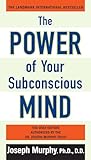
Editors Reads Verdict
Joseph Murphy's decades-old classic has found continuous new audiences for its accessible, practical approach to subconscious reprogramming — drawing on New Thought tradition to offer techniques that remain influential across personal development, modern therapy, and spiritual practice.
What We Loved
- Practical techniques presented in immediately applicable form
- The core insight — that unconscious beliefs shape outcomes — has been validated by subsequent psychology
- Murphy's writing style is accessible and direct without being reductive
- The book covers health, relationships, wealth, and vocation with consistent framework
Minor Drawbacks
- The religious framing may be off-putting to secular readers
- Some claims about healing and prosperity are not supported by contemporary research
- The 1963 publication context shows in certain cultural assumptions
Key Takeaways
- → The subconscious mind does not evaluate — it accepts and acts on what the conscious mind consistently feeds it
- → Visualization is not magical thinking but a method of aligning conscious intent with unconscious drive
- → Habitual thought patterns become default beliefs and shape behavior without conscious awareness
- → The most effective time to feed new ideas to the subconscious is during the hypnagogic state before sleep
- → Affirmations work best when they carry emotional content, not just verbal repetition
| Author | Joseph Murphy |
|---|---|
| Publisher | TarcherPerigee |
| Pages | 304 |
| Published | January 1, 1963 |
| Language | English |
| Genre | Self-Help, Psychology, Spirituality |
| Difficulty | Beginner |
| Best For | Self-help readers interested in the foundational texts of the genre; those exploring visualization and affirmation techniques; readers interested in the psychology of belief and its effect on behavior. |
How The Power of Your Subconscious Mind Compares
The Power of Your Subconscious Mind at a glance against 3 similar books readers weigh alongside it.
| Book | Author | Rating | Best for |
|---|---|---|---|
| The Power of Your Subconscious Mind (this book) | Joseph Murphy | ★ 4.3 | Self-help readers interested in the foundational texts of the genre |
| Atomic Habits | James Clear | ★ 4.8 | Anyone who wants to build better habits, break bad ones, or improve personal |
| Meditations | Marcus Aurelius | ★ 4.8 | Anyone seeking practical philosophical guidance for living with integrity under |
| The Obstacle Is the Way | Ryan Holiday | ★ 4.3 | Readers who want an accessible introduction to Stoic philosophy through a |
A Classic of the Self-Help Tradition
Joseph Murphy’s The Power of Your Subconscious Mind, first published in 1963, is one of the foundational texts of the New Thought tradition that underlies a vast proportion of contemporary self-help. Its central premise — that the subconscious mind is a powerful force that can be deliberately programmed by the conscious mind through repetition, visualization, and affirmation — has shaped everyone from Norman Vincent Peale to modern positive psychology practitioners.
Murphy was a minister and metaphysical teacher who drew on religious tradition, early psychology, and the emerging science of the unconscious to build a practical system for achieving desired outcomes in health, wealth, relationships, and vocation. The book’s endurance is a testament to both the resonance of its core ideas and the accessibility of its presentation.
The Mechanism Murphy Proposes
The fundamental model is straightforward: the subconscious mind does not reason — it accepts and acts on whatever the conscious mind plants in it through habitual repetition. Negative habitual thought patterns (“I’m not good enough,” “I can never succeed”) are accepted by the subconscious as instructions and acted upon accordingly. Deliberate positive programming through affirmation and visualization replaces those patterns with new instructions that produce different outcomes.
This is not identical to contemporary cognitive-behavioral therapy, but the structural similarity is real: both approaches focus on identifying and replacing habitual thought patterns with more functional alternatives.
Where Murphy’s Claims Exceed the Evidence
Readers should approach Murphy’s more expansive claims — around healing physical illness through subconscious reprogramming, or attracting wealth through visualization alone — with appropriate critical engagement. The psychological core of his argument has genuine support; the more ambitious applications are where scientific scrutiny becomes necessary.
The Garden and the Gardener
Murphy’s governing metaphor is agricultural: the conscious mind is the gardener, and the subconscious is the soil, which accepts whatever seeds — thoughts, beliefs, images — are planted in it and grows them indiscriminately, weeds and flowers alike. The subconscious, in his account, makes no judgments and draws no distinctions; it simply takes the conscious mind’s habitual convictions as commands and works tirelessly to make them real. This is why, for Murphy, the quality of your repeated inner speech matters so enormously: tell yourself often enough that you are unworthy or doomed to fail, and the subconscious dutifully arranges your perceptions, energy, and behavior to confirm it. The practical upshot is hopeful — that by consciously and consistently planting better seeds, you can, over time, change the harvest. Stripped of the metaphysics, this is a recognisable cousin of the modern understanding of self-fulfilling prophecy and the way habitual thought shapes mood and action.
The Techniques
What has kept the book in print for six decades is that it is relentlessly practical, full of concrete methods the reader can try at once. Murphy is especially keen on the threshold state between waking and sleep — the drowsy, hypnagogic minutes at night and on waking — which he considers the moment when the conscious “guard” is lowest and new ideas slip most easily into the subconscious. He offers a battery of techniques: the “sleeping” technique of repeating a calm affirmation as you drift off; the “thank you” technique of giving thanks for a desired outcome as though it has already arrived; the “mental movie” method of vividly visualising a goal achieved; and the practice of “decreeing” a confident statement with feeling. His insistence that affirmations must carry genuine emotional conviction — not mere mechanical repetition — is a point modern visualization and performance psychology echo.
A Product of New Thought
To understand the book is to understand its lineage. Joseph Murphy was an Irish-born minister of Divine Science and Religious Science, and The Power of Your Subconscious Mind sits squarely in the “New Thought” tradition that runs from the nineteenth-century healer Phineas Quimby through writers like Wallace Wattles and the autosuggestion pioneer Émile Coué (of “every day, in every way, I’m getting better and better” fame). That same tradition would later flower, in diluted and commercialised form, into Rhonda Byrne’s The Secret and the modern “law of attraction” industry. Murphy frequently reframes prayer itself as a technique of conscious subconscious programming, blending scripture, Eastern ideas, and pop-psychology of his era into an accessible system. Knowing this heritage helps a reader separate the durable psychological insight from the period metaphysics in which it is wrapped.
Where the Claims Run Ahead of the Evidence
The book’s boldest claims demand a skeptical eye. Murphy recounts numerous anecdotes of physical illnesses cured and fortunes attracted through subconscious work, and presents them as straightforward cause and effect. Some of this maps onto the genuinely real and well-documented placebo effect — the way belief and expectation can measurably influence pain, healing, and well-being — but Murphy pushes far past what that science supports, implying that conviction alone can cure organic disease or summon wealth. The same logic carries the familiar dark side of all such systems: if your mind creates your reality, then illness, poverty, and misfortune become, by uncomfortable implication, failures of thought. Readers should take the psychological core — that habitual belief shapes behaviour and perception — and firmly set aside the miracle-cure literalism.
Enduring Influence and Verdict
The techniques Murphy describes — prayer as conscious programming, the threshold state before sleep as prime time for reprogramming, the importance of emotional conviction in affirmation — have filtered through decades of self-help literature and appear, in modified and evidence-tested form, in contemporary mindfulness, cognitive-behavioral therapy, sports psychology, and visualization training. That is the paradox of this book: it is unscientific in its framing and overreaching in its promises, yet it grasped, decades early, something psychology has since substantially confirmed — that our unexamined beliefs quietly run much of our lives. Read critically, as a historical foundation stone of the genre and a toolkit to be filtered rather than swallowed whole, it still offers real value.
Our rating: 4.3/5 — A foundational text whose core insights about the relationship between conscious belief and unconscious action remain valuable even where specific claims require critical filtering.
Frequently Asked Questions
What is "The Power of Your Subconscious Mind" about?
A practical guide to harnessing the subconscious mind for healing, prosperity, and happiness through visualization, affirmation, and the alignment of conscious and unconscious thought.
Who should read "The Power of Your Subconscious Mind"?
Self-help readers interested in the foundational texts of the genre; those exploring visualization and affirmation techniques; readers interested in the psychology of belief and its effect on behavior.
What are the key takeaways from "The Power of Your Subconscious Mind"?
The subconscious mind does not evaluate — it accepts and acts on what the conscious mind consistently feeds it Visualization is not magical thinking but a method of aligning conscious intent with unconscious drive Habitual thought patterns become default beliefs and shape behavior without conscious awareness The most effective time to feed new ideas to the subconscious is during the hypnagogic state before sleep Affirmations work best when they carry emotional content, not just verbal repetition
Is "The Power of Your Subconscious Mind" worth reading?
Joseph Murphy's decades-old classic has found continuous new audiences for its accessible, practical approach to subconscious reprogramming — drawing on New Thought tradition to offer techniques that remain influential across personal development, modern therapy, and spiritual practice.
Ready to Read The Power of Your Subconscious Mind?
Check the current price on Amazon.
Check Price on Amazon (paid link)Prices and availability are subject to change. See Amazon for current price.
Review last updated: