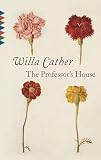
Editors Reads Verdict
A quiet, profound, and structurally daring novel of midlife disillusion. Cather's spare prose and the luminous embedded story of Tom Outland make this one of her most haunting and underrated works.
What We Loved
- Cather's spare, luminous prose at its most refined
- A daring structure with the unforgettable Tom Outland story at its heart
- A profound, quietly devastating study of midlife disenchantment
Minor Drawbacks
- Quiet and interior, with little external plot
- Its melancholy, undramatic mood asks patience of the reader
Key Takeaways
- → Worldly success can arrive alongside spiritual exhaustion
- → The promise of youth haunts the disenchantment of middle age
- → What we build can come to feel like a house we cannot live in
| Author | Willa Cather |
|---|---|
| Publisher | Vintage Classics |
| Pages | 272 |
| Published | January 1, 1925 |
| Language | English |
| Genre | Classic Literature, Literary Fiction |
| Difficulty | Intermediate |
| Best For | Readers of literary classics who value quiet, interior, beautifully written fiction about memory, disillusion, and the inner life. |
How The Professor's House Compares
The Professor's House at a glance against 3 similar books readers weigh alongside it.
| Book | Author | Rating | Best for |
|---|---|---|---|
| The Professor's House (this book) | Willa Cather | ★ 4.1 | Readers of literary classics who value quiet, interior, beautifully written |
| Death Comes for the Archbishop | Willa Cather | ★ 4.1 | Literary Fiction |
| My Ántonia | Willa Cather | ★ 4.3 | Literary fiction readers, students of American literature, and anyone drawn to |
| O Pioneers! | Willa Cather | ★ 4.2 | Readers of American literary classics, students of early twentieth-century |
A House One Cannot Leave
Willa Cather’s The Professor’s House, published in 1925, is one of the quietest and most profound of her novels — a subtle, melancholy, structurally daring meditation on middle age, disillusion, memory, and the slow loss of the self. Cather, the great chronicler of the American frontier in O Pioneers! and My Ántonia, turns here to a more inward and modern subject: the spiritual exhaustion of a successful man who, having achieved everything he set out to achieve, finds himself unaccountably estranged from his own life. It is a novel of remarkable restraint and depth, less famous than her prairie masterpieces but treasured by many readers and critics as among her finest and most haunting achievements — a book whose apparent calm conceals a quiet devastation.
The professor of the title is Godfrey St. Peter, a distinguished historian who has just completed his life’s work, a multi-volume study that has brought him prizes, money, and renown. With the proceeds his family has built a comfortable new house, but St. Peter finds he cannot bring himself to leave the cramped, shabby attic study of the old house where he wrote his great work and raised his daughters. As the novel unfolds, we come to understand his condition: a profound midlife disenchantment, a sense of having lost touch with the passionate, essential self of his youth, a weariness with the family and the worldly success that should fulfill him. He feels himself a stranger to his own life — to his wife, his grown daughters, his sons-in-law, and the comfortable bourgeois prosperity that has overtaken his household — and he retreats, in spirit, toward solitude and the past.
The Tom Outland Story
The novel’s most celebrated feature is its daring structure. At its center, Cather inserts a long, self-contained narrative — “Tom Outland’s Story” — that interrupts the domestic novel entirely and changes its key. Tom Outland was a brilliant, idealistic young man, St. Peter’s most gifted student and almost a son to him, who died in the First World War; his memory haunts the professor and his family, and his scientific invention has, ironically, become the source of the family’s new wealth and its squabbles. In the embedded story, told in Tom’s own voice, we hear of his youth in the Southwest, and above all of his discovery of an ancient cliff-dweller city on a mesa in New Mexico — a luminous, almost mystical account of beauty, wonder, and the betrayal of an ideal.
This inset narrative is one of the most beautiful things Cather ever wrote, and its placement is the novel’s masterstroke. The clean, open, idealistic world of Tom’s youth on the mesa stands in luminous contrast to the cluttered, compromised, materialistic world of the professor’s family, and the juxtaposition crystallizes the book’s themes: the loss of youthful idealism, the corruption of pure things by money and time, the gulf between the life of the spirit and the life of getting and spending. Cather described the structure with an architectural metaphor — like opening a window in a stuffy room onto a view of the open sea — and the effect is exactly that: a sudden expansion of air and light at the heart of an enclosed, airless book.
The Demands of Quietness
Honesty requires noting what kind of novel this is. The Professor’s House is quiet, interior, and undramatic; its real action takes place within St. Peter’s soul, and readers expecting external incident, plot momentum, or resolution will find little of it. The book is a study of a mood and a condition — disenchantment, weariness, the longing for an earlier self — rendered with spare precision and great subtlety, and its power is cumulative and atmospheric rather than dramatic. Its melancholy is pervasive and its pace is slow; it asks for patience and for attention to nuance, to what is felt rather than what is done.
This restraint is the source of both its difficulty and its depth. Cather refuses easy drama or consolation; the professor’s crisis is not resolved with any neat epiphany, and the novel ends on a note of muted, hard-won, ambiguous acceptance rather than triumph or catastrophe. For readers attuned to its frequencies, this quiet honesty is precisely what makes the book so moving and so true; for those who need event and resolution, it may feel static. It is a novel to be absorbed slowly, read for its prose, its mood, and its psychological and spiritual truth rather than its story.
A Haunting, Underrated Masterwork
The Professor’s House stands as one of Willa Cather’s most haunting and underrated novels — a profound, beautifully written, structurally bold study of midlife disillusion and the loss of the youthful self, illuminated at its center by the unforgettable Tom Outland story. Spare, melancholy, and quietly devastating, it shows Cather working at the height of her powers on a subject far from her famous frontier epics, and rewards the patient reader with one of the most psychologically and spiritually truthful portraits of middle age in American fiction.
For readers who love quiet, interior, luminously written literary classics about memory, disenchantment, and the inner life, The Professor’s House is a deeply rewarding and lingering read — a masterwork of restraint from one of America’s greatest novelists.
Final Verdict
Our rating: 4.1/5 — A quiet, profound, structurally daring novel of midlife disillusion, memory, and the lost promise of youth. Cather’s spare, luminous prose and the unforgettable embedded Tom Outland story make this one of her most haunting and underrated works. Undramatic and melancholy, but psychologically and spiritually true.
For more Cather, see O Pioneers!, My Ántonia, and Death Comes for the Archbishop.
Frequently Asked Questions
What is "The Professor's House" about?
Willa Cather's subtle, melancholy novel of middle age. Professor Godfrey St. Peter, having achieved every success, finds himself unable to leave his old study and strangely estranged from his own life — a quiet meditation on disillusion, memory, and the lost promise of youth.
Who should read "The Professor's House"?
Readers of literary classics who value quiet, interior, beautifully written fiction about memory, disillusion, and the inner life.
What are the key takeaways from "The Professor's House"?
Worldly success can arrive alongside spiritual exhaustion The promise of youth haunts the disenchantment of middle age What we build can come to feel like a house we cannot live in
Is "The Professor's House" worth reading?
A quiet, profound, and structurally daring novel of midlife disillusion. Cather's spare prose and the luminous embedded story of Tom Outland make this one of her most haunting and underrated works.
Ready to Read The Professor's House?
Check the current price on Amazon.
Check Price on Amazon (paid link)Prices and availability are subject to change. See Amazon for current price.
Review last updated: