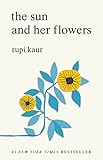
Editors Reads Verdict
The Sun and Her Flowers deepens Kaur's signature minimalism with an expanded scope — adding immigration, cultural identity, and generational trauma to her emotional palette. It rewards readers who loved her debut while showing real growth as a poet.
What We Loved
- Broader thematic scope than the debut — immigration and heritage add depth
- More technically varied than Milk and Honey with longer, more developed poems
- Nature imagery is evocative and consistently well executed
- Maintains the accessibility that made Kaur's voice so beloved
Minor Drawbacks
- Some passages feel repetitive for readers familiar with her first book
- The minimalist style still won't satisfy readers who prefer formal complexity
- A few sections feel more like prose fragments than poetry
Key Takeaways
- → Identity is shaped by both the place you left and the place you arrived
- → Grief and growth often occupy the same emotional space
- → Cultural heritage is a form of nourishment, not a constraint
- → Nature's cycles — wilting, rooting, rising — mirror human resilience
- → Diaspora identity involves constant negotiation between worlds
| Author | Rupi Kaur |
|---|---|
| Publisher | Andrews McMeel Publishing |
| Pages | 256 |
| Published | October 3, 2017 |
| Language | English |
| Genre | Poetry |
| Difficulty | Beginner |
| Best For | Fans of Milk and Honey and anyone interested in poetry that addresses migration, cultural identity, love, and the process of personal reinvention. |
How The Sun and Her Flowers Compares
The Sun and Her Flowers at a glance against 3 similar books readers weigh alongside it.
| Book | Author | Rating | Best for |
|---|---|---|---|
| The Sun and Her Flowers (this book) | Rupi Kaur | ★ 4.0 | Fans of Milk and Honey and anyone interested in poetry that addresses |
| And Still I Rise | Maya Angelou | ★ 4.8 | Anyone seeking powerful, joyful, and politically resonant poetry — particularly |
| Home Body | Rupi Kaur | ★ 3.9 | Readers drawn to introspective poetry about self-acceptance, body image, and |
| Milk and Honey | Rupi Kaur | ★ 4.0 | Readers seeking accessible, emotionally resonant poetry — particularly those |
Growing Beyond the Debut
Second collections are notoriously difficult. The pressure to repeat the success of a debut while demonstrating growth is a tension that sinks many poets. Rupi Kaur navigates it with reasonable success in The Sun and Her Flowers, her 2017 follow-up to the record-breaking Milk and Honey. The emotional intensity is retained; the thematic range is noticeably expanded.
Divided into five sections — wilting, falling, rooting, rising, blooming — the collection uses botanical metaphor as a structural spine. Each section maps onto a stage of emotional or psychological development, from grief and disorientation to eventual flowering. It is, like its predecessor, intensely personal — but here Kaur reaches outward to her parents’ immigration from India to Canada and to the complexities of Punjabi identity in the diaspora.
New Ground
The immigration poems are the collection’s most distinctive contribution. Kaur writes about her mother with particular force — the sacrifices made, the self left behind, the love that travels across continents. These poems carry a weight that the purely romantic or trauma-focused work in Milk and Honey sometimes lacked, because they are rooted in a specific cultural and historical reality.
The nature imagery, too, is handled with more craft here. Flowers, soil, light, and seasons are deployed not as decoration but as structural metaphors that genuinely illuminate the emotional content. The book earns its botanical conceit.
Continuity and Limitation
Kaur’s core technique — short lines, lowercase text, minimalist illustration — is unchanged. For loyal readers this will feel like a comfortable return; for critics who found the debut thin, nothing here will change their minds. The most defensible criticism is that the two books begin to blur: the themes of healing from harm, finding self-worth, and processing grief appear in both collections, and without the structural novelty of the debut, some sections feel familiar rather than fresh.
The Migration Poems
The strongest and most original work in The Sun and Her Flowers concerns immigration and inheritance — Kaur’s reckoning with her parents’ journey from Punjab to Canada and the costs it exacted. Here her characteristically simple style acquires real ballast, because the emotion is anchored to specific history: a mother who gave up a language, a homeland, and a version of herself so that her daughter might have a future; a father whose labor is rendered with gratitude rather than abstraction. These poems broaden Kaur’s range beyond the romantic and trauma-focused material that dominated Milk and Honey, and they answer one of the sharpest criticisms of her debut — that its universality could tip into vagueness — by grounding the feeling in a particular cultural and generational experience. The section on her mother, in particular, contains some of the most affecting writing Kaur has published, and it suggests a poet capable of more than the screenshot-ready aphorism.
The Botanical Structure
The collection’s organizing conceit — five sections named for the life cycle of a flower, from wilting through falling, rooting, and rising to blooming — is more than decorative scaffolding. Kaur uses the botanical arc to map a journey from grief and disorientation toward growth and self-possession, so that the structure itself enacts the healing the poems describe. Soil, seeds, light, and seasons recur as genuine structural metaphors rather than ornamental imagery, and the conceit gives the book a coherence and forward motion that a simple anthology of fragments would lack. This is a meaningful advance on the looser organization of her debut: where Milk and Honey moved through stages of pain and recovery somewhat schematically, The Sun and Her Flowers earns its shape through a sustained natural metaphor that the reader feels rather than merely notices.
The Instapoetry Debate
No assessment of Rupi Kaur is complete without acknowledging the fierce critical debate she embodies. As the most commercially successful figure in “Instapoetry” — verse optimized for sharing on social media, written in short lines and plain language and often paired with minimalist line drawings — Kaur has been both celebrated for bringing poetry to millions of new readers and dismissed by critics who find the work simplistic, prosaic, or merely aphoristic. The Sun and Her Flowers will not resolve this argument; readers who found the debut thin will find their objections largely intact. But the collection complicates the easy dismissal, because its migration and heritage poems demonstrate a capacity for specificity and weight that the critique tends to deny. Kaur is, at minimum, doing something culturally significant: making poetry feel accessible and emotionally direct to an audience that traditional verse had largely failed to reach.
Accessibility as a Value
Whatever one concludes about the literary merit of individual poems, the cultural achievement of The Sun and Her Flowers is real. Kaur writes for readers who do not think of themselves as poetry readers — young people, immigrants, survivors of trauma — and she meets them with language that asks for no specialized training and offers immediate emotional recognition. The plainness that critics deride is, from another angle, a deliberate democratic gesture, an insistence that poetry can speak directly about love, grief, healing, and identity without the mediating difficulty that has kept many readers away. The collection sold in numbers almost unheard of for contemporary poetry, and it did so by treating accessibility not as a compromise but as the point. For its enormous audience, the book has functioned less as literature to be evaluated than as company to be kept, and that, too, is a form of value.
The Verdict
The Sun and Her Flowers is a worthy successor that demonstrates genuine growth. The expanded geographic and cultural scope gives Kaur’s intimate voice a larger canvas, and the best poems here — particularly those about her mother and her heritage — show a poet capable of more than her critics allow.
Our rating: 4/5 — A confident, emotionally rich second collection that expands Kaur’s voice into migration and cultural identity.
Frequently Asked Questions
What is "The Sun and Her Flowers" about?
Rupi Kaur's second collection explores migration, identity, and the cycles of wilting and blooming through 256 pages of spare, illustrated verse.
Who should read "The Sun and Her Flowers"?
Fans of Milk and Honey and anyone interested in poetry that addresses migration, cultural identity, love, and the process of personal reinvention.
What are the key takeaways from "The Sun and Her Flowers"?
Identity is shaped by both the place you left and the place you arrived Grief and growth often occupy the same emotional space Cultural heritage is a form of nourishment, not a constraint Nature's cycles — wilting, rooting, rising — mirror human resilience Diaspora identity involves constant negotiation between worlds
Is "The Sun and Her Flowers" worth reading?
The Sun and Her Flowers deepens Kaur's signature minimalism with an expanded scope — adding immigration, cultural identity, and generational trauma to her emotional palette. It rewards readers who loved her debut while showing real growth as a poet.
Ready to Read The Sun and Her Flowers?
Check the current price on Amazon.
Check Price on Amazon (paid link)Prices and availability are subject to change. See Amazon for current price.
Review last updated: