Where to Start with Rupi Kaur: A Reading Guide
Where to start with Rupi Kaur — whether to begin with milk and honey, the sun and her flowers, or home body. A complete reading guide to the bestselling poet.
By Lena Fischer

Rupi Kaur (born 1992) is the Indo-Canadian poet and artist whose milk and honey (2014) — self-published, illustrated with her own line drawings, and initially circulated through Instagram — became one of the bestselling poetry collections in publishing history, selling over 12 million copies worldwide and introducing contemporary poetry to an enormous readership that had not previously engaged with the form. Kaur’s work is short-form free verse without capitalisation or conventional punctuation, often illustrated, and organised into chapters that trace arcs of trauma, healing, love, and self-discovery. She is one of the most commercially successful poets in the history of the medium and one of the most contested: literary critics are largely sceptical, while her readership, which skews young and female, describes her work as having reached them at exactly the right moment with exactly the right language.
Where to Start: milk and honey (2014)
The essential Kaur — and the book that made her. milk and honey is divided into four chapters: the hurting, the loving, the breaking, and the healing. Each poem is short — many just a few lines — accompanied by simple line illustrations. Together they trace the arc of surviving abuse, navigating love and loss, and finding the capacity to heal.
The book’s success came first through Instagram, where Kaur’s poems circulated widely before the collection was picked up by Andrews McMeel Publishing. Its accessibility — the short lines, the lack of formal intimidation, the direct emotional address — made it the entry point to poetry for millions of readers who had found other collections opaque or inaccessible.
The formal simplicity that literary critics question is inseparable from the book’s reach: Kaur’s poems say directly what other poetry says slant, and for a reader who has experienced abuse or trauma, the directness can be precisely what is needed. Whether the directness constitutes poetry in the canonical sense is a separate question from whether it has value, and Kaur’s readership suggests it does.
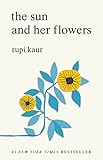
the sun and her flowers (2017)
The second collection — broader in scope, addressing immigration and ancestry alongside personal healing. Structured as a growth cycle from wilting to blooming; Kaur’s most ambitious work.
home body (2020)
The third collection — turned inward, focused on the relationship with self and the body. Quieter and more introspective than the first two; for readers who want to continue the journey Kaur traces across all three collections.
Why milk and honey Is the Ideal First Book
For a reader new to Rupi Kaur, milk and honey is the ideal first book because it is her breakout collection, a phenomenon that made her one of the most widely read poets of her generation, and the fullest expression of her distinctive style and themes. milk and honey gathers short, accessible poems, often accompanied by her own simple line drawings, exploring themes of love, loss, trauma, healing, and femininity in a direct, intimate, and emotionally resonant voice. As an entry point, it offers the purest expression of Kaur’s appeal, the accessible and intimate poetry, the emotional directness, and the themes of love, healing, and womanhood that have resonated with a vast readership. It welcomes the newcomer with its accessibility, its emotional resonance, and its intimate voice, drawing the reader into her distinctive poetic world. It is her breakout collection and the one that best represents her style, so that the new reader encounters Kaur at her most characteristic. For the newcomer, then, milk and honey is the natural and ideal starting point.
What to Expect as a New Reader
As a new reader, you can expect milk and honey to be a collection of short, accessible, emotionally resonant poems, exploring love, loss, trauma, healing, and femininity in an intimate voice. You can expect accessibility, for Kaur’s poems are short, direct, and approachable, written in a plain, intimate style that has made poetry accessible to a vast readership, including many who do not usually read poetry. You can expect emotional directness, for the poems explore deep and often painful emotions and experiences with a raw, direct honesty. You can expect themes of love, loss, trauma, healing, and femininity, for the collection traces a journey through pain toward healing and self-affirmation, with particular attention to women’s experience. You can expect simple line drawings accompanying many of the poems, a distinctive feature of Kaur’s work. You should be aware that the collection addresses difficult subjects, including trauma and abuse. Expect, in short, a collection of short, accessible, emotionally resonant poems exploring love, healing, and femininity, an intimate introduction to Kaur’s voice.
Going Deeper After Your First Book
Once milk and honey has introduced you to Kaur’s poetry, the reader who wishes to go deeper can explore her other collections, which continue her accessible, intimate style and her exploration of love, healing, growth, and womanhood. Her subsequent collections continue her distinctive approach, the short, accessible poems, the emotional directness, and the themes of love, loss, healing, and femininity, while extending her exploration toward growth, self-discovery, and flourishing. Reading these after milk and honey deepens your engagement with Kaur’s distinctive style and themes, the accessible and intimate poetry, the emotional resonance, and the journey through pain toward healing and self-affirmation. Her characteristic voice and concerns run through her work, and the reader who has been moved by milk and honey will find them developed in her other collections. Building your reading journey through Kaur’s work is a matter of following her accessible, intimate poetry from her breakout collection into her further work. The reader who begins with milk and honey and continues through her work will find one of the most widely read poets of her generation.
Reading Rupi Kaur
Begin with milk and honey — it is the essential Kaur and the best introduction to her voice and method. Read the sun and her flowers and home body in order if you want to follow her complete trajectory. All three collections are short and can be read in an afternoon each.
For the full Rupi Kaur bibliography, reviews, and biography, visit the Rupi Kaur author page on Editors Reads.
Affiliate disclosure: Links to Amazon on this page are affiliate links. We earn a small commission at no extra cost to you.
Frequently Asked Questions
Where should I start with Rupi Kaur?
milk and honey (2014) is the essential starting point — Kaur's self-published debut collection, written in short free verse with her own line illustrations, divided into four chapters: the hurting, the loving, the breaking, and the healing. The book documents experiences of abuse, trauma, loss, and survival with a directness and accessibility that made it one of the bestselling poetry collections in publishing history. For readers new to contemporary poetry, it is among the least intimidating entry points available.
What is the sun and her flowers about?
the sun and her flowers (2017) is Kaur's second collection — five chapters (wilting, falling, rooting, rising, blooming) structured as a journey of grief, recovery, and growth. Thematically broader than milk and honey, it addresses immigration and ancestry alongside the personal trauma and healing of the first collection. The illustrated format and short-form free verse remain consistent; the emotional scope is larger.
What is home body about?
home body (2020) is Kaur's third collection — focused inward, on the relationship with self, the body, and the work of making peace with who you are. More introspective and quieter in tone than the first two collections; concerned with mental health, self-worth, and the ongoing practice of healing rather than a single arc of trauma and recovery.
Is Rupi Kaur's poetry considered serious literature?
Rupi Kaur is a genuinely controversial figure in poetry criticism. Her work has sold over 12 million copies and introduced a generation of readers to poetry who had not read it before; it has also been criticised by literary critics for its formal simplicity, its lack of ambiguity, and what some see as a reduction of complex experiences to motivational aphorism. Both assessments contain truth. Her work is most usefully evaluated as what it is — accessible, therapeutic, Instagram-native short-form poetry — rather than against the standards of the formal lyric tradition it does not attempt to work within.