Where to Start with Bessel van der Kolk: A Reading Guide
Where to start with Bessel van der Kolk — how to approach The Body Keeps the Score, his essential book on trauma. A complete reading guide to the trauma researcher.
By Lena Fischer
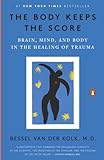
Bessel van der Kolk (born 1943) is the Dutch-American psychiatrist and trauma researcher who has spent over forty years studying the effects of trauma on the brain and body at Boston University School of Medicine and the Trauma Center in Brookline, Massachusetts. His book The Body Keeps the Score (2014) — published when he was seventy — became one of the most widely read books on trauma and mental health of the decade, consistently appearing in bestseller lists and becoming the primary reference for general readers seeking to understand what trauma is and how healing occurs.
Where to Start: The Body Keeps the Score (2014)
The essential van der Kolk — and the most comprehensive accessible account of trauma ever published for general readers. The book’s title states its central finding: the effects of trauma are not stored in narrative memory alone but in the body’s nervous system, in automatic responses, in the way muscles brace and breath changes and heartbeat accelerates in the presence of triggers that recall the original experience.
Van der Kolk draws on forty years of clinical work and neuroscience research to show what trauma does: it overwhelms the brain’s capacity to process experience, leaving fragments of sensation, emotion, and imagery that are experienced in the present as if they are happening now rather than as memories of what happened then. Standard cognitive therapies — talking about what happened, reframing how you think about it — are insufficient because trauma operates below the level of narrative: the body responds before the mind can intervene.
The book surveys the treatments that work. EMDR (Eye Movement Desensitisation and Reprocessing) — bilateral stimulation that allows traumatic memories to be reprocessed. Somatic therapies that work through the body directly. Yoga and mindfulness practices that restore the capacity to be in the body without fear. Theatre and expressive arts that provide a route to experience that bypasses verbal processing. MDMA-assisted therapy, then in clinical trials, now with established efficacy for PTSD. Van der Kolk is a polymath in his approach: he refuses to be confined to any single model.
For anyone seeking to understand trauma — their own, their patients’, their loved ones’ — The Body Keeps the Score is the essential starting point.
Why The Body Keeps the Score Is the Ideal First Book
For a reader new to Bessel van der Kolk, The Body Keeps the Score is the ideal and essential first book because it is his landmark work and the fullest expression of his influential understanding of trauma and its treatment. A leading expert on trauma, van der Kolk presents in The Body Keeps the Score his central insight, that trauma is not merely a psychological event but lives in the body, reshaping the brain and the nervous system, and that healing must therefore engage the body as well as the mind. As an entry point, it is the essential and natural place to begin, for it is his definitive work, the comprehensive and authoritative account of his understanding of trauma and the approaches to healing it. It welcomes the newcomer with its compelling insight, its accessible explanation, and its profound importance, offering a transformative understanding of trauma and its treatment. It is his landmark book and the one that best represents his work, so that the new reader encounters van der Kolk’s central understanding directly. For the newcomer interested in trauma and healing, then, The Body Keeps the Score is the natural and essential starting point.
What to Expect as a New Reader
As a new reader, you can expect The Body Keeps the Score to be a comprehensive and influential account of trauma and its treatment, presenting the understanding that trauma lives in the body as well as the mind. You can expect van der Kolk’s central insight, that trauma is not merely a psychological event but reshapes the brain, the nervous system, and the body, and that healing must therefore engage the body as well as the mind. You can expect a combination of science, clinical experience, and case studies, for van der Kolk draws on decades of research and practice to explain how trauma affects people and how it can be healed. You can expect an exploration of various approaches to healing, including those that engage the body directly. You should be aware that the book addresses difficult subject matter, the realities of trauma and its effects, handled with expertise and compassion. Expect, in short, a comprehensive and influential account of trauma and its treatment, grounded in the insight that trauma lives in the body, a transformative introduction to van der Kolk’s understanding.
Going Deeper After Your First Book
Once The Body Keeps the Score has given you van der Kolk’s understanding of trauma, the reader who wishes to go deeper can explore the wider literature on trauma, healing, and the mind-body connection to which his work is central, reading further in the light of the framework that his landmark book provides. The themes of The Body Keeps the Score, the bodily nature of trauma, the reshaping of the brain and nervous system, and the approaches to healing that engage the body, connect to a broad and growing field of trauma research and therapy, and the reader drawn to these questions can pursue them further. Reading more deeply deepens your engagement with the understanding of trauma and healing, but van der Kolk’s landmark book provides the essential, authoritative foundation. His central insight, that trauma lives in the body and that healing must engage it, underlies much contemporary understanding of trauma, and the reader who has grasped it in The Body Keeps the Score possesses the key. Building your reading journey from The Body Keeps the Score is a matter of carrying its understanding into the wider literature on trauma and healing. The reader who begins with The Body Keeps the Score will have the authoritative foundation for understanding trauma and its treatment.
Reading Bessel van der Kolk
The Body Keeps the Score is van der Kolk’s only major book and the full statement of his research and clinical experience. It stands alone; no prior reading is necessary.
For the full Bessel van der Kolk bibliography, reviews, and biography, visit the Bessel van der Kolk author page on Editors Reads.
Affiliate disclosure: Links to Amazon on this page are affiliate links. We earn a small commission at no extra cost to you.
Frequently Asked Questions
Where should I start with Bessel van der Kolk?
The Body Keeps the Score (2014) is the essential and only major book — van der Kolk's comprehensive account of trauma: what it is, what it does to the brain and body, and what approaches can help people heal. Written from forty years of clinical experience and research; one of the most important books on trauma ever published for general readers. Has been a consistent bestseller since 2014.
What is The Body Keeps the Score about?
The Body Keeps the Score presents van der Kolk's central insight: that trauma is stored not just in memory but in the body — in the nervous system, in posture and movement, in the way breath and heartbeat respond to triggers. The book examines what trauma does to the brain (particularly the amygdala and prefrontal cortex), surveys the evidence for different treatment approaches (EMDR, yoga, theatre, neurofeedback, MDMA-assisted therapy), and argues that standard talk therapy and medication are often insufficient for severe trauma. Personal case studies throughout.
Is The Body Keeps the Score appropriate for trauma survivors?
The Body Keeps the Score is widely read by trauma survivors and is genuinely helpful for understanding what has happened to them. It is also a demanding read: the case studies are specific and sometimes graphic, and readers who are actively struggling with trauma may find certain sections activating. Many therapists recommend reading it with professional support rather than alone, or reading selected chapters rather than cover to cover. It is written for both clinicians and general readers.
What should I read after The Body Keeps the Score?
After The Body Keeps the Score, readers often go to Peter Levine's Waking the Tiger (a somatic approach to trauma) or Judith Herman's Trauma and Recovery (the foundational feminist clinical text on trauma). Daniel Siegel's Interpersonal Neurobiology provides more technical depth on the brain science. For a more personal trauma memoir, Sebastian Junger's Tribe examines collective trauma and reintegration.