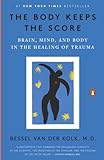
Bessel van der Kolk is a Dutch-American psychiatrist whose book The Body Keeps the Score transformed public understanding of trauma by showing how it is stored in the body as much as the mind.
Bessel van der Kolk has spent his career treating trauma — initially in Vietnam veterans, then in a broader clinical population — and The Body Keeps the Score represents the distillation of decades of research and clinical practice. Published in 2014, it spent an extraordinary number of weeks on bestseller lists as awareness of trauma and its treatment reached mainstream audiences.
The book’s central argument is that trauma is not primarily a psychological disorder in the traditional sense but a physiological one: that overwhelming experience literally alters the body’s stress response systems, the brain’s architecture, and the capacity for social connection in ways that cannot be fully addressed by talk therapy alone. Van der Kolk surveys a range of body-based treatments — EMDR, yoga, theater, neurofeedback — arguing that healing requires engaging the body as well as the mind. The clinical case studies are vivid and humanizing, and the science, though complex, is rendered accessibly.
The book has attracted significant criticism from researchers and clinicians, some of whom argue that van der Kolk overstates the certainty of some neurobiological claims and promotes treatments where the evidence base is thinner than his presentation suggests. These are legitimate concerns. The book should be read as a serious and important clinical perspective rather than as settled science. Its cultural impact has been enormous, and for many readers — particularly trauma survivors — it has been genuinely clarifying. That impact, whatever the caveats, is hard to dismiss.
Reading Guides