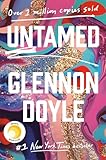
Editors Reads Verdict
Untamed is a memoir-as-manifesto that captured a specific cultural moment with remarkable precision — Doyle's aphoristic prose and uncompromising stance on self-determination resonated enormously with women who felt constrained by expectations they hadn't chosen.
What We Loved
- Doyle's aphoristic, punchy prose is distinctive and immediately quotable
- The love story at the book's center is told with genuine vulnerability
- Captures the specific experience of social conditioning and its undoing
- Many chapters work as standalone essays with complete emotional arcs
Minor Drawbacks
- The manifesto tone can feel prescriptive rather than invitational
- Doyle's framework for authenticity is not universally applicable
- Some repetition across the three-part structure
Key Takeaways
- → The version of yourself you perform for approval is not your real self
- → Conditioning begins so early that dismantling it requires active, ongoing effort
- → The question is not what you should do but what you actually want
- → Relationships built on a false version of you cannot sustain your real life
- → Trusting your own knowing is more difficult and more important than following rules
| Author | Glennon Doyle |
|---|---|
| Publisher | The Dial Press |
| Pages | 352 |
| Published | March 10, 2020 |
| Language | English |
| Genre | Memoir, Self-Help |
| Difficulty | Beginner |
| Best For | Women questioning the expectations imposed on them by family, religion, or culture, and anyone interested in memoirs about radical self-reinvention. |
How Untamed Compares
Untamed at a glance against 3 similar books readers weigh alongside it.
| Book | Author | Rating | Best for |
|---|---|---|---|
| Untamed (this book) | Glennon Doyle | ★ 4.3 | Women questioning the expectations imposed on them by family, religion, or |
| Big Magic | Elizabeth Gilbert | ★ 4.2 | Creative people wrestling with fear, perfectionism, or the belief that they |
| Daring Greatly | Brené Brown | ★ 4.3 | Readers interested in the psychology of shame and vulnerability, particularly |
| The Untethered Soul | Michael A. Singer | ★ 4.5 | Readers seeking a practical spiritual framework for working with their own mind |
The Cheetah and the Cage
Untamed opens with a scene at a zoo: a cheetah named Tabitha pacing her enclosure, trained since birth to perform tricks for crowds, having never run at full speed. Doyle uses Tabitha as her central metaphor: women are conditioned so young, so thoroughly, that they mistake the cage for their nature.
The inciting incident of Doyle’s memoir is meeting soccer star Abby Wambach at a book event — Doyle was then married to her son’s father, a man she loved but had settled into rather than chosen with full consciousness. The meeting detonated something. The memoir is the account of the detonation and what she built in its aftermath.
The Power of the Moment
Untamed was published in March 2020, went immediately to the top of the bestseller lists, and stayed there — propelled in part by the pandemic-induced circumstances that left millions of women at home with time to read and a renewed sense of the lives they were actually living. The book’s message — stop performing the self that others need you to be and start living from your own knowing — landed with particular force at a moment of enforced stillness.
Doyle’s prose style is unlike most memoirists: she writes in short, aphoristic bursts, chapters that sometimes run two pages, sentences built for Instagram shareability. Critics sometimes mistake this for shallowness. In fact, it’s a deliberate rhetorical strategy: Doyle wants her ideas to be portable, to travel with readers out of the book and into their daily lives.
The Limits of the Framework
Untamed works best as a memoir and struggles when it operates as a universal prescription. Doyle’s specific experiences — recovering from addiction, leaving a marriage, coming out, building a new family — generated the insight she shares. But that insight doesn’t always scale to lives organized around different constraints.
The book is also unapologetically binary in some of its framing: there’s a way that feels right (trusting your inner knowing) and a way that doesn’t (living for external approval). The reality of moral decision-making is messier than that. Readers who need nuance may find the framework too clean.
What It Gets Right
At its best, Untamed is a book about the specific, underacknowledged labor of becoming yourself — of noticing the ways you perform compliance, tracing their origins, and deciding which of them to keep. That project is genuinely valuable, and Doyle’s vulnerability in documenting her own version of it makes the book worth the arguments it sometimes provokes.
Doyle’s Path to Untamed
Untamed is not Glennon Doyle’s first memoir, and understanding her trajectory deepens the book. She came to public attention as a confessional blogger whose writing about addiction, bulimia, marriage, and motherhood built an enormous and intensely loyal following, and her earlier books — the bestselling Carry On, Warrior and Love Warrior — chronicled an attempt to repair a marriage damaged by her husband’s infidelity. Love Warrior was a critical and commercial success and an Oprah’s Book Club selection, and it ended on a note of hard-won reconciliation. Untamed effectively overturns that ending: the woman who had written a redemption narrative about saving her marriage falls in love with the retired soccer star Abby Wambach, leaves that marriage, and reorganizes her family around a new truth. Read against Love Warrior, this book becomes something braver and more unsettling — a public revision of a story Doyle had already told, and an argument that the earlier resolution was itself a kind of performance.
A Manifesto for Its Moment
Part of the book’s extraordinary reach owes to timing and form. Published in March 2020, just as much of the world locked down, it reached millions of readers who suddenly had the stillness to reconsider the shape of their own lives, and its message of refusing inherited expectations met that moment with unusual force. The aphoristic, chapter-as-essay structure — sentences engineered to be underlined, screenshotted, and shared — turned the book into a social phenomenon as much as a literary one, circulating widely through women’s reading communities and social media. That same quality is the source of the most common criticism: detractors find the manifesto register prescriptive and the framework too clean for the genuine messiness of moral life. Both responses are fair, and which one dominates tends to depend on what a given reader needs from the book.
Who Should Read It
Untamed speaks most directly to women questioning the expectations imposed on them by family, religion, marriage, or culture, and to readers drawn to memoirs of radical reinvention told with raw candor. It is also a meaningful book for queer readers and for anyone navigating a late-arriving recognition of their own desires. Those who prefer nuance and ambivalence to bold declaration may find its certainties grating, and it is more invitation than instruction manual despite its imperative tone. Approached as one woman’s vivid, unapologetic account of dismantling a performed self — rather than as a universal blueprint — it earns its place as one of the defining memoirs of its cultural moment.
It is also worth reading for the questions it sharpens even when it does not answer them well. Untamed presses hard on the difference between the self we construct to win approval and the self that exists beneath that performance, and it insists that the labor of telling them apart is lifelong rather than a single act of liberation. Doyle’s most resonant insight is that conditioning runs so deep and begins so early that most people mistake it for their own nature — the cheetah pacing a cage she no longer recognizes as a cage. Whether or not a reader accepts the book’s tidy resolutions, sitting with that distinction is genuinely clarifying, and it is the reason the book has stayed in conversation long after the news cycle that surrounded its release moved on.
Our rating: 4.3/5 — A culturally resonant memoir-manifesto whose aphoristic honesty and genuine vulnerability about self-reinvention made it essential reading for millions.
Frequently Asked Questions
What is "Untamed" about?
Glennon Doyle recounts how falling in love with soccer player Abby Wambach led her to question every choice she had made and learn to trust her own inner knowing.
Who should read "Untamed"?
Women questioning the expectations imposed on them by family, religion, or culture, and anyone interested in memoirs about radical self-reinvention.
What are the key takeaways from "Untamed"?
The version of yourself you perform for approval is not your real self Conditioning begins so early that dismantling it requires active, ongoing effort The question is not what you should do but what you actually want Relationships built on a false version of you cannot sustain your real life Trusting your own knowing is more difficult and more important than following rules
Is "Untamed" worth reading?
Untamed is a memoir-as-manifesto that captured a specific cultural moment with remarkable precision — Doyle's aphoristic prose and uncompromising stance on self-determination resonated enormously with women who felt constrained by expectations they hadn't chosen.
Ready to Read Untamed?
Check the current price on Amazon.
Check Price on Amazon (paid link)Prices and availability are subject to change. See Amazon for current price.
Review last updated: