Quentin Coldwater is now a king of Fillory, but restlessness drives him on a quest that leads back to Earth — while Julia's parallel story reveals how she gained her devastating magical power outside the Brakebills system. The most emotionally sophisticated volume in the Magicians trilogy.
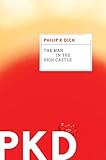
An alternate history set in an Axis-occupied America where the Allies lost WWII — Philip K. Dick's Hugo Award-winning masterwork of speculative fiction.
Gwynplaine, whose mouth was surgically carved into a permanent grin as a child by a gang called the Comprachicos, grows up as a carnival performer and discovers he is an English peer. Hugo's most melodramatic novel is also his most direct examination of disfigurement, spectacle, and the face made into a mask by forces outside the self.
Chieko, a merchant's daughter in Kyoto, discovers she has a twin sister—Naeko, who was given away and grew up in poverty in the mountains. The seasons of Kyoto (cherry blossoms, gion festival, autumn maples, winter snow) structure the novel as the two sisters negotiate whether to acknowledge each other. Kawabata's most accessible work.
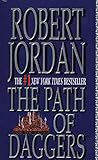
Rand's military campaign through the Westlands takes a dark turn as the One Power begins to behave strangely around him, while Egwene al'Vere leads the rebel Aes Sedai in an audacious campaign to reclaim the White Tower from Elaida.
Isabel Archer, a spirited American woman, inherits a fortune and goes to Europe seeking freedom and experience — only to make a catastrophically wrong marriage. James's defining novel is the supreme portrait of a consciousness discovering the limits of its own idealism.
On a birthday dinner that her partner misses, Irina is tempted to kiss Ramsey, a charismatic snooker player. The novel follows both paths: the life she lives if she kisses him, and the life she lives if she doesn't.
The third Cemetery of Forgotten Books novel returns to Daniel Sempere and reveals the backstory of Fermín Romero de Torres — his imprisonment in Montjuïc Castle during the early Franco years — connecting the series' mysteries to the specific historical violence of the Spanish Civil War's aftermath.
Eighteen years ago, Bel Price's mother vanished without a trace. Now a true crime documentary crew arrives to revisit the cold case — and Rachel Price suddenly reappears, alive, turning everything Bel thought she knew about her family upside down.
The direct sequel to All Quiet on the Western Front follows the surviving soldiers as they return to a Germany that has changed beyond recognition — where their sacrifice is simultaneously celebrated and disregarded, and where the civilian world has no framework for what they have seen. Remarque's second novel asks what happens after the war ends: harder to read and less celebrated than its predecessor, but in some ways more honest.
In a brutal near-future America, desperate man Ben Richards enters a televised game show where contestants are hunted across the country and killed for entertainment — and prize money his family cannot survive without.
During the Reign of Terror following the French Revolution, a mysterious English nobleman known only as the Scarlet Pimpernel leads a daring league to rescue condemned French aristocrats from the guillotine, while his wife Marguerite desperately tries to uncover his true identity.
Cal Hooper, a retired Chicago detective, buys a fixer-upper in rural Ireland seeking quiet and distance from his old life. A boy named Trey asks him to find his missing brother — and what Cal uncovers pulls him into a community with deep roots and older loyalties than he understands.
Anton Waker, who has spent years laundering documents and facilitating his family's criminal enterprises, tries to go straight by taking an office job — only to find that the past is not easily outrun. Mandel's second novel is more overtly thriller-shaped than her debut, with multiple timelines and unreliable perspectives dissolving into a portrait of complicity.
A three-week love affair between Leo Percepied and Mardou Fox, a young Black woman, in San Francisco's North Beach — narrated in the long, breath-driven sentences Kerouac developed from jazz improvisation. Written in three nights, his most formally concentrated novel.
Dejima, 1799: the Dutch trading post is the only window between Japan and the Western world. Clerk Jacob de Zoet arrives hoping to restore his family's fortune and falls in love with a Japanese midwife student. Mitchell's most disciplined novel is a masterwork of historical fiction.
Thessaloniki (Salonika) in the early twentieth century: a city of Greeks, Jews, Turks, and refugees, one of the most cosmopolitan cities in the Mediterranean. The Thread follows two families — one Greek Orthodox, one from the city's ancient Jewish community — across eight decades of fire, war, occupation, and transformation, as the city loses its plurality and becomes something more singular. Hislop's most historically ambitious novel.
Lima's Leoncio Prado Military Academy: the cadets live under brutal hierarchy, organize theft rings, and maintain codes of silence. When a cadet is killed, someone informs. The search for the informer consumes the novel. Vargas Llosa's debut—written at twenty-six—was burned publicly in Peru and made him internationally famous.
A young governess at a remote English estate becomes convinced that the children in her charge are in contact with the malevolent spirits of two dead servants.
A sequel to The Silence of the Girls, following Briseis and the Trojan women through the aftermath of the war's end as the Greeks are stranded on the beach, unable to sail home, and old wounds refuse to heal.
Athens, 1941. The German occupation begins, and with it the great famine in which hundreds of thousands of Greeks die. Themis, a young woman from a divided Athens family — some Communist, some right-wing, all suffering — lives through the occupation, the resistance, the civil war that follows, and the decades of political fracture that define 20th-century Greek history. Hislop's most politically complex novel, spanning sixty years of Greek history.
Sixteen-year-old Kaye has spent her childhood moving between cities while her mother plays small venues. Returning to New Jersey, she discovers the faerie world she glimpsed as a child is real — and she is more entangled in its politics than she ever knew. Dark, seductive, and morally complicated, Tithe established the template for Holly Black's faerie fiction.
Danny and his friends—the paisanos of Monterey's Tortilla Flat district—live outside the conventional economy, drinking wine, pursuing women, and avoiding work. Steinbeck's first commercial success structures their adventures as a mock-Arthurian legend, with Danny's house as Camelot and the paisanos as his errant knights.