African American literature is among the most vital traditions in American letters — a body of work that has reckoned with the nation's history more honestly than any other. From the towering novels of Toni Morrison and James Baldwin to a flourishing contemporary scene, these are the books that belong on every reader's shelf.
Late seventeenth-century Virginia, before race solidified into the defining hierarchy of American slavery. A small farm operated by a Dutch trader, his English wife, a Native American servant, and an enslaved African woman whose daughter Florens is given away as partial payment of a debt—an act the mother calls a mercy.
Frank Money, a Korean War veteran, is hospitalized in 1950s America, escapes, and makes his way back south to rescue his sister Cee from medical experimentation. Morrison's slimmest novel, about homecoming, brotherhood, and the specific horrors awaiting Black veterans in Jim Crow America.
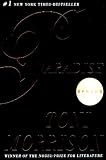
An all-Black Oklahoma town founded by freed slaves attacks a nearby convent housing women who have fled their former lives. The third novel in Morrison's Beloved trilogy, Paradise asks what happens when a community built to protect its own becomes as oppressive as the society it fled.
On a private Caribbean island, a beautiful Black model named Jadine and a mysterious stranger named Son collide—she has assimilated into white wealth, he represents something older and more dangerous. Morrison's most openly confrontational novel about race, class, and the seductions of belonging.
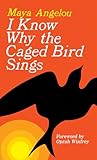
Maya Angelou's first autobiographical volume, covering her childhood in Stamps, Arkansas, her rape at eight years old, her years of traumatized silence, and her eventual recovery through literature and language.
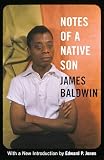
Baldwin's first essay collection, published when he was thirty-one, established him as one of the essential voices in American literature. The ten essays — including the title piece, written after his father's death during the Harlem riots — examine race in America, Black American identity in Europe, and the relationship between art and social responsibility with a clarity that has not dated.
Baldwin's first and most autobiographical novel follows fourteen-year-old John Grimes on his birthday in 1935 Harlem, moving between his stepfather's fierce Pentecostal faith and the sins and suffering that faith is meant to redeem. The novel interweaves three generations of a Black family in the American South and Harlem in prose of extraordinary lyrical power.
Tish Rivers, nineteen years old and pregnant, narrates the story of her fiancé Fonny, a sculptor falsely accused of rape and imprisoned in the Tombs. Baldwin's most tender novel is also his most explicitly political — a love story told inside an indictment of American racial injustice that is both heartbreaking and precise.
Ellison's collection of essays on literature, music, and American identity — written over twenty years — is the essential companion to Invisible Man. The essays on jazz and blues argue that African American music is the central achievement of American culture; the literary essays situate Ellison's novel within the tradition of Hemingway, Faulkner, and Dostoevsky; and the autobiographical pieces account for the Oklahoman who became one of the great American novelists.
Baldwin's sprawling novel of race, sexuality, and grief in 1950s New York begins with the suicide of jazz drummer Rufus Scott and follows the reverberations through his circle of friends — Black and white, gay and straight — as each tries to find love across the divisions that American life makes almost impossible to cross.
Hurston's collection of Southern Black folklore — gathered during fieldwork in Florida and Louisiana in the early 1930s — is both a scholarly work of anthropology and a literary performance. The tales, sayings, and voodoo practices are presented inside a frame narrative that shows how the material was collected.
Hurston's autobiography — the most unreliable and most revealing of the Harlem Renaissance — traces her childhood in Eatonville, Florida, her years studying under Franz Boas, her folk research in the South and Caribbean, and her life as a writer. Hurston revises, omits, and invents throughout; the book is most honest about what it refuses to say.
Baldwin's final novel follows gospel singer Arthur Montana through the civil rights era as narrated by his brother Hall, years after Arthur's death. It is Baldwin's most ambitious attempt to hold the full weight of Black American life — religion, sexuality, music, family, political violence — in a single narrative, and the most direct summation of everything he had written before it.
Meridian Hill, a young Black woman from Georgia, gives up her child and her education to join the civil rights movement, and spends years questioning whether violence is ever justified in the service of justice. Walker's most politically direct novel — a nonlinear account of the movement and its costs.
John Buddy Pearson, a Black man of great physical beauty and rhetorical power, becomes a Baptist preacher in Florida and cannot resist the women who desire him. Hurston's first novel — published before Their Eyes Were Watching God — uses her father's life as raw material and her folk research as language.
Tashi, the African woman who appeared briefly in The Color Purple, undergoes female genital mutilation as an act of cultural solidarity and spends the rest of her life dealing with the trauma, eventually killing the woman who performed the procedure. Walker's most confrontational novel — a direct political act about female genital cutting as a cultural and feminist issue.
A white senator who was raised as a Black child by a Black preacher in the American South is shot on the floor of the Senate and, as he lies dying, remembers his childhood with Reverend Hickman. Ellison's posthumously published second novel — assembled from forty years of manuscript — is flawed and incomplete but contains passages equal to anything in Invisible Man, and the central figure of the Black minister who raised a white child is among the most complex moral situations in American fiction.
A loose sequel to The Color Purple following several characters — including an aged spirit named Miss Lissie who remembers multiple past lives — through a meditation on African and African American history, gender, and spiritual continuity. Walker's most ambitious and most polarizing novel.
Bride, a beautiful dark-skinned young woman who has turned her blackness into a brand and a career asset, confronts her traumatic childhood—and the lie she told as a child that sent an innocent woman to prison—when her boyfriend suddenly vanishes. Morrison's final novel, set in contemporary California.
Beloved and Song of Solomon by Toni Morrison, The Fire Next Time and Go Tell It on the Mountain by James Baldwin, and Their Eyes Were Watching God by Zora Neale Hurston are foundational. Among contemporary writers, Colson Whitehead and Ta-Nehisi Coates are essential.
Their Eyes Were Watching God by Zora Neale Hurston and James Baldwin's The Fire Next Time are powerful, accessible starting points. For fiction, Toni Morrison's Beloved is the tradition's most celebrated novel.
Toni Morrison, James Baldwin, Zora Neale Hurston, Richard Wright, and Ralph Ellison form the canonical core. Among living writers, Colson Whitehead, Ta-Nehisi Coates, Jesmyn Ward, and Jacqueline Woodson are among the most acclaimed.
Disclosure: Amazon links on this page are affiliate links. If you purchase through them we earn a small commission at no extra cost to you.
We use cookies to understand how visitors use our site (Google Analytics). No data is collected until you accept.
Privacy Policy