Health psychologist Kelly McGonigal distills the science of self-control from her popular Stanford course, presenting research-based strategies for strengthening willpower and understanding why it fails.
Geneticist Adam Rutherford retells the human story through our genes. Drawing on the revolution in DNA sequencing, he explores migration, ancestry, race, and identity — debunking myths about genetic determinism and royal bloodlines while revealing how deeply and surprisingly interconnected all humans are.
The science of the human digestive tract from mouth to the other end — saliva, stomach acid, intestinal bacteria, fermentation, gas, and the specific history of what researchers have learned by investigating each component of the alimentary canal.
Steven Pinker's ambitious case against the 'blank slate' view of the mind. Marshalling evidence from genetics, neuroscience, and evolutionary psychology, Pinker argues that human nature is real and shaped by evolution — and confronts the moral and political fears that idea provokes.
Physicist Brian Greene explains superstring theory and the quest for a unified theory of everything — the attempt to reconcile quantum mechanics and general relativity in a single mathematical framework.
Science journalist Annie Murphy Paul synthesizes research showing that human cognition extends beyond the brain into body, space, and relationships — with practical implications for how we learn and think.
Richard Dawkins makes the case that belief in a personal God is not merely wrong but irrational — that the existence of any supernatural creator is a scientific hypothesis that the evidence decisively refutes, and that religion is neither necessary for morality nor harmless in its effects.
Journalist Jon Ronson tumbles down a rabbit hole into the world of psychopaths — meeting diagnosed psychopaths, the psychiatrists who identify them, the CEOs who may be among their number, and the critics who question whether the entire diagnostic enterprise makes sense. The result is a darkly funny, genuinely unsettling investigation into madness, power, and the humans who get to decide who is sane.
Neuroscientist V. S. Ramachandran's wide-ranging investigation of what makes us human. Through strange and revealing cases — phantom limbs, synesthesia, body-identity disorders — Ramachandran explores language, art, self-awareness, and consciousness, offering bold theories about the uniquely human brain.
Bill McKibben's landmark 1989 book, the first work on climate change written for a general audience. McKibben argues that human activity has so altered the atmosphere that 'nature' as an independent force has ended — a prophetic, philosophical meditation on what we have done to the planet.
Mary Roach investigates the science behind military research — the labs, researchers, and experimental programs working on problems of survival in combat. Chapters cover uniforms that resist bacteria, the acoustics of IED blasts, the psychology of diarrhea in the field, and the science of keeping soldiers alive in increasingly hostile conditions.
Steven Pinker's ambitious synthesis of cognitive science and evolutionary psychology. Drawing on both fields, he attempts to reverse-engineer the human mind — explaining vision, reasoning, emotion, relationships, and the arts as adaptations shaped by natural selection.
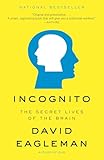
Neuroscientist David Eagleman's accessible tour of the unconscious brain. Drawing on cutting-edge research, he argues that the conscious mind is a small, often misled passenger in a brain that does most of its work below awareness — with provocative implications for selfhood, free will, and the law.
Naomi Klein's urgent case for a Green New Deal. Gathering more than a decade of her climate writing alongside new material, On Fire argues that the climate crisis demands not incremental tweaks but a transformative political and economic response equal to the scale of the emergency.
Yale psychologist Paul Bloom explores why people deliberately seek out painful, difficult, and stressful experiences — arguing that a meaningful life requires struggle, and that the pursuit of pure pleasure and comfort is a recipe for emptiness.
Hawking and co-author Leonard Mlodinow address three fundamental questions: Why is there something rather than nothing? Why do the laws of physics have the form they do? What is the nature of reality? Their answer, M-theory, generated significant controversy.