Three movements: Paul Ehrenfest's suicide, John von Neumann's life and legacy, and AlphaGo's 2016 defeat of Lee Sedol — a meditation on mathematical genius, the bomb, and what artificial intelligence means for human cognition.
A history of the cell — from its discovery in the 17th century through the present era of cellular medicine — that is simultaneously a meditation on what it means to be a body made of cells, and a tour of the frontier of medicine where cells are being engineered to cure cancer, repair organs, and rewrite genetic destiny.
Mary Roach investigates the science of sex — from the Victorian researchers who conducted the first systematic studies to modern laboratory work on arousal, anatomy, and dysfunction. She attends research sessions, interviews scientists, and reads the primary literature with the same deadpan curiosity she applies to corpses and astronauts.
The follow-up to Behave makes the full case that free will is an illusion — that every decision we make is the product of biology, environment, and history we did not choose. Sapolsky argues this should change not just our self-understanding but the moral and legal frameworks we use to judge human behavior.
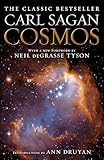
Carl Sagan's companion to his landmark PBS series explores the history of science, the nature of the universe, and humanity's place in the cosmos with breathtaking scope and lyrical prose.
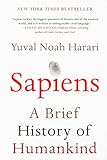
From the emergence of Homo sapiens in Africa to the 21st century, Harari traces the full sweep of human history, asking why our species conquered Earth while others failed.
Nobel Prize-winning physicist Richard Feynman's collection of outrageous, funny, and illuminating adventures — from cracking safes at Los Alamos to learning to draw, playing bongo drums, and embarrassing the censors of the Brazilian physics curriculum.
The story of Henrietta Lacks, the Black woman whose cancer cells were taken without her consent in 1951 and became the most important biological materials in modern medical history — all while her family lived in poverty and ignorance of what had been done.
Neil deGrasse Tyson's compressed guide to the greatest ideas in astrophysics — from the Big Bang to dark matter — for readers with curiosity but limited time.
Bill Bryson's comprehensive and entertaining tour through the human body — covering anatomy, physiology, the history of medicine, and the extraordinary complexity of the systems keeping us alive.
Walter Isaacson's definitive biography of Albert Einstein traces the physicist's life from his rebellious childhood to the development of the theory of relativity, his Nobel Prize, and his political activism as a refugee from Nazi Germany.
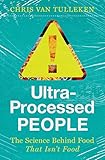
British infectious disease doctor Chris van Tulleken investigates the health effects of ultra-processed food and what the science says about why it's so difficult to stop eating it.
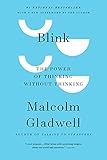
An exploration of the power of intuitive snap judgments — when they are reliable, when they fail, and how thin-slicing works in experts and everyday people.
An economist and a journalist explore the hidden side of everything — using data and economic analysis to expose unexpected truths about sumo wrestling, real estate agents, crime, and parenting.
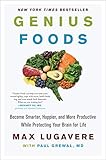
Max Lugavere presents the research on diet and brain health, identifying ten foods that improve cognitive function and protect against dementia and cognitive decline.
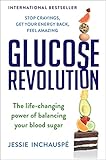
Biochemist Jessie Inchauspé explains the science of blood sugar spikes and provides ten practical hacks for flattening glucose curves without giving up the foods you love.
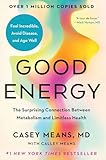
Stanford-trained surgeon Casey Means argues that mitochondrial dysfunction is the root cause of most chronic disease and presents a comprehensive lifestyle framework for optimizing metabolic health.
Theoretical physicist Carlo Rovelli's slim, lyrical introduction to modern physics. In seven short lessons, he illuminates general relativity, quantum mechanics, the architecture of the cosmos, the nature of time, and our place within it — physics rendered as poetry.
Four plants — apple, tulip, cannabis, potato — and four human desires they satisfy — sweetness, beauty, intoxication, control. Pollan inverts the usual perspective: instead of humans cultivating plants, the plants are manipulating humans to spread their genes. A new way of thinking about co-evolution.
The co-founder of DeepMind argues that AI and synthetic biology together constitute a wave of technological change so profound and so fast that the current nation-state order cannot contain it — and proposes a framework for thinking about what containment might look like.
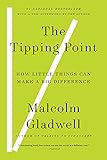
An investigation into how ideas, trends, and social behaviours spread like epidemics — reaching a tipping point where a small change triggers a massive, cascading effect.
Forester Peter Wohlleben's international bestseller revealing the secret social life of forests. Drawing on science and decades of observation, he argues that trees communicate, cooperate, support their kin, and form vast underground networks — transforming how we see the woods.
Daniel Pink synthesizes research from biology, economics, and psychology to explain when to make decisions, take breaks, and start projects for optimal performance.