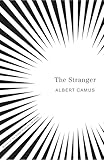
Albert Camus was a French-Algerian novelist and philosopher, Nobel laureate, and one of the defining voices of twentieth-century existentialism and absurdist thought.
Albert Camus grew up in colonial Algeria and became one of the most important French-language writers of the twentieth century. His work engages directly with what he called the absurd — the conflict between humanity’s instinct to find meaning and a universe that offers none — without resolving that tension through either nihilism or false hope. He resisted being labelled an existentialist, though his work inevitably sits in that neighborhood.
The Stranger is his most widely read novel: short, cold, and deliberately alienating, it follows Meursault, a man whose emotional detachment from his own life leads to a violent act and a trial more interested in his character than his guilt. The prose is famously flat, and that flatness is the point — the gap between the world’s indifference and society’s demand for emotional performance is where the novel lives. The Plague, more expansive and more directly allegorical, uses a bubonic outbreak in Oran to examine collective suffering, resistance, and the moral choices available to people trapped by circumstances beyond their control. Written during the German Occupation, its relevance to any era of collective crisis is hard to escape.
Camus is not always an easy read — his ideas demand engagement and his emotional register can feel remote — but the clarity of his thinking and the precision of his prose reward the effort. Few writers have looked at the human condition with as much honesty and as little comfort, and fewer still have done so with as much warmth beneath the surface.
A Philosopher of the Absurd
Albert Camus was one of the most important and influential writers and thinkers of the twentieth century, a French-Algerian novelist, essayist, and philosopher whose exploration of the absurd, rebellion, and human meaning made him a central figure of modern thought. A Nobel laureate, Camus confronted the fundamental questions of existence, the search for meaning in an indifferent universe, the proper response to suffering and injustice, with extraordinary clarity, moral seriousness, and humanity. His novels and essays, combining philosophical depth with literary artistry and a passionate commitment to human dignity, have profoundly influenced literature, philosophy, and ethical thought, and he remains one of the most widely read and admired writers of his era.
The Stranger
Camus’s most famous novel, The Stranger, is a landmark of twentieth-century literature and the work through which most readers encounter his thought. Narrated by an emotionally detached man who commits a senseless murder and confronts his own execution with strange indifference, the novel embodies Camus’s concept of the absurd, the confrontation between the human longing for meaning and the silent indifference of the universe. Written in a spare, stark style, the novel is both a gripping story and a profound philosophical statement, and its haunting protagonist and unsettling vision have made it one of the most studied and influential novels of the modern era.
The Absurd
Central to Camus’s thought is his philosophy of the absurd, which he developed most directly in his essay The Myth of Sisyphus. He argued that human beings inevitably seek meaning and order in a universe that offers none, and that this confrontation between our longing and the world’s silence is the fundamental condition of the absurd. Yet rather than despair or escape, Camus advocated facing the absurd with lucidity, defiance, and engagement, embracing life fully despite its lack of ultimate meaning. This philosophy, neither nihilistic nor falsely consoling, is at the heart of his work and a key to his enduring influence on modern thought.
Rebellion and Justice
In his later work, Camus moved from the absurd toward themes of rebellion, solidarity, and justice. His novel The Plague, an allegory of resistance to suffering and evil, and his essay The Rebel explore how human beings should respond to injustice and catastrophe, advocating engagement, compassion, and revolt against suffering rather than passive acceptance or destructive ideology. His passionate commitment to human dignity and his opposition to oppression, while resisting the absolutist ideologies of his time, reflect a profound moral seriousness. This concern with rebellion and justice, grounded in human solidarity, is a central and influential dimension of his thought.
A Moral Voice
Camus was, above all, a moral voice of extraordinary integrity and humanity. He insisted on confronting the great questions of existence honestly, without the false comforts of ideology or easy answers, and he maintained a passionate commitment to human dignity, justice, and freedom even amid the catastrophes of his century. His independence of mind, his refusal to subordinate ethics to political dogma, and his deep humanity made him a singular figure, and his Nobel Prize recognized both his literary achievement and his moral significance. This combination of philosophical depth and ethical seriousness is central to his lasting importance.
Clarity and Humanity
Camus’s writing is celebrated for its clarity, beauty, and humanity. He wrote with a luminous, precise style that made profound philosophical ideas accessible and emotionally resonant, and his work is animated by a deep love of life, the natural world, and human dignity. Even in confronting the absurd and the tragic, his writing affirms the value and beauty of existence, and his sun-drenched Algerian settings convey a sensual appreciation of life. This combination of intellectual depth with literary beauty and warm humanity gives his work its distinctive power and its broad and enduring appeal to readers across generations.
Albert Camus: Where to Start
Albert Camus’s influence on literature, philosophy, and ethical thought is immense, and his exploration of the absurd, rebellion, and human meaning continues to resonate deeply with readers. For newcomers, The Stranger is the essential starting point, with the essay The Myth of Sisyphus offering his philosophy of the absurd and The Plague his vision of rebellion and solidarity. For readers seeking fiction and thought of profound moral seriousness, philosophical depth, and luminous humanity, Albert Camus remains one of the most essential and rewarding writers of the twentieth century.
Reading Guides