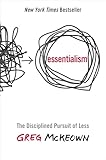
Greg McKeown is a British-American author and speaker whose book Essentialism makes a rigorous case for doing fewer things better by focusing only on what is essential.
Greg McKeown’s Essentialism, published in 2014, makes a systematic philosophical and practical argument for what he calls the disciplined pursuit of less. Where most productivity advice focuses on doing more efficiently, McKeown argues that the more fundamental problem is choosing what to do at all — that the modern professional’s tendency to say yes to everything, to accumulate commitments, and to treat all options as equally worthy of time is itself the primary obstacle to meaningful work and meaningful life.
The book’s argument is well structured and moves from philosophy to practice in a way that feels earned rather than schematic. McKeown draws on his experience coaching executives at companies including Apple, Google, and Twitter, and the examples he uses feel current rather than archaic. The central discipline he describes — asking not “what should I do?” but “what is essential?” — is a genuine reorientation, and the tools he offers for protecting time and saying no with clarity are practical.
Essentialism has been praised for its clarity and criticised for its occasionally privileged assumptions: the freedom to decline commitments and redesign one’s role is available to senior professionals in ways it simply is not to people in more constrained circumstances. McKeown largely acknowledges this without resolving it. The book can also become repetitive in its middle sections, returning to the same insight from multiple angles. But as a philosophical corrective to overcommitment, it is among the more thoughtful books in its category.
Reading Guides