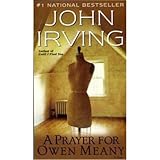
American novelist whose A Prayer for Owen Meany and The World According to Garp combine comic grotesque with genuine emotional depth in the tradition of Charles Dickens.
John Irving studied under Kurt Vonnegut and John Cheever and has described Dickens as his primary literary model, which explains a great deal about how his novels are structured: large casts, accidents that drive plot, comedy that coexists with genuine tragedy, and a deep investment in narrative as an act of memory and meaning-making. The World According to Garp, published in 1978, made him famous — a sprawling, strange, comic novel about a writer, his feminist mother, and the violence that keeps intersecting with their lives. A Prayer for Owen Meany, published in 1989, is arguably his masterpiece: a novel about belief, predestination, and sacrifice narrated by a man looking back at the friend he loved and who changed his life irrevocably.
Owen Meany is a remarkable creation — a character who is physically small, intellectually extraordinary, and spiritually convinced of his own destiny in ways that the novel earns rather than asserts. The way Irving handles the novel’s theological dimensions is unusual for American literary fiction: he takes faith seriously without either endorsing or dismissing it. The time structure, alternating between the 1950s–1960s story and the narrator’s 1987 present, generates mounting dread in a way that few novels manage.
Irving’s detractors find his work overlong, too attached to violence and shock, and insufficiently self-critical about its own darker impulses. These are fair observations about a writer who trusts his instincts to an unusual degree. At his best — in Owen Meany, in Garp — that instinct produces fiction of genuine power and range.
Reading Guides