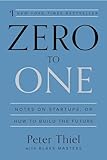
Peter Thiel is an American entrepreneur and venture capitalist whose Zero to One offers a contrarian framework for building companies that create genuinely new things.
Peter Thiel co-founded PayPal, made the first outside investment in Facebook, and has been one of Silicon Valley’s most influential — and most controversial — investors and thinkers. Zero to One (2014), co-written with Blake Masters from notes taken during Thiel’s Stanford course on startups, presents his framework for building businesses that create genuine monopolies in new markets rather than competing in existing ones. The title refers to the distinction between going from one to n (incremental improvement) and going from zero to one (creating something genuinely new).
The book’s core arguments are genuinely thought-provoking. Thiel’s case that competition is overrated — that we celebrate competition ideologically while the most successful businesses work to avoid it — is counterintuitive and well-argued. His framework for thinking about what kinds of startups have the potential to become monopolies, and the specific features (proprietary technology, network effects, economies of scale, brand) that sustain monopoly advantages, is useful for anyone thinking seriously about building a technology business. The book is short, opinionated, and confidently written.
The caveats are significant. Thiel is not merely a disinterested analyst: Zero to One is also a manifesto, and it reflects his specific worldview — libertarian, contrarian, sceptical of consensus and credentialism. Readers should be aware that Thiel’s personal politics and business practices have been sources of substantial controversy, from his funding of lawsuits against Gawker Media to his political affiliations. Engaging with the book’s business ideas does not require endorsing its author’s broader views, but it would be dishonest not to note that context. Read critically, Zero to One is one of the more genuinely original business books of the past decade.
Reading Guides