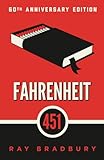
Ray Bradbury was an American author whose Fahrenheit 451 and The Martian Chronicles rank among the most celebrated works of speculative fiction in the 20th century.
Ray Bradbury was self-educated, spending years reading through his local library after deciding he could not afford university. He became one of the most beloved American writers of the twentieth century not primarily through traditional science fiction — which he often said he did not consider himself to write — but through a body of work that used the imagery and conceits of speculative fiction to explore fundamentally humanist concerns about memory, beauty, mortality, and the costs of progress. He was above all a prose stylist of unusual gifts, and his sentences have a lyrical, sometimes incantatory quality that distinguishes his work from most of what appeared alongside it in the pulp magazines where he began.
Fahrenheit 451 (1953) is his most widely read novel — a future America in which books are banned and firemen burn them, following one fireman’s awakening. The novel is more meditation than thriller: it is about the loss of ideas, of literary culture, of private inner life in a society of noise and distraction. Its diagnosis of a people who choose comfortable conformity over difficult thought has proved more durable than the literal censorship scenario suggests. The Martian Chronicles (1950), structured as a series of linked stories rather than a conventional novel, uses the colonisation of Mars as a mirror for American history — particularly the destruction of indigenous cultures — and for more intimate human themes of longing and loss.
Bradbury’s short fiction — collected in volumes including The Illustrated Man and Something Wicked This Way Comes — is where many readers find his work at its most concentrated and affecting. He was unashamed of sentimentality in a way that more modernist writers distrusted, and his best work earns the emotion it aims for. Some contemporary readers find his style overripe; others find it transporting. He is in any case an essential figure in the history of American speculative writing.
Reading Guides