Brave New World vs Fahrenheit 451: Which First?
Two 'soft' dystopias that control through pleasure and distraction rather than fear. How Huxley's and Bradbury's visions compare — and where to begin.

Brave New World and Fahrenheit 451 are usually filed alongside 1984 as the great 20th-century dystopias, but the two of them belong together more naturally than either does with Orwell. Where 1984 imagines control through fear and pain, Huxley and Bradbury imagine something subtler and, to many modern readers, more unsettling: control through pleasure and distraction.
Brave New World: a population that loves its servitude
Aldous Huxley’s Brave New World (1932) imagines a future that has solved suffering — and lost everything that gives life meaning in the process. Citizens are grown in bottles, conditioned from birth into rigid castes, kept perpetually content by the drug soma and a culture of frictionless consumption and pleasure. There is no need for a secret police, because no one wants to rebel. The horror is that everyone is happy. Huxley’s insight — that a society might enslave people by giving them exactly what they want — is one of the most influential ideas in all of dystopian fiction.
Fahrenheit 451: a culture that stops reading
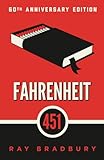
Ray Bradbury’s Fahrenheit 451 (1953) is shorter, more lyrical, and tighter in focus. In its world, firemen burn books — but the deeper catastrophe is that the public stopped reading long before the burning began, hypnotised by wall-sized screens and constant noise. Bradbury’s prose is dense with metaphor and his vision is mournful rather than clinical. It is, at heart, an elegy for attention and thought.
Which should you read first?
Read Fahrenheit 451 first if you want the shorter, more immediately moving book, or if its warning about distraction and the death of reading speaks most directly to your own sense of the present.
Read Brave New World first if you want the deeper, more influential, more analysable vision — the one whose central idea (oppression through pleasure) has shaped how we think about freedom and contentment ever since.
If you read only one, Brave New World is the more important book. But the two are genuine companions, and reading them together makes a more complete argument about how a free society might quietly stop being free — not with a boot, but with a screen.
Huxley, Orwell, and where Bradbury fits
The most useful way to place these two books is through the famous Huxley-versus-Orwell contrast. Orwell’s 1984 feared that the truth would be concealed from us and that we would be controlled by pain. Huxley feared the opposite — that the truth would be drowned in a sea of irrelevance, and that we would be controlled by our own appetites, coming to love the very things that disable our capacity to think.
Brave New World is the fullest statement of that fear. Fahrenheit 451 is its close cousin: Bradbury’s burning books are a symptom, and the disease is a public that traded reading for distraction and never looked back. Both, in other words, sit on the Huxley side of the great dystopian divide — which is exactly why they make such a natural pair, and why reading them together is more illuminating than reading either against Orwell alone.
Read next
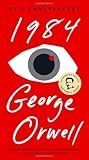
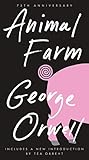
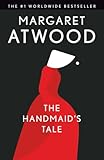
The essential third is George Orwell’s 1984, the “hard” dystopia that completes the trio, alongside his Animal Farm. For a modern dystopia in the same tradition, Margaret Atwood’s The Handmaid’s Tale is the standout. For more, see our guide to books like 1984.
Affiliate disclosure: Links on this page are affiliate links. We earn a small commission at no extra cost to you.
Frequently Asked Questions
Should I read Brave New World or Fahrenheit 451 first?
Read Fahrenheit 451 first if you want the shorter, more lyrical, more accessible book — it can be finished in an afternoon. Read Brave New World first if you want the deeper and more influential vision; it is the more substantial novel and the one whose ideas about control-through-pleasure have proven most prescient. Both are standalone, so order is a matter of how much you want to take on first.
What is the difference between Brave New World and Fahrenheit 451?
Both depict control without overt brutality, but through different means. Brave New World imagines a society pacified by engineered pleasure — genetic conditioning, the drug soma, and the elimination of want, so that people love their servitude. Fahrenheit 451 imagines a society distracted into apathy by constant entertainment, where books are burned because no one wants to read them. Huxley's people are happy; Bradbury's are merely numb.
Which is deeper, Brave New World or Fahrenheit 451?
Brave New World is generally considered the more substantial and philosophically ambitious of the two — its vision of a population that loves its own oppression is one of the most influential ideas in dystopian fiction. Fahrenheit 451 is shorter and more poetic, focused tightly on the death of reading and thought. Brave New World rewards analysis; Fahrenheit 451 rewards immersion.
How do Brave New World and Fahrenheit 451 compare to 1984?
All three are core dystopias, but 1984 is the 'hard' one — control through fear, surveillance, and pain. Brave New World and Fahrenheit 451 are the 'soft' dystopias — control through pleasure and distraction respectively. The common framing pairs Huxley against Orwell: Orwell feared a boot on the face, Huxley feared we would come to love the things that destroy our capacity to think. Fahrenheit 451 sits closer to Huxley than to Orwell.