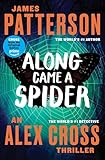
Alex Cross Books in Order: The Complete Reading Guide (2026)
Every Alex Cross novel by James Patterson in order, from Along Came a Spider to Alex Cross Must Die — with the best starting point, the standout entries, and how the recurring villains connect.
James Patterson’s Alex Cross is one of the great recurring protagonists in American thriller fiction: a forensic psychologist and Washington, D.C. detective, a Black professional in a city defined by race and power, and a devoted family man whose loved ones keep being pulled into danger. Across more than three decades and 33 novels, Cross has hunted some of the genre’s most memorable villains while trying — and usually failing — to hold on to a quiet life. This guide lays out every Alex Cross book in order, flags the standouts, and explains how the recurring nemeses connect.
All Alex Cross Books in Order
| # | Title | Year |
|---|---|---|
| 1 | Along Came a Spider | 1993 |
| 2 | Kiss the Girls | 1995 |
| 3 | Jack and Jill | 1996 |
| 4 | Cat & Mouse | 1997 |
| 5 | Pop Goes the Weasel | 1999 |
| 6 | Roses Are Red | 2000 |
| 7 | Violets Are Blue | 2001 |
| 8 | Four Blind Mice | 2002 |
| 9 | The Big Bad Wolf | 2003 |
| 10 | London Bridges | 2004 |
| 11 | Mary, Mary | 2005 |
| 12 | Cross | 2006 |
| 13 | Double Cross | 2007 |
| 14 | Cross Country | 2008 |
| 15 | Alex Cross’s Trial | 2009 |
| 16 | I, Alex Cross | 2009 |
| 17 | Cross Fire | 2010 |
| 18 | Kill Alex Cross | 2011 |
| 19 | Merry Christmas, Alex Cross | 2012 |
| 20 | Alex Cross, Run | 2013 |
| 21 | Cross My Heart | 2013 |
| 22 | Hope to Die | 2014 |
| 23 | Cross Justice | 2015 |
| 24 | Cross the Line | 2016 |
| 25 | The People vs. Alex Cross | 2017 |
| 26 | Target: Alex Cross | 2018 |
| 27 | Criss Cross | 2019 |
| 28 | Deadly Cross | 2020 |
| 29 | Fear No Evil | 2021 |
| 30 | Triple Cross | 2022 |
| 31 | Cross Down | 2023 |
| 32 | Alex Cross Must Die | 2024 |
| 33 | The House of Cross | 2024 |
These 33 novels form the complete run of the series and the natural reading project for anyone working through it. The House of Cross (2024) is the basis for the Prime Video series Cross, and Patterson shows no sign of retiring the character.
Where to Start
The answer is simple: start at the beginning, with Along Came a Spider. It introduces Cross at his most focused, sets him against the brilliant, theatrical kidnapper Gary Soneji, and establishes the short-chapter, propulsive style that became Patterson’s trademark. The opening stretch of the series — through Four Blind Mice — is widely regarded as its strongest, so beginning at the start rewards new readers almost immediately. Kiss the Girls and Pop Goes the Weasel in particular rank among the best mainstream thrillers of their era.
If you prefer to sample before committing, each Cross novel is engineered to function as a standalone. But the series rewards sequence, because Cross’s family, his relationships, and above all his recurring enemies develop across books.
The Pairs You Shouldn’t Split
A handful of Alex Cross novels are really two-part stories, and reading them out of order — or reading only the first half — robs you of the payoff:
- The Big Bad Wolf (#9) and London Bridges (#10): the hunt for the crime lord known as the Wolf begins in one and concludes in the other.
- Roses Are Red (#6) and Violets Are Blue (#7): the Mastermind arc opens on a cliffhanger and resolves in the sequel.
- Cross My Heart (#21) and Hope to Die (#22): the Thierry Mulch storyline ends Cross My Heart on a brutal cliffhanger that Hope to Die pays off.
- Triple Cross (#30) and Cross Down (#31): Triple Cross sets up the events that Cross Down — a Sampson-led entry — continues.
The Recurring Villains
Part of what binds the series together is its rogues’ gallery of returning nemeses. Gary Soneji, the kidnapper of Along Came a Spider, comes back for a vengeful second act in Cat & Mouse. Kyle Craig, the FBI-agent-turned-mastermind, drives the Roses Are Red / Violets Are Blue arc and resurfaces in Double Cross and Cross Fire. Geoffrey Shafer, the Weasel of Pop Goes the Weasel, returns for the global plot of London Bridges. Late in the series, the taunting figure known only as M — introduced in Criss Cross — becomes the new long-running threat, carrying through Deadly Cross and Fear No Evil.
The Standout Entries
Beyond the strong early run, a few books deserve special mention. Cross (#12) is the series’ most personal novel, finally confronting the unsolved murder of Cross’s wife, Maria, that had haunted every previous book. Alex Cross’s Trial (#15) is its most ambitious and surprising — a serious historical novel about Ku Klux Klan terror in 1906 Mississippi, framed as a story Cross himself wrote, in which the modern detective barely appears. Cross Justice (#23) sends Cross home to North Carolina to confront buried family secrets. And Cross Down (#31) takes the boldest structural risk of the late run, benching a wounded Cross and handing the lead to his lifelong partner, John Sampson.
How the Quality Curves
Honesty requires noting that the Alex Cross series, like most long-running franchises, is strongest at the start. The first six or seven novels are tightly plotted, psychologically rich, and anchored by unforgettable villains. The middle and later entries trend toward larger, faster, more plot-driven thrillers — national conspiracies, kidnapped presidents, globe-spanning schemes — that prize momentum over the intimate dread of the early books, and many of the later titles are co-written. That does not make them bad; Patterson’s command of pace keeps even the lesser entries readable. But readers should know that the series’ peak is its opening act, with periodic standouts — Cross, Alex Cross’s Trial, Criss Cross — punctuating the later years.
Start Your Reading Project
However you approach it, the Alex Cross series remains one of the most accessible and propulsive entry points into modern crime fiction. Begin with Along Came a Spider, keep the two-book pairs together, and let the recurring villains pull you forward. For a wider view of Patterson’s other series, see our companion guide, James Patterson Books in Order.
Frequently Asked Questions
What is the correct order to read the Alex Cross books?
Read them in publication order, starting with Along Came a Spider (1993) and ending with Alex Cross Must Die (2024). Patterson designs each novel to work as a standalone, so you can technically begin anywhere, but reading in sequence gives you Cross's full backstory, his evolving family life, and the payoffs of recurring villains like Kyle Craig, Thierry Mulch, and M. A few books form tight pairs that should not be split — The Big Bad Wolf and London Bridges, Roses Are Red and Violets Are Blue, and Cross My Heart and Hope to Die.
Where should a new reader start with Alex Cross?
Along Came a Spider is the ideal entry point. It introduces Cross at his most focused, pits him against the unforgettable kidnapper Gary Soneji, and establishes the fast, short-chapter style that defines the series. The first wave — through roughly Four Blind Mice — is widely considered the strongest run, so starting at the beginning rewards you quickly.
How many Alex Cross books are there?
There are 33 Alex Cross novels from Along Came a Spider (1993) through The House of Cross (2024), and Patterson continues to add new entries. The count includes Alex Cross's Trial, a historical novel framed as a story Cross wrote, and Cross Down, a 2023 entry co-written with Brendan DuBois that hands the lead to John Sampson. The House of Cross is the basis for the Prime Video series Cross.
Which Alex Cross books are the best?
The early run is the high point: Along Came a Spider, Kiss the Girls, Pop Goes the Weasel, and the Roses Are Red / Violets Are Blue pairing are among the strongest. Cross (2006) is the most personal, finally confronting the murder of Cross's wife, and Alex Cross's Trial is the most ambitious, a serious historical novel about Klan terror. Criss Cross introduces the intriguing latter-day nemesis M.
Do I need to read Alex Cross's Trial in sequence?
Not strictly. Alex Cross's Trial is a historical novel set in 1906, framed as a book the modern Cross wrote about his family's past, and the contemporary detective barely appears. It stands almost entirely on its own and can be read at any point, though placing it in publication order (after Cross Country) preserves the intended rhythm of the series.