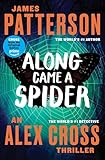
Editors Reads Verdict
Along Came a Spider introduces one of crime fiction's most enduring protagonists and established the template for the modern psychological thriller: short chapters, relentless pacing, a killer who is as interested in fame as in violence, and a detective whose analytical precision is matched by emotional depth.
What We Loved
- Alex Cross is one of crime fiction's most fully realised protagonists — analytically brilliant and genuinely human
- Patterson's short-chapter structure creates compulsive, difficult-to-stop pacing
- Gary Soneji is a genuinely unnerving antagonist whose media obsession feels ahead of its time
- The Washington DC setting is used with political and social specificity
Minor Drawbacks
- Some plot twists in the second half strain credibility under close scrutiny
- The romance subplot between Cross and Jezzie Flanagan is underdeveloped relative to the investigative material
- Secondary characters outside Cross receive limited development
Key Takeaways
- → Understanding a killer's psychology requires temporarily inhabiting their logic without endorsing it
- → Media fame has always been a motivating force for certain categories of violent crime
- → Institutional racism and economic inequality in Washington DC are as much a part of the crime landscape as any individual criminal
- → The analyst who gets closest to the killer pays the highest psychological price
| Author | James Patterson |
|---|---|
| Publisher | Little, Brown |
| Pages | 435 |
| Published | January 1, 1993 |
| Language | English |
| Genre | Thriller, Crime Fiction, Mystery, Fiction |
| Difficulty | Beginner |
| Best For | Readers new to crime fiction looking for a propulsive, character-driven entry point; fans of psychological thrillers with a recurring protagonist. |
How Along Came a Spider Compares
Along Came a Spider at a glance against 3 similar books readers weigh alongside it.
| Book | Author | Rating | Best for |
|---|---|---|---|
| Along Came a Spider (this book) | James Patterson | ★ 4.2 | Readers new to crime fiction looking for a propulsive, character-driven entry |
| Gone Girl | Gillian Flynn | ★ 4.2 | Readers who want their thrillers to also function as literary fiction and |
| Red Dragon | Thomas Harris | ★ 4.4 | Crime and thriller readers interested in the origins of the psychological |
| The Girl with the Dragon Tattoo | Stieg Larsson | ★ 4.2 | Crime and thriller readers who enjoy complex investigations, morally compelling |
Meet Alex Cross
James Patterson had published eight novels before Along Came a Spider, none of them bestsellers. This is the book that changed everything — for Patterson personally and for the crime thriller genre structurally. The short-chapter format that would become Patterson’s signature (and the template for a generation of commercial thrillers) is fully operational here: chapters rarely exceed five pages, scenes end on hooks rather than resolutions, and the reader’s impulse to continue is engineered with machine-like consistency.
At the centre of all this is Alex Cross: a Black Washington DC homicide detective with a PhD in psychology from Johns Hopkins, a widower raising two children in the Southeast DC neighbourhood where he grew up, and a mind that reads killers the way other people read books. Cross is one of the genre’s genuine achievements — a protagonist whose intellectual gifts never detach from his emotional life, whose professional brilliance is anchored in domestic love rather than in the dysfunction that crime fiction usually assigns to its great detectives.
Gary Soneji and the Performance of Evil
The antagonist of Along Came a Spider is Gary Soneji, a teacher at a prestigious private school who kidnaps two children — one the daughter of a Hollywood actress, one the son of a prominent politician — and begins a media spectacle of misdirection and taunting that anticipates the celebrity-killer culture of the internet era by a decade.
Soneji’s defining quality is his hunger for fame. He is not primarily a sadist; he is a narcissist who has chosen violent crime as the medium for his self-expression. Patterson’s decision to give Soneji interiority — chapters from his point of view that reveal the split psychology of a man who spent years suppressing his violent impulses — gives the novel more psychological texture than the genre typically provides.
Cross and the Washington DC Landscape
Patterson is unusually specific about the social geography of Washington DC in a way that enriches the novel’s moral framework. Cross lives in a neighbourhood most of his colleagues in the Metropolitan Police Department politely avoid; the kidnapping occurs in an institution most of the city’s population could never access. The tension between these worlds — the private school on one side, the public housing on the other, with Cross navigating between them — gives the novel a social dimension that straightforward crime procedurals often flatten.
The partnership between Cross and Secret Service agent Jezzie Flanagan is handled with enough ambiguity to generate narrative energy even where the romance itself is underdeveloped.
The Template for Modern Commercial Thrillers
Reading Along Came a Spider in retrospect is reading the origin document of an enormous commercial genre. The DNA of the modern thriller — the short chapters, the killer POV, the psychologist-detective, the ticking clock, the twist that recontextualises everything — is all present in its first fully developed expression. Patterson did not invent all these elements individually, but he assembled them into a machine so effective that thirty years of bestseller lists have been shaped by it.
The Engine of the Page-Turner
It is worth pausing on exactly how Patterson achieves the compulsive readability that Along Came a Spider established as a commercial standard. The short chapters are only the most visible device. Beneath them is a discipline of information management: each chapter delivers a small revelation or raises a new question, and the cut to the next scene almost always occurs at the moment of maximum uncertainty. Patterson rarely lets a scene run past its dramatic purpose. The prose is functional rather than decorative — clean, fast, transparent — which keeps the reader’s eye moving forward rather than lingering on the sentence.
This is a deliberate aesthetic, and it has costs as well as benefits. Atmosphere, interiority, and the slow accumulation of mood are largely sacrificed to momentum. But for the kind of book Patterson is writing, the trade is the right one, and Along Came a Spider makes the case for it more persuasively than most of its many imitators. The machine is built to do one thing — to make stopping difficult — and it does that thing with near-perfect efficiency.
A Detective Rooted in a Life
The reason the formula did not feel mechanical to its first readers is Alex Cross himself. Patterson surrounds the procedural with a domestic life that grounds it: Cross’s home in Southeast Washington, his grandmother Nana Mama, the two young children he is raising alone after his wife’s murder. These details do more than soften the violence; they give the detective something to protect and something to lose, which is what converts a competent thriller into one with emotional stakes. Cross’s professional gift for inhabiting a killer’s logic is balanced against a private life that keeps him recognizably human, and the tension between those two demands — the descent into another mind and the return to his own family — is the series’ real subject. That balance, present from this first outing, is why Cross outlasted the dozens of detectives who borrowed his structural blueprint but not his heart.
Our rating: 4.2/5 — The novel that launched one of crime fiction’s most compelling protagonists and established the template for the modern psychological thriller, with a villain whose media obsession feels as contemporary as ever.
The Debut of Alex Cross
Along Came a Spider introduced Alex Cross — the psychologist, homicide detective, and devoted family man who would become one of the most popular recurring characters in the modern thriller — and launched a series that has sold in the tens of millions. The novel sets the template that made James Patterson a publishing phenomenon: a compelling, principled hero pitted against a cunning and dangerous adversary, propelled by the short, punchy chapters and relentless pacing that became Patterson’s signature. Here Cross hunts a calculating kidnapper whose crimes are more complex and theatrical than they first appear, and the cat-and-mouse pursuit drives a plot built for momentum and surprise. What distinguishes Cross from many thriller heroes is his humanity — his work as a psychologist, his devotion to his family, and his moral seriousness ground the violence in real feeling — and that combination of propulsive action and a sympathetic, fully drawn protagonist is much of why the series has endured. The book delivers exactly what readers of the genre want: gripping suspense, a clever and chilling antagonist, twists that keep the pages turning, and an ending that satisfies. As the launch of one of the best-selling series in crime fiction, it is the natural starting point for readers wanting to follow Alex Cross from the beginning, and a perfect example of the addictive, fast-moving thriller that Patterson does better than almost anyone.
Reading Guides
Frequently Asked Questions
What is "Along Came a Spider" about?
DC homicide detective and forensic psychologist Alex Cross is called to investigate when a brilliant, media-obsessed killer kidnaps two children from a prestigious private school — drawing Cross into the most complex and personal case of his career.
Who should read "Along Came a Spider"?
Readers new to crime fiction looking for a propulsive, character-driven entry point; fans of psychological thrillers with a recurring protagonist.
What are the key takeaways from "Along Came a Spider"?
Understanding a killer's psychology requires temporarily inhabiting their logic without endorsing it Media fame has always been a motivating force for certain categories of violent crime Institutional racism and economic inequality in Washington DC are as much a part of the crime landscape as any individual criminal The analyst who gets closest to the killer pays the highest psychological price
Is "Along Came a Spider" worth reading?
Along Came a Spider introduces one of crime fiction's most enduring protagonists and established the template for the modern psychological thriller: short chapters, relentless pacing, a killer who is as interested in fame as in violence, and a detective whose analytical precision is matched by emotional depth.
Ready to Read Along Came a Spider?
Check the current price on Amazon.
Check Price on Amazon (paid link)Prices and availability are subject to change. See Amazon for current price.
Review last updated: