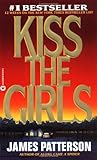
Editors Reads Verdict
Kiss the Girls raises the stakes of the Alex Cross series by making Cross's pursuit personal and by introducing a genuinely disturbing antagonist whose crimes are rooted in a psychology of possession rather than pure sadism. The introduction of Kate McTiernan as a co-protagonist gives the novel a feminist counterweight that strengthens the moral frame.
What We Loved
- The personal stakes — Cross searching for his kidnapped niece — add emotional depth to the procedural
- Kate McTiernan is a strong co-protagonist whose agency and resilience drive the novel's best sequences
- Casanova's psychology — possessive rather than purely sadistic — is more disturbing than most thriller antagonists
- The dual-killer structure, with Casanova and the Gentleman Caller operating across two coasts, creates genuine complexity
Minor Drawbacks
- The revelation of Casanova's identity strains plausibility for some readers
- The dual-killer narrative can feel overstretched in the middle section
- Patterson's spare prose style sacrifices atmosphere for pace in the novel's quieter passages
Key Takeaways
- → Possession and control are darker and more common motivations for violent crime than pure sadism
- → Survivors of violent crime carry analytical intelligence about their captors that investigators need to hear
- → Personal investment in a case can be an investigative asset as well as a liability
- → The most dangerous criminals are those who function normally in professional and social life
| Author | James Patterson |
|---|---|
| Publisher | Little, Brown |
| Pages | 484 |
| Published | June 1, 1995 |
| Language | English |
| Genre | Thriller, Crime Fiction, Mystery, Fiction |
| Difficulty | Beginner |
| Best For | Alex Cross series readers; fans of psychological thrillers with a strong female survivor character; readers who enjoy dual-timeline, dual-location investigative narratives. |
How Kiss the Girls Compares
Kiss the Girls at a glance against 3 similar books readers weigh alongside it.
| Book | Author | Rating | Best for |
|---|---|---|---|
| Kiss the Girls (this book) | James Patterson | ★ 4.2 | Alex Cross series readers |
| Along Came a Spider | James Patterson | ★ 4.2 | Readers new to crime fiction looking for a propulsive, character-driven entry |
| Red Dragon | Thomas Harris | ★ 4.4 | Crime and thriller readers interested in the origins of the psychological |
| The Silence of the Lambs | Thomas Harris | ★ 4.6 | Any serious reader of fiction |
The Personal Case
The structural innovation of Kiss the Girls within the Alex Cross series is the decision to make Cross’s niece one of Casanova’s victims. Patterson understood that the first novel established Cross as an analyst — a man who reads killers from a professional distance. This one forces him to feel the full weight of what his professional life is actually about, by putting someone he loves into the position of the victims he usually encounters only as case files.
Naomi Cross is a law student who has disappeared in North Carolina. The disappearances in the Durham area follow a pattern: young, accomplished women — students, professionals, athletes — who vanish without the forensic signatures of conventional abduction. Cross comes to believe they are being held alive, which is both more hopeful and more disturbing than the alternative.
Casanova and the Gentleman Caller
Patterson introduces two killers operating independently but in loose, competitive correspondence: Casanova on the East Coast and the Gentleman Caller in Los Angeles. The dual structure gives the novel its most unusual quality — a sense that the pathology of serial predation is not unique, not singular, but almost systemic, two expressions of the same psychology developing independently in different American cities.
Casanova is among Patterson’s most disturbing antagonists precisely because his crimes are motivated by a desire for possession rather than destruction. He wants to keep his victims, to build a world with them in it under his control. The underground compound where he holds them is a fantasy of domestic captivity — which makes it more psychologically resonant and more uncomfortable than the typical thriller’s monster.
Kate McTiernan: Survivor as Protagonist
The novel’s most significant contribution to the series is Kate McTiernan, a medical resident who escapes from Casanova’s compound and becomes Cross’s most valuable investigative resource. Kate is not a victim in the passive sense — she is intelligent, physically capable, and analytically sharp about her captor’s psychology. Her chapters give the novel a perspective that Cross cannot provide and give the narrative a feminist counterweight to the male investigator’s frame.
The dynamic between Cross and Kate — mutual respect developing through shared analytical purpose — is one of the series’ more convincing professional partnerships, grounded in what they can offer each other rather than in the romantic tension Patterson sometimes reaches for.
Raising the Series Stakes
Kiss the Girls demonstrates what the Alex Cross series can do when it uses the recurring protagonist’s personal life as a narrative resource rather than background detail. Cross is a more fully human investigator in this novel because something irreplaceable is at risk — and the climax, in which professional and personal resolution converge, earns its emotional weight through the long preparation of everything that precedes it.
Two Coasts, One Pathology
The dual-killer structure of Kiss the Girls is more than a plotting device; it carries the novel’s unsettling central idea. By setting Casanova on the East Coast against the Gentleman Caller in California, Patterson suggests that predatory violence of this kind is not a singular aberration but something closer to a recurring pattern, capable of arising independently in different places. The loose, competitive correspondence between the two killers — each aware of the other, each measuring himself against the other — turns what might have been a simple manhunt into a study of a particular psychology reproducing itself. The effect is to make the threat feel less containable, and therefore more frightening, than a single villain ever could.
Patterson manages the two strands with the cross-cutting technique the series had by now made its signature, though the structure does strain in the middle stretches, where the geographic split occasionally dilutes the tension rather than doubling it. The pay-off, when the relationship between the two killers becomes clear, justifies most of the patience it asks for.
The Survivor Who Refuses the Victim’s Role
The novel’s most durable contribution is Kate McTiernan. Patterson is sometimes faulted, with reason, for thin secondary characters, but Kate is a genuine exception. A physician with the physical training and analytical composure to escape Casanova’s compound and then to assist in the hunt for him, she is written as an agent rather than an object — the rare thriller character who has survived a captor and emerges not merely traumatized but useful, carrying first-hand intelligence about her abductor that no investigator could otherwise obtain. Her partnership with Cross is built on professional respect rather than the romantic charge Patterson sometimes reaches for, and the novel is stronger for that restraint. Kate’s chapters give Kiss the Girls a second center of gravity, a perspective from inside the ordeal that the investigating detective, however gifted, can never fully supply.
A Darker Register
Kiss the Girls is a notably darker entry than the novel that preceded it, and the darkness is purposeful. Where the first Alex Cross book filtered its horror partly through Cross’s professional distance, this one collapses that distance by making the central crime a matter of captivity rather than murder — victims kept alive, held, controlled, in a fantasy of domination that the reader is made to contemplate at length. Casanova’s pathology of possession is in some ways more disturbing than simple violence precisely because it is harder to look away from: it is not a single terrible act but an ongoing condition of cruelty.
By making Cross’s own niece one of the captives, Patterson ensures that the detective cannot retreat into analysis. He is forced to feel, throughout, the full weight of what his profession usually lets him observe from a safe remove. The novel is the series learning that its recurring hero is most compelling when the case reaches into his own life — a lesson Patterson would return to repeatedly, but rarely with more effect than here.
Our rating: 4.2/5 — A thriller that deepens the Alex Cross series by making the investigation personal, and introduces a memorable antagonist whose psychology of possession is more unsettling than simple violence.
Reading Guides
Frequently Asked Questions
What is "Kiss the Girls" about?
Alex Cross races to find a serial kidnapper called Casanova who keeps intelligent, accomplished women as captives in an underground harem — while simultaneously discovering that his own niece Naomi has become one of Casanova's victims.
Who should read "Kiss the Girls"?
Alex Cross series readers; fans of psychological thrillers with a strong female survivor character; readers who enjoy dual-timeline, dual-location investigative narratives.
What are the key takeaways from "Kiss the Girls"?
Possession and control are darker and more common motivations for violent crime than pure sadism Survivors of violent crime carry analytical intelligence about their captors that investigators need to hear Personal investment in a case can be an investigative asset as well as a liability The most dangerous criminals are those who function normally in professional and social life
Is "Kiss the Girls" worth reading?
Kiss the Girls raises the stakes of the Alex Cross series by making Cross's pursuit personal and by introducing a genuinely disturbing antagonist whose crimes are rooted in a psychology of possession rather than pure sadism. The introduction of Kate McTiernan as a co-protagonist gives the novel a feminist counterweight that strengthens the moral frame.
Ready to Read Kiss the Girls?
Check the current price on Amazon.
Check Price on Amazon (paid link)Prices and availability are subject to change. See Amazon for current price.
Review last updated: