Best Books Set in Ireland: Essential Irish Fiction
The best books set in Ireland — from Ulysses and Dubliners to Normal People and Milkman. The essential Irish fiction reading list for every kind of reader.

Irish literature is one of the richest in the English-speaking world — disproportionately productive given the island’s size, and consistently engaged with questions of identity, history, and the relationship between private life and political violence. Dublin in particular has been one of the great literary cities since Joyce made it the subject of the first modern novel.
The Foundational Works
Dubliners — James Joyce (1914)
The essential starting point for Irish fiction — fifteen stories about Dublin life at the turn of the twentieth century, from childhood (“The Sisters,” “Araby”) through adolescence and maturity to “The Dead,” which is arguably the finest short story in the English language. Joyce’s method — the epiphany, the moment of revelation that illuminates an entire life — invented the modern short story and set the terms for almost everything that followed in the form.
Essential reading not only as Irish literature but as the founding document of modernist fiction.
A Portrait of the Artist as a Young Man — James Joyce (1916)
Joyce’s autobiographical novel of Stephen Dedalus — growing up Catholic in Dublin, experiencing the crisis of faith that will define his life, and forming the artistic identity that will eventually take him out of Ireland. The novel’s style changes as Stephen grows, beginning in the fragmented language of early childhood and arriving at the lucid, controlled prose of his mature voice. The final sections — the famous villanelle, the decision to leave Ireland — are among the most important statements in modernist literature about the artist’s relationship to national and religious tradition.
Contemporary Irish Fiction
Normal People — Sally Rooney (2018)
The most widely read contemporary Irish novel — a quiet study of a complicated relationship between Connell and Marianne, two teenagers from County Cork, through their final year of school and four years at Trinity College Dublin. The novel is about class (Connell is popular and working-class; Marianne is unpopular and wealthy) and about the specific ways two people who are right for each other can fail to stay together. Rooney’s prose is deliberately controlled, her dialogue unnervingly accurate, and the book is harder to put down than its understated style suggests.
Milkman — Anna Burns (2018)
The Booker Prize winner — a formally extraordinary novel set in Belfast during the Troubles. The narrator (unnamed) is being stalked by a paramilitary figure; her community’s enforced silence about everything that happens around them shapes the novel’s oblique, pressurised style. Burns’s achievement is to make the reader feel the psychological effect of living in a community where nothing can be said directly, where everyone is watching, and where compliance with violence is the price of survival.
Conversations with Friends — Sally Rooney (2017)
Rooney’s debut — the relationship between Frances, a twenty-one-year-old Trinity student, and Nick, a married actor, told through Frances’s precise and slightly detached narration. Like Normal People, it is about class, desire, and the difficulty of honesty between people who are supposed to be sophisticated and self-aware. Set in Dublin and France, it is the better entry point to Rooney’s work for readers who prefer a cooler emotional temperature.
The Short Fiction
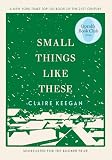
Small Things Like These — Claire Keegan (2021)
A novella set in 1985 in a small Irish town — a coal merchant who discovers, in the weeks before Christmas, that the local convent is operating a Magdalene laundry: an institution that confined “fallen” women (unmarried mothers, victims of abuse) to unpaid labour under the Church’s supervision. What Keegan achieves in 120 pages — the specific texture of small-town Catholic Ireland, the cost of knowing something that conflicts with social survival, the possibility of one small act of courage — is extraordinary.
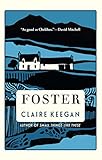
Foster — Claire Keegan (2010)
Keegan’s earlier novella — a girl sent to spend the summer with distant relatives, the care she receives there, and what she understands about adult grief. Under 100 pages, perfect in form. The best introduction to Keegan’s work.
The Irish Voice
There is a quality often called “the Irish voice” — a distinctive relationship to language, to storytelling, and to the rhythms of speech — that runs through the literature of Ireland and helps explain why so small a country has produced so extraordinary a body of writing. The Irish literary tradition is famous out of all proportion to the island’s size, and much of its power derives from a particular verbal genius: a love of language for its own sake, a gift for the cadence and music of the spoken word, a tradition of oral storytelling that has fed directly into the written, and a wit that can turn from the comic to the devastating in a single sentence. This voice is audible across the tradition, in the talk that fills Irish fiction, in the precision and beauty of the prose, in the way ordinary speech is rendered with an attentiveness that makes it sing. The historical roots of this verbal richness are complex, bound up with the tension between English and the Irish language, with a culture in which talk and story held central importance, and with a people who turned to words as one of the few resources available under difficult circumstances. Whatever its sources, the result is a literature unusually alive to language, in which how something is said matters as much as what is said, and in which the sheer pleasure of the prose is a constant reward. To read Irish fiction is to encounter this voice — supple, musical, witty, and precise — and to understand why Ireland has given the world a procession of writers far exceeding what its population would predict. The voice is the tradition’s signature, and it is among the deepest pleasures these books afford.
Small Places, Large Lives
Much of the greatest Irish fiction is set in small places — a provincial town, a rural townland, a single family’s house — and yet it achieves a largeness of human meaning that belies the modesty of its settings. This is one of the tradition’s characteristic strengths: the capacity to find, in the closely observed life of a small community or a single ordinary person, the full range and depth of human experience. Irish writers have repeatedly demonstrated that universality is reached not by expanding the canvas but by deepening the attention, that the entire drama of love, ambition, disappointment, faith, and mortality can be enacted within the confines of a small town as completely as on any larger stage. The constraint of the small setting becomes a source of intensity, concentrating the human material and forcing a fineness of observation that a broader scope might dissipate. These books take seriously the inner lives of people whom a less attentive literature might overlook — the rural and the provincial, the ordinary and the unremarked — and discover in them complexity, dignity, and significance. The small Irish community, with its dense web of relationships, its long memories, its pressures of conformity and its possibilities of connection, proves an ideal microcosm for examining how people live, what binds and divides them, and how the largest questions of existence play out in the texture of unexceptional lives. This attention to the small and the local, far from limiting the fiction, is the very means by which it reaches the universal, and it accounts for the peculiar power of Irish writing to make a single town or family stand for the whole of human life.
From Joyce to the New Irish Fiction
The Irish literary tradition is marked by a fascinating relationship between its towering past and its vital present, between the giants of the early twentieth century and the remarkable generation of contemporary writers carrying the tradition forward. Joyce above all looms over everything that follows, his revolutionary achievement at once an inspiration and a daunting inheritance for those who came after, and the modernist generation he belonged to established Irish writing at the very center of world literature. Yet rather than being paralyzed by this monumental past, contemporary Irish fiction has flourished, producing a new wave of writers who have found fresh subjects, voices, and forms while remaining recognizably part of the same tradition. This continuity-with-renewal is one of the most striking features of Irish literature: the new writers inherit the tradition’s verbal richness, its attention to ordinary life, its preoccupation with family, community, and the weight of the past, but they bring these inherited concerns to bear on a transformed Ireland — more secular, more prosperous, more connected to the wider world, reckoning with new social realities even as the old ones persist beneath the surface. The result is a literature in living conversation with its own history, neither trapped by its great predecessors nor severed from them. Reading across the tradition, from the foundational works to the contemporary, one sees both how much has changed and how much endures, how the concerns and the voice of Irish writing persist through generations even as each generation remakes them for its own moment. This combination of deep roots and continual renewal is what keeps the tradition vital, and it ensures that Irish fiction remains, generation after generation, among the most rewarding in the English-speaking world.
Reading Order
Start accessible: Normal People → Foster → Small Things Like These.
Joyce introduction: Dubliners → A Portrait of the Artist → Ulysses (much later).
Contemporary: Normal People → Conversations with Friends → Milkman.
Frequently Asked Questions
What is the best book set in Ireland?
Dubliners by James Joyce is the essential starting point — fifteen stories about Dublin life at the turn of the twentieth century that invented the modern short story form and remain the finest literary portrait of the city. Normal People by Sally Rooney is the most widely read contemporary Irish novel — its account of a complicated relationship between two Cork teenagers is also a study of class and social performance in contemporary Ireland. Milkman by Anna Burns won the Booker Prize for its account of life in Belfast during the Troubles, narrated in an extraordinary unnamed voice.
What is Milkman about?
Milkman (2018) by Anna Burns won the Booker Prize and is set in Belfast during the Troubles — specifically in a Catholic community under IRA control. The narrator, a teenage girl known only as 'middle sister,' is being stalked by a paramilitary figure known as the Milkman. Burns writes in an unnamed, indirect style that mirrors the community's enforced silence — nothing is named, everything is referred to obliquely — and the result is one of the most formally original accounts of life under political violence in recent fiction.
What is Foster by Claire Keegan about?
Foster (2010) — published as a standalone novella after appearing in The New Yorker — follows a young girl sent to spend a summer with distant relatives while her parents deal with a new baby and financial trouble. At the Kinsellas' farm in Wexford, she experiences a kind of care and quiet that her own home does not offer. Keegan's novella is about what children observe of adult grief and kindness, about what is never said between people who care for each other, and about the specific texture of Irish rural life in the 1970s. At under 100 pages, it is one of the finest short fictions of the century.
Is Ulysses set in Dublin?
Yes — Ulysses (1922) by James Joyce is set almost entirely in Dublin on a single day, 16 June 1904 (now celebrated as Bloomsday). Leopold Bloom, an advertising salesman, moves through the city over the course of eighteen hours, and Joyce maps his movements against the structure of Homer's Odyssey. Dublin is not merely a setting but a character — the novel is a portrait of a city at a specific historical moment, rendered in such detail that Joyce famously claimed Dublin could be reconstructed from its pages alone. It is one of the most demanding novels in the language.