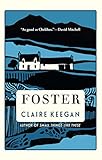
Editors Reads Verdict
One of the most quietly devastating works of Irish fiction in the past fifty years. In 89 pages, Keegan renders a summer, a child, and the nature of love with a precision that most novelists cannot achieve in three times the length.
What We Loved
- 89 pages of absolute literary precision — the economy is extraordinary
- The child's first-person voice is rendered with total authenticity
- The contrast between the narrator's home and the Kinsellas' home is handled with remarkable subtlety
- The ending is perfectly calibrated — devastating without being manipulative
Minor Drawbacks
- At 89 pages it requires pairing with other work for readers wanting a sustained reading experience
- The rural Irish 1970s setting may require some contextual knowledge for non-Irish readers
Key Takeaways
- → Care and love are not the same thing — the absence of the latter defines the narrator's home
- → A child's capacity for silence and observation is itself a form of understanding
- → The rural Irish summer is rendered as both ordinary and luminous
| Author | Claire Keegan |
|---|---|
| Publisher | Grove Press |
| Pages | 89 |
| Published | September 2, 2010 |
| Language | English |
| Genre | Literary Fiction, Irish Literature, Coming of Age |
| Difficulty | Intermediate |
| Best For | Readers of literary fiction, Irish fiction, and short-form narrative. Often paired with Small Things Like These as a two-work introduction to Keegan. |
How Foster Compares
Foster at a glance against 3 similar books readers weigh alongside it.
| Book | Author | Rating | Best for |
|---|---|---|---|
| Foster (this book) | Claire Keegan | ★ 4.3 | Readers of literary fiction, Irish fiction, and short-form narrative |
| Normal People | Sally Rooney | ★ 4.1 | Literary fiction readers interested in contemporary Irish society, millennial |
| Small Things Like These | Claire Keegan | ★ 4.4 | Readers of literary fiction, Irish fiction, and anyone interested in the |
| So Late in the Day | Claire Keegan | ★ 4.0 | Existing Keegan readers and fans of her New Yorker work |
Foster is a novella published first in The New Yorker in 2010 and then as a standalone book by Faber & Faber. It is narrated by a young girl — never named — who is left for the summer with the Kinsellas, relatives of her father, while her mother is expecting another child. The Kinsellas are childless. They live carefully and quietly. They feed the narrator, talk to her, listen to her, take her to the sea. These ordinary attentions are extraordinary to a child who has not experienced them before.
Keegan tells the story entirely from the child’s perspective, and the child’s perspective is one of pure observation — she records what she sees and hears without fully understanding its implications. The reader, however, understands. What the novella describes, underneath its quiet surface, is a child experiencing for the first time what it feels like to be wanted.
The contrast between the Kinsellas’ household and the narrator’s home is never stated directly. Keegan trusts the reader to feel it. The narrator does not complain about her parents. She does not analyse the difference between her two summers. She simply lives in each one, and the reader does the work.
Foster was longlisted for the International IMPAC Dublin Literary Award and was recognised across the literary press as a work of rare accomplishment. It is routinely taught in university literature courses as an example of what short fiction at the highest level can achieve. For readers new to Keegan, it is the right place to start — it can be read in two hours and will justify the longer commitment that Small Things Like These requires.
What Distinguishes This Book
Among the qualities that set Foster apart: 89 pages of absolute literary precision — the economy is extraordinary; The child’s first-person voice is rendered with total authenticity; The contrast between the narrator’s home and the Kinsellas’ home is handled with remarkable subtlety; and The ending is perfectly calibrated — devastating without being manipulative. These strengths are evident from the first pages and sustain across the whole work.
Themes
The thematic concerns of Foster give it weight beyond its surface narrative. Care and love are not the same thing — the absence of the latter defines the narrator’s home. A child’s capacity for silence and observation is itself a form of understanding. The rural Irish summer is rendered as both ordinary and luminous. These ideas emerge from the texture of the work rather than explicit statement, which is the mark of ambitious fiction done well.
The Writing
Claire Keegan’s prose in Foster is the vehicle through which the book’s ideas travel. The style is calibrated to the subject — neither more ornate nor more stripped-down than the material requires. This kind of precision is less common than it appears, and it is one of the reasons the book repays re-reading: there is more in each page than a single pass recovers.
Limitations
At 89 pages it requires pairing with other work for readers wanting a sustained reading experience. The rural Irish 1970s setting may require some contextual knowledge for non-Irish readers. These are worth knowing before starting, though they are unlikely to diminish the experience for the readers the book is written for.
Who This Is For
Readers of literary fiction, Irish fiction, and short-form narrative. Often paired with Small Things Like These as a two-work introduction to Keegan.
Final Verdict
Our rating: 4.3/5 — One of the most quietly devastating works of Irish fiction in the past fifty years. In 89 pages, Keegan renders a summer, a child, and the nature of love with a precision that most novelists cannot achieve in three times the length.
Enormous Power in Few Pages
Foster is barely a hundred pages long, and that compression is central to its art. Claire Keegan tells the story of a young girl sent one summer to live with distant relatives in rural Ireland, and in the quiet accumulation of small, exactly observed moments she builds an emotional force out of all proportion to the book’s length. Nothing is wasted; every detail of the girl’s experience in this warmer, more attentive household — so different from her own neglectful, overcrowded home — carries weight, and the reader feels the child’s slow, wary opening to love with an intensity that longer novels rarely achieve.
The Eloquence of the Unsaid
Keegan’s defining gift is restraint. The novel is narrated by the girl in spare, plain language, and its deepest emotions live in what is left unspoken — the things the adults do not say, the kindnesses offered without comment, the grief that hovers at the edges of the foster family’s warmth. Keegan trusts her reader to feel what she does not state, and the famous final moment of the book lands with devastating power precisely because she withholds explanation. It is a masterclass in how much can be conveyed through implication and silence.
A Story About Care
At its heart Foster is about the difference that being properly cared for makes to a child, and about the quiet tragedy of a girl who discovers, in someone else’s home, the attention she has been missing in her own. Keegan handles this without sentimentality, and the contrast between the two households is drawn with precision rather than melodrama. The result is a story that is tender without being soft, and devastating without ever raising its voice.
Why to Read It
Foster is the ideal introduction to one of the finest prose stylists writing today — a perfect, complete, and deeply moving work that can be read in a single sitting and remembered for years. It rewards the reader who values economy, precision, and emotional depth over length and incident, and it demonstrates how much a genuinely great writer can achieve in the smallest possible space. For readers new to Keegan, it is the natural place to begin, and a quiet, luminous reminder of what the short form can do.
Frequently Asked Questions
What is "Foster" about?
A young girl is sent to spend the summer with relatives in rural County Wexford, Ireland, in the 1970s, and discovers for the first time what it means to be cared for unconditionally.
Who should read "Foster"?
Readers of literary fiction, Irish fiction, and short-form narrative. Often paired with Small Things Like These as a two-work introduction to Keegan.
What are the key takeaways from "Foster"?
Care and love are not the same thing — the absence of the latter defines the narrator's home A child's capacity for silence and observation is itself a form of understanding The rural Irish summer is rendered as both ordinary and luminous
Is "Foster" worth reading?
One of the most quietly devastating works of Irish fiction in the past fifty years. In 89 pages, Keegan renders a summer, a child, and the nature of love with a precision that most novelists cannot achieve in three times the length.
Ready to Read Foster?
Check the current price on Amazon.
Check Price on Amazon (paid link)Prices and availability are subject to change. See Amazon for current price.
Review last updated: