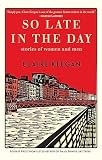
Editors Reads Verdict
Sharper and colder than her other work, So Late in the Day reveals a different register of Keegan's talent — her capacity for controlled anger. The title story is one of the finest short stories published in this decade.
What We Loved
- The title story is a masterclass in controlled narrative — a man's dismissal of a woman told through his own obliviousness
- Keegan's prose remains as economical and precise as in her longer novellas
- The three stories work independently and in dialogue with each other
Minor Drawbacks
- Shorter even than her novellas — reads in under two hours
- The emotional register is colder and less accessible than Foster or Small Things Like These
- Readers expecting the warmth of Foster may find the moral universe here more unsettling
Key Takeaways
- → The distance between men and women is often not a failure of communication but a failure of care
- → Obliviousness in relationships is not innocent — it is a choice that has consequences
| Author | Claire Keegan |
|---|---|
| Publisher | Grove Press |
| Pages | 112 |
| Published | September 5, 2023 |
| Language | English |
| Genre | Literary Fiction, Short Stories, Irish Literature |
| Difficulty | Intermediate |
| Best For | Existing Keegan readers and fans of her New Yorker work. Best read after Foster and Small Things Like These. |
How So Late in the Day Compares
So Late in the Day at a glance against 3 similar books readers weigh alongside it.
| Book | Author | Rating | Best for |
|---|---|---|---|
| So Late in the Day (this book) | Claire Keegan | ★ 4.0 | Existing Keegan readers and fans of her New Yorker work |
| Foster | Claire Keegan | ★ 4.3 | Readers of literary fiction, Irish fiction, and short-form narrative |
| Small Things Like These | Claire Keegan | ★ 4.4 | Readers of literary fiction, Irish fiction, and anyone interested in the |
| The New Yorker Stories | Ann Beattie | ★ 4.0 | Readers of literary short fiction who appreciate spare, observational, |
So Late in the Day collects three stories, the centrepiece of which is the title story, first published in The New Yorker. Where Foster and Small Things Like These are built around protagonists whose fundamental decency is tested by external circumstances, the stories in So Late in the Day are built around a different kind of subject: the failure of that decency in intimate relationships between men and women.
The title story follows Cathal, a man who has just been left by a woman he was going to marry. Over the course of an afternoon and evening, his consciousness unfolds what happened and why — and the gap between what Cathal thinks he understands about the relationship and what the reader understands is Keegan’s subject. It is a technically precise story about a very particular kind of masculine blindness, and it is genuinely unsettling.
The collection is the slimmest of Keegan’s books and the least approachable as a first introduction to her work. Readers new to Keegan should start with Foster or Small Things Like These — both are more immediately emotional and more immediately rewarding. So Late in the Day is best understood as a counterpoint: the same formal precision applied to a colder and more uncomfortable set of questions. Together, the three books represent the full range of what Keegan does.
What Distinguishes This Book
Among the qualities that set So Late in the Day apart: The title story is a masterclass in controlled narrative — a man’s dismissal of a woman told through his own obliviousness; Keegan’s prose remains as economical and precise as in her longer novellas; and The three stories work independently and in dialogue with each other. These strengths are evident from the first pages and sustain across the whole work.
Themes
The thematic concerns of So Late in the Day give it weight beyond its surface narrative. The distance between men and women is often not a failure of communication but a failure of care. Obliviousness in relationships is not innocent — it is a choice that has consequences. These ideas emerge from the texture of the work rather than explicit statement, which is the mark of ambitious fiction done well.
The Writing
Claire Keegan’s prose in So Late in the Day is the vehicle through which the book’s ideas travel. The style is calibrated to the subject — neither more ornate nor more stripped-down than the material requires. This kind of precision is less common than it appears, and it is one of the reasons the book repays re-reading: there is more in each page than a single pass recovers.
Limitations
Shorter even than her novellas — reads in under two hours. The emotional register is colder and less accessible than Foster or Small Things Like These. Readers expecting the warmth of Foster may find the moral universe here more unsettling. These are worth knowing before starting, though they are unlikely to diminish the experience for the readers the book is written for.
Who This Is For
Existing Keegan readers and fans of her New Yorker work. Best read after Foster and Small Things Like These.
Final Verdict
Our rating: 4.0/5 — Sharper and colder than her other work, So Late in the Day reveals a different register of Keegan’s talent — her capacity for controlled anger. The title story is one of the finest short stories published in this decade.
Enormous Weight in a Small Space
So Late in the Day confirms Claire Keegan as one of the finest short-form writers at work today. Like her other celebrated short fiction, it achieves an emotional and moral force out of all proportion to its brevity, telling its story in spare, precise, exactly chosen prose where nothing is wasted. Keegan trusts implication over explanation and silence over statement, and the result is a piece that can be read in a sitting yet lingers and unsettles long afterward. Her economy is not a limitation but a mastery — the deliberate art of saying a great deal with very little.
A Quietly Devastating Subject
The story examines a man and the failure of a relationship, and through his perspective Keegan offers a subtle, unsparing study of misogyny, meanness of spirit, and the small choices that close a life down. What might in another writer’s hands become a polemic is instead a precise, character-driven portrait, and the indictment is all the sharper for being delivered through observation rather than argument. Keegan lets the reader draw the conclusions, and the quiet accumulation of detail makes the final understanding land with real force.
The Power of Restraint
As always with Keegan, the deepest meanings live in what is not said — in the gaps, the withheld feelings, the things the characters cannot or will not acknowledge. Her restraint is the source of her power, and it asks an active reader, one willing to feel the weight of the unspoken. This is fiction of great control and subtlety, and it rewards close, attentive reading rather than a search for incident.
Why to Read It
So Late in the Day is a perfect introduction to Keegan’s art for readers who value precision, economy, and emotional depth over length, and a fine companion to her other acclaimed short works. It demonstrates how much a genuinely great writer can achieve in the smallest possible space, and it leaves behind a sharp, uncomfortable, and lasting impression. For readers new to one of the most admired prose stylists of her generation, it is a brief but indelible place to begin.
Frequently Asked Questions
What is "So Late in the Day" about?
Three stories — the title story originally published in The New Yorker — examining the space between men and women: what they want from each other, what they withhold, and what the distance costs.
Who should read "So Late in the Day"?
Existing Keegan readers and fans of her New Yorker work. Best read after Foster and Small Things Like These.
What are the key takeaways from "So Late in the Day"?
The distance between men and women is often not a failure of communication but a failure of care Obliviousness in relationships is not innocent — it is a choice that has consequences
Is "So Late in the Day" worth reading?
Sharper and colder than her other work, So Late in the Day reveals a different register of Keegan's talent — her capacity for controlled anger. The title story is one of the finest short stories published in this decade.
Ready to Read So Late in the Day?
Check the current price on Amazon.
Check Price on Amazon (paid link)Prices and availability are subject to change. See Amazon for current price.
Review last updated: