Best Campus Novels: Essential Academic Fiction
The best campus novels — from The Secret History and Stoner to The Marriage Plot and Wonder Boys. Essential academic fiction set in universities and colleges.

The campus novel — fiction set in universities and colleges — is one of the most durable subgenres in English-language fiction. It exploits the specific conditions of academic life: enclosed communities with their own hierarchies and rituals, the collision of intellectual idealism and social reality, the particular intensity of friendships and loves formed between people who are still becoming themselves. The novels below are the essential reading.
The Essential Campus Novels
The Secret History — Donna Tartt (1992)
The most gripping campus novel of the past thirty years — Richard Papen’s admission to an exclusive Greek tutorial group at a small Vermont college, and the murder that follows from the group’s conviction that their intellectual superiority exempts them from ordinary moral constraints. Tartt’s novel works as a thriller (we know from the first page that Bunny is dead; the pleasure is in discovering why) and as a portrait of the seductions of elite academic culture: the beautiful teacher, the rarefied intellectual world, the contempt for mainstream life.
Stoner — John Williams (1965)
The quietest and most serious campus novel — William Stoner’s entire life as a Missouri English professor, from his discovery of literature as a student to his death. Williams’s prose is precise and controlled; the novel’s argument is that a life of intellectual devotion — even one that produces no great achievement, that is marked by failure in marriage and professional conflict and missed opportunities — has its own dignity. Rediscovered after decades of obscurity, it is now recognised as one of the great American novels.
The Early Twentieth Century
This Side of Paradise — F. Scott Fitzgerald (1920)
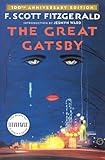
Fitzgerald’s first novel — Amory Blaine at Princeton, then in New York, discovering that his belief in his own exceptionalism is insufficient armour against the world’s indifference. The most directly autobiographical of Fitzgerald’s novels and the most immediate account of the specific atmosphere of elite American university culture in the early twentieth century.
Contemporary Academic Fiction
The Marriage Plot — Jeffrey Eugenides (2011)
Three Brown University students in the early 1980s — Madeleine’s Victorian novel thesis, Leonard’s bipolar disorder, Mitchell’s religious seeking — and what happens to them in the years after graduation. Eugenides is interested in the specific intellectual culture of his period (deconstruction, Roland Barthes, the question of whether the marriage plot still works) and in the gap between the ideas people study and the lives they actually live.
Wonder Boys — Michael Chabon (1995)
Grady Tripp, a creative writing professor who has been working on his second novel for years and cannot finish it, has a series of disastrous weekend adventures involving his pregnant girlfriend, his student (a brilliantly strange boy who may be a genius), and an accidental death. Chabon’s novel is the most comic on this list and the most accurate portrait of the specific midcareer academic’s predicament: the gap between what you intended to accomplish and what you have.
Why the Campus Works So Well as a Setting
The durability of the campus novel is no accident; the university is one of fiction’s most productive settings precisely because it concentrates the conditions that drama requires. It is an enclosed world with its own elaborate hierarchies, rituals, and codes — a hothouse in which ordinary social tensions are intensified and made visible. It throws together people at a uniquely volatile moment: students still in the process of becoming themselves, forming friendships and loves of an intensity rarely matched later in life, colliding with the realities that will shape who they turn out to be. And it stages a perpetual confrontation between ideas and life — between the lofty intellectual idealism the institution professes and the petty ambition, envy, desire, and compromise that actually govern its inhabitants. This last tension is the genre’s deepest vein. The campus is a place dedicated to the life of the mind, and the comedy and tragedy of campus fiction both arise from the endless gap between that high purpose and the human animals pursuing it. Tartt’s students believe their intellectual refinement places them beyond morality; Chabon’s professor cannot reconcile his literary ambitions with his shambolic life; Eugenides’s undergraduates study theories of love while making a hash of the real thing. The setting supplies, ready-made, the genre’s permanent subject: the distance between what we think and how we live.
Two Modes: The Thriller and the Elegy
The campus novel tends to divide into two temperamental traditions, and this list represents both. The first is the campus novel as thriller or comedy of intrigue, in which the enclosed academic world becomes a pressure cooker for plot — secrets, transgressions, even murder. Donna Tartt’s The Secret History is the supreme modern example, a novel that opens with a death already accomplished and derives its propulsive power from the seductive, sinister glamour of an elite intellectual coterie that believes itself exempt from ordinary rules. Chabon’s Wonder Boys works the comic variant of the same energy, mining academic life for farce. The second tradition is the campus novel as quiet elegy, in which the university becomes the stage for a meditation on a whole life, on vocation, failure, and the dignity of intellectual devotion. John Williams’s Stoner is the masterpiece of this mode — a novel almost without external incident, tracing one unremarkable professor’s entire existence and finding in it a profound, understated tragedy and grace. Between these poles sit the coming-of-age variants, like This Side of Paradise and The Marriage Plot, that use the university as the threshold between youth and the world. The genre’s range, from page-turning intrigue to contemplative life-study, is part of what keeps it perpetually alive.
The University as a Mirror of Its Age
Beyond their individual pleasures, campus novels function as unusually precise records of the intellectual climates that produced them, because the university is where each era’s ideas are most concentrated and most contested. The Marriage Plot is inseparable from the early-1980s vogue for deconstruction and literary theory; Eugenides makes Roland Barthes and the question of whether the traditional marriage plot can survive into the heart of his story, capturing a specific moment when the humanities were intoxicated by French theory. The Secret History channels a particular fantasy of classical education and aestheticism, the seductive idea that immersion in ancient beauty might lift one above modern moral constraint. Fitzgerald’s This Side of Paradise preserves the precise atmosphere of elite American university culture on the eve of the Jazz Age. Read as a group, campus novels become a kind of intellectual history told from the inside, a record of what successive generations of educated people believed, argued about, and aspired to. For readers who love ideas, this is a distinctive reward: the genre not only tells absorbing human stories but documents the changing weather of the intellectual life, the fashions and faiths of the academy across a century. The best campus novels are simultaneously gripping fiction and a window onto how we have thought.
Reading Order
New to campus fiction: The Secret History → Stoner → The Marriage Plot.
American academia: This Side of Paradise → Stoner → Wonder Boys → The Marriage Plot.
The essentials: The Secret History → Stoner.
Frequently Asked Questions
What is the best campus novel to start with?
The Secret History (1992) by Donna Tartt is the most popular campus novel of the past thirty years — a group of classics students at a small Vermont college, their charismatic professor Julian, and a murder. Tartt's novel is a compulsive read and the most fully realised portrait of elite academic culture and its specific temptations: the beauty of enclosed intellectual worlds, the seductiveness of superior teachers, and the corruption that can follow from a belief in one's own aesthetic exceptionalism. Stoner (1965) by John Williams is the quietest and most serious — a Missouri English professor's entire life, from childhood through academic career to death, written with extraordinary economy and restraint.
What is The Secret History about?
The Secret History (1992) by Donna Tartt is narrated by Richard Papen, a California student who transfers to Hampden College in Vermont and is admitted to an exclusive Greek tutorial group led by the charismatic Julian Morrow. The novel opens with the murder of one of the group's members, Bunny, by the others — then works backwards to explain how this happened. Tartt's portrait of the tutorial group (their intellectual elitism, their dress, their contempt for the mainstream college culture around them) and of what happens when the Greek ideals they study (the Dionysian rite, the transcendence of ordinary morality) are taken too seriously is the defining campus novel of its generation.
What is Stoner about?
Stoner (1965) by John Williams follows William Stoner, the son of a Missouri farmer who goes to the state university to study agriculture, discovers literature in his sophomore year, and spends the rest of his life as an English professor. The novel covers his entire adult life: his unhappy marriage, his one true love affair (which ends badly), his conflict with a colleague who prevents his advancement, and his relationship with his work. Williams's prose is extraordinarily controlled; the novel's argument is that an ordinary life, lived with integrity and love of one's work, has a dignity that more spectacular lives may lack.
What is The Marriage Plot about?
The Marriage Plot (2011) by Jeffrey Eugenides follows three college friends at Brown University in the early 1980s and the years immediately after graduation — Madeleine, who is writing her thesis on Victorian marriage plots; Leonard, her boyfriend, who is brilliant and bipolar; and Mitchell, who loves Madeleine and is seeking religious meaning in India. The novel is partly a meditation on the marriage plot itself (the Victorian novel's tendency to resolve with marriage, and the question of whether that resolution still works in a world where women have more options), and partly an account of the specific intellectual culture of elite American universities in the early Reagan era.