Books Like The Corrections: 9 Family Saga Novels
If Franzen's sprawling, mordant portrait of a Midwestern family drew you in, these literary novels of family, ambition, and disappointment hit the same nerve.
Jonathan Franzen’s The Corrections is the novel that made the case, at the turn of the millennium, that the big, ambitious, socially engaged family novel was still alive. It follows the Lamberts — an aging Midwestern couple and their three adult children — as the mother tries to gather everyone for one last Christmas while her husband sinks into Parkinson’s and dementia. Around this domestic frame, Franzen builds a panoramic, mordantly funny portrait of American life: its consumerism, its pharmaceuticals, its dot-com mania, its anxieties about success and aging.
What makes the novel so absorbing is the way Franzen moves between scathing social satire and genuine tenderness for his flawed, striving characters. The books below share that combination — the sweep of the ambitious literary novel, the intimacy of the family drama, and the willingness to be both critical and compassionate about the people and the country they depict.
More Franzen, and the Great American Family Novel
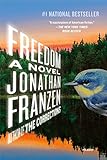
#1 — Freedom by Jonathan Franzen
The obvious next step. Freedom applies the same method — a single family as a lens on the nation — to the Berglunds, a seemingly model Midwestern couple whose marriage and ideals slowly come apart across decades. It is just as ambitious as The Corrections and arguably even more assured, weaving in environmentalism, politics, and the contradictions of American individualism. If you finished The Corrections wanting more of exactly that, this is the book.
#2 — Crossroads by Jonathan Franzen
Franzen’s later return to the family novel, Crossroads turns to the Hildebrandts, a 1970s clergyman’s family in suburban Chicago, each member facing a private moral crisis. Warmer and more interior than his earlier work, it deepens his lifelong subject — how the people who share a house can remain mysteries to one another — and confirms him as the great contemporary chronicler of the American family.
#3 — American Pastoral by Philip Roth
Roth’s Pulitzer Prize winner is the other essential American family-and-nation novel of its era. It traces the unraveling of the Levov family when the daughter of a successful, assimilated New Jersey businessman commits an act of political violence in the 1960s. Like Franzen, Roth uses one household’s catastrophe to take the measure of a whole country’s turmoil, and his prose has a ferocity that Corrections readers will recognize and relish.
#4 — Middlesex by Jeffrey Eugenides
A sweeping, warm, three-generation Greek American saga that braids an intimate story of identity with the epic history of immigration, Detroit, and the twentieth century. Eugenides shares Franzen’s gift for making a single family feel like a whole world, and his expansive, generous storytelling makes Middlesex a natural companion for readers who love the family-saga scale of The Corrections.
Ambitious Literary Novels of Modern Life
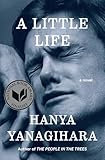
#5 — A Little Life by Hanya Yanagihara
If it was the emotional depth and the long arc of damaged lives that held you, Yanagihara’s devastating novel of four friends in New York — and the trauma that shadows one of them — delivers an even more intense version of that experience. It is far darker than The Corrections, but it shares the ambition to follow characters across decades and to make their suffering and striving feel monumentally significant.
#6 — The Goldfinch by Donna Tartt
Tartt’s Pulitzer-winning novel follows a boy from a terrorist bombing that kills his mother through a sprawling, Dickensian coming-of-age across New York, Las Vegas, and Amsterdam. Big, immersive, and richly characterized, it offers the same pleasure as The Corrections — losing yourself completely in a long, ambitious novel that is both a page-turner and a serious work of literature.
#7 — A Visit from the Goon Squad by Jennifer Egan
Egan’s Pulitzer winner is a mosaic of interconnected lives orbiting the music industry, leaping across decades to explore time, memory, and the gap between who we were and who we become. Formally more inventive than Franzen, it shares his sharp eye for contemporary American culture and his interest in how individual lives are shaped by the larger forces of their era.
#8 — White Noise by Don DeLillo
The great precursor to Franzen’s brand of social satire. DeLillo’s darkly comic masterpiece follows a professor of “Hitler studies” and his family through consumerism, media saturation, and the modern fear of death. Its blend of family comedy and cultural diagnosis directly anticipates The Corrections, and it remains one of the funniest and most unsettling novels of American life.
#9 — Revolutionary Road by Richard Yates
For the bleaker, more concentrated heart of the family novel, Yates’s masterpiece anatomizes a 1950s suburban marriage collapsing under the weight of its own illusions. It lacks Franzen’s panoramic sweep but matches his unsparing honesty about disappointment, self-deception, and the distance between the lives we plan and the lives we lead.
Where to Go Next
If these whet your appetite for more big, character-rich literary fiction, John Steinbeck’s East of Eden offers the classic American family epic that stands behind them all, and Marilynne Robinson’s Gilead provides a quieter, more luminous meditation on fathers, sons, and inheritance. The great pleasure of The Corrections is the ambitious novel that is also genuinely fun to read — and the books above all deliver that combination in their own ways.
Worth a Look
Two more literary novels reward Corrections readers who want to keep going. Jeffrey Eugenides’s The Marriage Plot follows three brilliant young people from college into the messy realities of adulthood, love, and ambition with the same blend of intellectual seriousness and emotional warmth that animates Franzen’s work. And Philip Roth’s The Human Stain turns a single explosive secret into a searching portrait of identity, reputation, and American hypocrisy — a perfect match for readers drawn to the way Franzen makes private lives speak to the condition of a whole country.
Affiliate disclosure: Links to Amazon on this page are affiliate links. We earn a small commission at no extra cost to you.
Frequently Asked Questions
What should I read after The Corrections?
The most natural next step is Franzen's own Freedom, which applies the same panoramic, family-centered method to a different American household and is widely considered his other major achievement. After that, readers who loved the dysfunctional-family dynamics should try Jonathan Franzen's Crossroads, while those drawn to the big social-novel ambition will find kindred works in Jonathan Franzen's contemporaries — Philip Roth's American Pastoral and Jeffrey Eugenides's Middlesex among them.
Is The Corrections part of a series?
No. The Corrections is a standalone novel, though it shares concerns and a sensibility with Franzen's later books Freedom, Purity, and Crossroads. Together these form a loose body of work — sometimes called the great American family novels of their generation — rather than a connected series. Each can be read entirely on its own.
Why is The Corrections considered a great American novel?
The Corrections combines an intimate, often savagely funny portrait of a single dysfunctional family with a sweeping engagement with American life at the turn of the millennium — consumerism, the pharmaceutical industry, the dot-com economy, the anxieties of aging and ambition. Franzen manages to make the small dramas of the Lambert family feel representative of a whole culture, which is the defining move of the ambitious social novel.