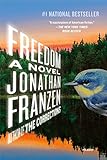
Editors Reads Verdict
Freedom is Franzen's most ambitious and most divisive novel: a sweeping account of a liberal American family's self-destruction that is simultaneously a detailed portrait of an era, a scalding examination of the ideology of personal freedom, and a more emotionally generous work than its critics allow.
What We Loved
- Franzen's character work is exceptional — Walter, Patty, and Richard are drawn with surgical precision
- The novel's indictment of liberal good intentions is genuinely searching and uncomfortable
- The multigenerational structure captures the social history of 1980s-2000s America with unusual specificity
- Patty's autobiographical section is one of contemporary American fiction's finest set pieces
Minor Drawbacks
- The novel is long and its pacing sags in places — some scenes could be cut without loss
- Franzen's female characters have generated legitimate criticism for their limited interiority
- The novel's didactic passages on overpopulation and environmentalism interrupt the narrative
Key Takeaways
- → Personal freedom pursued without ethical constraint is a form of aggression against others
- → Liberal ideology can coexist with profound self-deception about one's own motivations
- → The American nuclear family is a pressure vessel whose contents are always more volatile than the exterior suggests
- → Good intentions and good outcomes are causally disconnected in ways that produce lifetimes of harm
| Author | Jonathan Franzen |
|---|---|
| Publisher | Farrar, Straus and Giroux |
| Pages | 562 |
| Published | August 31, 2010 |
| Language | English |
| Genre | Literary Fiction, Fiction |
| Difficulty | Intermediate |
| Best For | Literary fiction readers interested in contemporary American social novels, family dysfunction as literary subject, and the ideological contradictions of liberal middle-class life. |
How Freedom Compares
Freedom at a glance against 3 similar books readers weigh alongside it.
| Book | Author | Rating | Best for |
|---|---|---|---|
| Freedom (this book) | Jonathan Franzen | ★ 4.1 | Literary fiction readers interested in contemporary American social novels, |
| A Little Life | Hanya Yanagihara | ★ 4.4 | Literary fiction readers prepared for an emotionally demanding novel about |
| Normal People | Sally Rooney | ★ 4.1 | Literary fiction readers interested in contemporary Irish society, millennial |
| The Corrections | Jonathan Franzen | ★ 4.0 | Literary fiction readers |
The Berglunds of St. Paul
Freedom opens with a neighborhood portrait: the Berglunds, viewed from the outside by the other residents of their Ramsey Hill block, who see only the surface — the couple’s early arrival in a gentrifying neighborhood, their home renovation, their son Joey, Walter’s earnest environmentalism, Patty’s athletic former career. The novel’s first section establishes the gap between the Berglunds’ outward life and their interior reality, a gap that the rest of the novel — sprawling across three decades and multiple narrative perspectives — will methodically demolish.
Jonathan Franzen’s fourth novel arrived in 2010 to a level of cultural attention rarely accorded literary fiction: cover of Time magazine, presidential praise, accusations of sexism, a paperback printing error that briefly withdrew the book from sale. The controversies were revealing: Freedom had struck nerves that purely literary novels typically cannot reach. It is a book about a specific class of Americans — educated, environmentally conscious, politically self-aware, personally catastrophic — and Franzen’s precision about that class’s self-deceptions is genuinely uncomfortable.
Three Characters in Collision
The novel’s three central figures — Walter Berglund, his wife Patty, and their lifelong friend Richard Katz — form a triangle of mutual need and mutual damage that Franzen traces with the patient attention of a biographer. Walter is decent, earnest, and self-righteous in ways that make him more rather than less capable of cruelty; Patty is a former athlete whose competitive intensity has no outlet in her domesticated life and turns inward with destructive force; Richard is a musician whose commitment to authentic selfishness is almost admirable in its consistency.
Patty’s autobiographical section — a memoir she writes at her therapist’s direction, rendered in third person — is the novel’s finest achievement. Franzen gives her a voice that is simultaneously self-aware and self-deceiving, capable of diagnosing her own psychology with alarming clarity while systematically misidentifying its causes. It is formally inventive and psychologically precise in a way that makes the criticism of her characterization seem like a misreading of a deliberately unreliable self-portraiture.
The Ideology of Freedom
The novel’s title is also its subject. Each of its central characters pursues a version of personal freedom — from obligation, from history, from other people’s expectations — and each of their pursuits inflicts damage on exactly the people they claim to love most. Franzen’s argument is not anti-freedom in any simple sense; it is an examination of what freedom means in practice rather than in ideology, and the portrait is merciless.
Walter’s conservation project — protecting cerulean warbler habitat from mountaintop removal mining, funded through a compromise with a coal company — is the novel’s most explicit dramatization of this theme: the ways good intentions require bad bargains, and the ways the people with the most developed ethical frameworks are often the most capable of self-justification when those frameworks become inconvenient.
An American Novel in the Full Sense
Freedom is an unfashionably large novel with unfashionably large ambitions, and its flaws — the pacing, the didactic passages, the questions about its women — are real. But it achieves something that very few contemporary American novels attempt: a sustained account of how a specific ideological formation (liberalism, environmentalism, the particular self-consciousness of the educated professional class) shapes and distorts the inner lives of the people who hold it. It is a novel about an era as much as about three people, and it gets the era right.
Our rating: 4.1/5
A Portrait of Contemporary America
Freedom is Jonathan Franzen’s ambitious and acclaimed novel, a sweeping portrait of an American family and, through them, of American life in the early twenty-first century. Centered on the Berglunds, a seemingly model Midwestern family whose lives gradually unravel, the novel traces marriage, parenthood, ambition, infidelity, and disappointment across decades, using their private dramas to explore the larger anxieties of the nation. Franzen’s panoramic scope, psychological depth, and engagement with contemporary issues, from environmentalism to politics to consumer culture, established the novel as a major literary event and confirmed his reputation as a leading chronicler of American life.
The Paradoxes of Freedom
As its title suggests, the novel is fundamentally concerned with the meaning and burdens of freedom, both personal and political. Franzen explores how his characters’ freedom to choose, to love, to pursue their desires and ambitions, often leads to confusion, betrayal, and unhappiness, and he examines the paradox that liberty can become a source of paralysis and self-destruction. Through the Berglunds’ choices and their consequences, the novel probes the costs and contradictions of American individualism and the difficulty of building a meaningful life amid limitless options.
Character and Social Observation
Franzen is celebrated for his richly drawn, deeply flawed, and recognizably human characters, and for his sharp, often satirical observation of contemporary mores and culture. The members of the Berglund family are rendered with psychological complexity and unsparing honesty, their failings and longings exposed in intimate detail, while Franzen weaves in pointed commentary on politics, the environment, and the texture of modern American life. This combination of intimate character study and broad social observation is central to the novel’s ambition and its appeal.
A Major Contemporary Novel
Freedom was widely hailed as one of the most significant American novels of its time, praised for its scope, its insight, and its engagement with the realities of contemporary existence, though some readers find Franzen’s characters and worldview difficult or his tone unsparing. Demanding and substantial, it offers the deep pleasures of the ambitious social novel, immersing readers in the lives of its characters while illuminating the anxieties of an era. For readers seeking serious, expansive contemporary fiction that takes the measure of American life, Freedom remains one of Franzen’s finest and most representative achievements.
Frequently Asked Questions
What is "Freedom" about?
The Berglunds — an outwardly ideal liberal family in St. Paul — fall apart across decades as Walter, Patty, and their son Joey pursue freedom in ways that destroy the people around them.
Who should read "Freedom"?
Literary fiction readers interested in contemporary American social novels, family dysfunction as literary subject, and the ideological contradictions of liberal middle-class life.
What are the key takeaways from "Freedom"?
Personal freedom pursued without ethical constraint is a form of aggression against others Liberal ideology can coexist with profound self-deception about one's own motivations The American nuclear family is a pressure vessel whose contents are always more volatile than the exterior suggests Good intentions and good outcomes are causally disconnected in ways that produce lifetimes of harm
Is "Freedom" worth reading?
Freedom is Franzen's most ambitious and most divisive novel: a sweeping account of a liberal American family's self-destruction that is simultaneously a detailed portrait of an era, a scalding examination of the ideology of personal freedom, and a more emotionally generous work than its critics allow.
Ready to Read Freedom?
Check the current price on Amazon.
Check Price on Amazon (paid link)Prices and availability are subject to change. See Amazon for current price.
Review last updated: