Jonathan Franzen Books in Order: Complete Reading Guide
All Jonathan Franzen novels in order — The Corrections, Freedom, Purity, and Crossroads. Reading guide for one of the most discussed American novelists.

Jonathan Franzen is an American novelist who has published six novels and several essay collections. He is one of the most seriously discussed American writers of his generation and one of the most controversial — both for the quality and concerns of his fiction, and for his public statements about literary culture.
Jonathan Franzen Novels in Publication Order
| # | Title | Year |
|---|---|---|
| 1 | The Twenty-Seventh City | 1988 |
| 2 | Strong Motion | 1992 |
| 3 | The Corrections | 2001 |
| 4 | Freedom | 2010 |
| 5 | Purity | 2015 |
| 6 | Crossroads | 2021 |
1. The Twenty-Seventh City — 1988
A South Asian woman becomes chief of police in St. Louis and attempts to manipulate the city’s real estate market for obscure political purposes. Ambitious and assured debut, but ultimately more impressive than moving.
2. Strong Motion — 1992
Earthquakes in Boston coincide with corporate negligence. Franzen’s second novel is more emotionally involving than his debut but still a work of a writer finding his full range.
3. The Corrections — 2001
Start here. The Lambert family — three adult children scattered across America, their father declining with Parkinson’s disease, their mother desperately engineering one last family Christmas — is rendered with savage precision and unexpected compassion. National Book Award winner. One of the essential American novels of the 2000s.
➡ Full review → | Buy on Amazon →
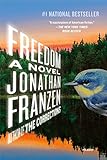
4. Freedom — 2010
The Berglunds — Walter, Patty, and their son Joey — navigate marriage, friendship, political conviction, and the specific texture of liberal American life in the 2000s. Time magazine’s novel of the decade. More politically direct than The Corrections; comparably ambitious.
➡ Full review → | Buy on Amazon →
5. Purity — 2015
Purity Tyler, a young woman crushed by student debt, becomes involved with a Julian Assange-like whistleblower. More diffuse than The Corrections or Freedom, with a satirical edge that feels occasionally excessive.
➡ Full review → | Buy on Amazon →
6. Crossroads — 2021
The Hildebrandt family in suburban Chicago in 1971 — a minister, his unhappy wife, and four children — over a week in December. First volume of a planned trilogy. Franzen’s warmest and most sympathetic novel, and his best since The Corrections.
➡ Full review → | Buy on Amazon →
The Ambition of the Social Novel
Jonathan Franzen is one of the foremost contemporary practitioners of the big, ambitious social novel, the capacious work that seeks to capture the texture and tensions of contemporary American life through the intertwined stories of richly drawn characters. Franzen has dedicated his major work to the ambition of the social novel, the large and capacious form that seeks to encompass and illuminate contemporary society, and his novels are notable for their scope, their ambition, and their effort to capture the texture and tensions of American life. He writes substantial, expansive novels that weave together the stories of multiple characters and that seek, through these intertwined stories, to illuminate the larger realities of contemporary American society, its pressures, its values, its discontents, and its tensions. This ambition of the social novel, the effort to capture and illuminate contemporary society through richly drawn characters and intertwined stories, is central to Franzen’s achievement and reflects his commitment to the large, serious, socially engaged novel. His major novels exemplify this ambition, encompassing the lives of their characters and, through them, the larger realities of contemporary American life, and achieving a scope and a social engagement that distinguish them. For readers, Franzen offers the ambition of the social novel, the capacious and serious work that seeks to capture the texture and tensions of contemporary American life through richly drawn characters and intertwined stories. The ambition of the social novel is central to Franzen’s achievement, his dedication to the big, capacious form that seeks to encompass and illuminate contemporary American society through the intertwined stories of richly drawn characters, and his novels are notable for their scope, ambition, and social engagement.
The Family as a Mirror of Society
A characteristic strategy of Jonathan Franzen’s fiction is his use of the family as the central subject and structure of his social novels, illuminating the larger realities of contemporary society through the intimate tensions, conflicts, and bonds of family life. Franzen’s major novels characteristically center on families, on the tensions, conflicts, disappointments, and bonds of family life, and through these intimate family dramas they illuminate the larger realities of contemporary society. The family serves Franzen as both subject and structure, allowing him to explore the intimate human realities of contemporary life, the relationships and conflicts between parents and children, husbands and wives, siblings, and at the same time to illuminate the larger social, cultural, and historical forces that shape these intimate lives. Through the dysfunctions, tensions, and bonds of his fictional families, Franzen explores the pressures and discontents of contemporary American life, using the family as a mirror in which the larger realities of society are reflected and examined. This use of the family as a mirror of society is central to Franzen’s method, for it allows him to combine the intimate human drama of family life with the larger social illumination that the social novel seeks, grounding his examination of contemporary society in the concrete and intimate reality of family. For readers, Franzen’s focus on the family offers both the intimate human drama of family life and the larger social illumination that his use of the family as a mirror provides. The family as a mirror of society is a characteristic strategy of Franzen’s fiction, his use of the intimate tensions and bonds of family life to illuminate the larger realities of contemporary society, combining the human drama of family with the social illumination that the social novel seeks.
Realism and Contemporary Discontent
Jonathan Franzen’s fiction is marked by its commitment to realism and by its sharp, often critical engagement with the discontents and anxieties of contemporary American life, its consumerism, its alienation, its moral and cultural tensions. Franzen is a committed realist, and his fiction seeks to render contemporary American life with detailed, observant, and psychologically acute realism, capturing the texture, the manners, and the realities of the contemporary world. His fiction is also marked by a sharp and often critical engagement with the discontents of contemporary life, with the anxieties, dissatisfactions, and moral and cultural tensions of an affluent but troubled society, and his novels frequently examine the alienation, consumerism, and spiritual restlessness that he perceives in contemporary America. This combination of detailed realism and critical engagement with contemporary discontent gives Franzen’s fiction its character and its substance, for he renders contemporary life with observant realism while examining critically its discontents and anxieties. His novels are at once richly detailed portraits of contemporary American life and critical examinations of its discontents, combining the realist’s eye for detail and texture with the social critic’s engagement with the anxieties and tensions of the age. For readers, Franzen offers a richly detailed and critically engaged portrait of contemporary American life, the realism and the critical examination of contemporary discontent that mark his fiction. Realism and contemporary discontent mark Franzen’s fiction, his commitment to rendering contemporary American life with detailed realism and his sharp, critical engagement with its discontents and anxieties, combining the realist’s eye for detail with the social critic’s examination of the tensions of the age.
Reading Order Recommendation
The Corrections → Freedom → Crossroads. This covers the three novels most likely to reward a new reader. Purity is worth reading for Franzen completists; the two early novels are primarily for the dedicated.
Affiliate disclosure: Links to Amazon on this page are affiliate links. We earn a small commission at no extra cost to you.
Frequently Asked Questions
What Franzen book should I read first?
Start with The Corrections — it is his masterpiece and the novel that defines his reputation. Freedom is the natural second read. Crossroads is his best book since The Corrections and can be read without knowing the earlier novels.
Are Franzen's novels connected?
No. Each novel is a standalone work with separate characters and settings. The connections are thematic: all deal with American family life, the tensions between individual freedom and social obligation, and the cultural landscape of contemporary America.
Why is Franzen controversial?
Franzen has made public statements about literary culture, the internet, and social media that have generated significant backlash. His opinions are separate from his fiction, which most serious critics consider among the best American literary novels of the past three decades.