Best History Books of All Time: Essential Reading List
The best history books ever written — from Sapiens and The Rise and Fall of the Third Reich to Why Nations Fail and Team of Rivals. History that changes how you understand the present.
By Oliver Kane
The best history books are not those that simply record what happened but those that explain why — why some civilisations dominated others, why revolutions succeed or fail, why individuals in positions of power make the choices they make. They change not just your knowledge of the past but your understanding of how the present came to be.
The list below covers the widest range possible: from big history that spans millennia to intimate political biography, from the broad sweep of global development to the specific horror of genocide, from American political history to the structural forces that determine whether nations prosper or fail.
Best History Books at a Glance
| Book | Author | Best for |
|---|---|---|
| Sapiens | Yuval Noah Harari | Curious readers of all backgrounds who want |
| Why Nations Fail | Daron Acemoglu and James Robinson | Economics and political science readers |
| Factfulness | Hans Rosling | Anyone who consumes news and wants a more |
| The Rise and Fall of the Third Reich | William L. Shirer | Anyone serious about twentieth-century history |
| Team of Rivals | Doris Kearns Goodwin | Readers of American history, biography |
| The Third Chimpanzee | Jared Diamond | Science |
| The Wealth of Nations | Adam Smith | Readers interested in economic history |
Big History: The Widest View
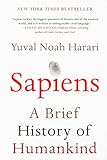
Sapiens: A Brief History of Humankind — Yuval Noah Harari (2011)
The most widely read popular history book in the world. Harari covers human history from the cognitive revolution (70,000 years ago, when Homo sapiens developed the capacity for abstract language and collective imagination) through the agricultural revolution, the rise of empires, the scientific revolution, and the present. His central insight: what makes humans dominant is not physical strength or individual intelligence but the capacity to believe in collective fictions — money, nations, religions, corporations — and to cooperate in large groups on the basis of shared myths.
Harari’s prose is accessible and his narrative is compelling. The book has been criticised by specialists for oversimplification (it covers an enormous range and inevitably sacrifices precision). Read it as a framework for thinking about human history and supplement with more specific histories in the areas that interest you.
Why Nations Fail — Daron Acemoglu and James A. Robinson (2012)
The most important political economy book of the last twenty years. Acemoglu and Robinson’s argument: why some nations prosper and others fail is not determined by geography, culture, or the ignorance of leaders — it is determined by the political and economic institutions they develop. Inclusive institutions (rule of law, property rights, distributed power, open markets) lead to prosperity; extractive institutions (concentrated power, rent-seeking elites, exclusion of most of the population from economic participation) lead to poverty and stagnation. The historical evidence they assemble — from the Glorious Revolution in England to the partition of Korea — is extensive and persuasive.
Factfulness — Hans Rosling with Ola Rosling and Anna Rosling Rönnlund (2018)
Not primarily a history book but the most important corrective to the misperception of history that most educated people have internalised. Rosling demonstrates, with data, that the world is significantly better than most people believe across almost every measurable dimension — child mortality, extreme poverty, literacy, vaccination rates — and investigates why our media-formed intuitions about global trends are systematically wrong. The book’s ten “instincts” (negativity bias, gap instinct, fear instinct) explain why we consistently perceive things as worse than they are.
Military and Political History
The Rise and Fall of the Third Reich — William Shirer (1960)
The definitive single-volume account of Nazi Germany, written by an American journalist who was present in Berlin from 1934 to 1940. Shirer covers Hitler’s rise, the consolidation of power, the persecution of Jews and others, the Anschluss, the war, and the defeat — all with the authority of someone who had direct access to events and sources, supplemented by the captured Nazi documents that became available after the war. Over 1,200 pages and still essential: no comparable work has replaced it.
Team of Rivals — Doris Kearns Goodwin (2005)
The most acclaimed narrative political history of Abraham Lincoln and his relationship with the three men who competed against him for the 1860 Republican nomination and whom he subsequently appointed to his Cabinet. Goodwin’s argument: Lincoln’s political genius was his capacity to contain and direct people who considered themselves his superiors, to see qualities in rivals that others missed, and to build an administration that was smarter and more capable than any one person could have been. The book is both biography and a study of leadership under the pressure of catastrophe.
More Essential History
The Third Chimpanzee — Jared Diamond. Diamond’s examination of what makes humans different from our closest evolutionary relatives and what our evolutionary heritage predicts about our future. The precursor to Guns, Germs, and Steel and in some ways its more interesting companion.
The Wealth of Nations — Adam Smith (1776). The foundational text of economics and the most important single book for understanding how market economies actually work. Dense and eighteenth-century in its prose, but still readable in selected chapters. Smith’s actual arguments — including his criticisms of monopoly, of business interests controlling government, and of the human costs of the division of labour — are more nuanced than his reputation as capitalism’s patron saint suggests.
Why History Matters
The study of history is not the idle contemplation of a dead past but an essential means of understanding the present and orienting ourselves toward the future, and the great history books perform the vital function of illuminating how the world came to be as it is, why things are as they are, and what the human story can teach us about ourselves and our prospects. History matters because the present is the product of the past, shaped at every point by what came before, and we cannot understand the world we inhabit, its arrangements, its conflicts, its possibilities, without understanding the historical processes that produced it. The great history books illuminate these processes, tracing how the present emerged from the past, revealing the origins and development of the institutions, conflicts, ideas, and conditions that shape our world, and providing the historical understanding without which the present remains opaque and inexplicable. History matters, too, because it is the great repository of human experience, the record of how human beings have lived, acted, succeeded, and failed across the ages, and the study of this record offers lessons, warnings, and insights of enduring value, expanding our understanding of human nature and human possibility and informing our judgment about the present and the future. And history matters because it shapes our identity and our understanding of who we are, for individuals and societies alike are constituted in part by their history, by the story of where they came from and how they came to be, and the understanding of this story is essential to a clear sense of identity and place in the world. The great history books, in illuminating the past, illuminate the present and inform the future, performing a function of the greatest importance, and the study of history, far from being the idle contemplation of a dead past, is an essential means of understanding ourselves and our world. To read the great works of history is to gain the historical understanding on which a clear comprehension of the present and a wise orientation toward the future depend.
Narrative and Analysis: Two Ways of Knowing the Past
The great history books employ two complementary approaches to the past — the narrative, which tells the story of what happened, and the analytical, which explains why it happened and what it means — and understanding the distinction and the relationship between these approaches enriches the reading of history and reveals the different ways that the past can be known and understood. Narrative history tells the story of the past, recounting events in their sequence and drama, bringing the past to life through the power of storytelling, and offering the reader the vivid experience of historical events as they unfolded. This narrative approach has great value and appeal, for it makes the past vivid and compelling, conveys the drama and contingency of historical events, and offers the reader a rich and engaging experience of the past as lived reality. Analytical history, by contrast, seeks to explain rather than merely to recount, analyzing the causes and consequences of events, identifying the larger forces and patterns at work, and interpreting the meaning and significance of the past. This analytical approach offers a different and complementary form of understanding, penetrating beneath the surface of events to the deeper causes and meanings, and providing the explanatory understanding that narrative alone cannot offer. The greatest history books often combine both approaches, telling the story of the past with narrative power while also explaining and interpreting it with analytical depth, and offering the reader both the vivid experience of historical events and the deeper understanding of their causes and meaning. Understanding the distinction between narrative and analysis enriches the reading of history, revealing the different ways that the past can be known and the complementary value of each, and the reader who appreciates both approaches gains a fuller understanding of the past, combining the vivid experience that narrative provides with the explanatory depth that analysis offers. The two ways of knowing the past, narrative and analytical, together constitute the great achievement of historical writing, and the finest history books employ both to illuminate the past in its fullness.
The Lessons and the Limits of History
History is often said to offer lessons for the present, and the great history books do indeed yield insights of enduring value, yet the relationship between historical knowledge and present guidance is more complex than the simple notion of history teaching lessons suggests, and understanding both the genuine value and the real limits of history’s lessons is essential to a mature engagement with the past. History does offer lessons, for the record of human experience across the ages contains insights, warnings, and patterns of enduring relevance, and the study of how human beings and societies have acted, succeeded, and failed in the past can genuinely inform our understanding and judgment in the present. The great history books yield such lessons, illuminating recurring patterns of human behavior, the consequences of various courses of action, the warnings of past catastrophes, and the conditions of past achievements, and the wise reader draws on this accumulated experience to inform their understanding of the present. Yet the lessons of history must be drawn with care, for the relationship between past and present is complex, and the naive application of historical lessons can mislead as easily as it can guide. History does not repeat itself exactly, circumstances differ, and the past offers no simple formulas that can be mechanically applied to the present. The genuine value of history’s lessons lies not in simple prescriptions but in the deepened understanding, the expanded perspective, the awareness of human nature and historical possibility, and the cautionary and instructive examples that the study of the past provides, all of which inform judgment without dictating it. Understanding both the genuine value and the real limits of history’s lessons is essential to a mature engagement with the past, allowing the reader to draw on the accumulated wisdom of historical experience while avoiding the naive application of simplistic lessons. The great history books offer lessons of enduring value, but their wisdom lies in deepened understanding and expanded perspective rather than in simple formulas, and the mature reader draws on the past to inform present judgment while respecting the complexity of the relationship between history and the present.
Reading by Period
World History: Sapiens → Why Nations Fail → Factfulness.
Twentieth Century: The Rise and Fall of the Third Reich → Team of Rivals (earlier, but essential US context) → Sapiens for synthesis.
Understanding the Present: Why Nations Fail → Factfulness → Sapiens.
Frequently Asked Questions
What is the best history book for beginners?
Sapiens: A Brief History of Humankind by Yuval Noah Harari is the most widely read popular history book of the last decade — it covers the full span of human history from the cognitive revolution 70,000 years ago to the present in accessible and engaging prose. Factfulness by Hans Rosling is the best book for understanding the actual state of the world (as opposed to how it appears in the news). For American history, Team of Rivals by Doris Kearns Goodwin is the most readable and most admired narrative history of the Lincoln era.
Is Sapiens accurate?
Sapiens is accurate in its broad outlines but has been criticised by specialists in each field it covers for oversimplification and occasionally for factual errors in specific details. Harari is a historian by training, not a scientist, and his coverage of evolutionary biology, anthropology, and economics occasionally substitutes narrative coherence for scientific precision. The book is best read as a framework for thinking about human history rather than as a definitive account of it. The broad claims (the cognitive revolution, the agricultural revolution, and their consequences) are well-supported; the specific causal claims are more contested.
What is the best book about World War II?
The Rise and Fall of the Third Reich by William Shirer (1960) remains the most comprehensive single-volume account of Nazi Germany from the inside — Shirer was an American journalist in Berlin from 1934 to 1940 and had direct access to events he describes. For the military history, Antony Beevor's Stalingrad and D-Day are the gold standard for specific campaigns. For the Holocaust, see our separate guide to the best Holocaust books.
What history books cover the longest timescales?
Sapiens by Harari covers 70,000 years; Guns, Germs, and Steel by Jared Diamond covers 13,000 years through the lens of why some civilisations dominated others. Why Nations Fail by Acemoglu and Robinson spans several centuries to explain why some nations prosper and others don't. For the longest view, David Christian's Maps of Time ('big history') covers 13.8 billion years from the Big Bang to the present.