Best Holocaust Books: Essential Reading on the Shoah
The best Holocaust books — from Night and Man's Search for Meaning to The Diary of a Young Girl, The Book Thief, and Fatelessness. Essential reading on the Shoah.
By Oliver Kane

The literature of the Holocaust — survivor memoirs, testimony, fiction, and philosophical meditation — constitutes one of the most important bodies of writing produced in the twentieth century. Reading it is not merely an act of historical education but a moral obligation: a commitment to understanding what human beings did to other human beings, and to ensuring that the testimony of survivors is not forgotten.
The Essential List
Night — Elie Wiesel (1960)
The most important and widely read Holocaust memoir. Wiesel’s account of his deportation from Sighet, Romania, at fifteen — the journey to Auschwitz, his separation from his mother and sisters (whom he never saw again), his survival through forced labour alongside his father, and his father’s death from dysentery just weeks before liberation — is written with a deliberate austerity: language stripped back to the minimum, as if any stylistic elaboration would be a betrayal of the facts. The book’s title refers to the darkness that descends permanently on Wiesel’s faith: ‘Never shall I forget that night… which has turned my life into one long night, seven times cursed and seven times sealed.‘
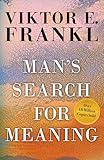
Man’s Search for Meaning — Viktor Frankl (1946)
The most important book about meaning produced by the Holocaust. Frankl, a Viennese psychiatrist, survived Auschwitz, Dachau, and other camps and observed that those who maintained a sense of purpose — a reason to survive — were more likely to endure than those who had lost hope. He developed logotherapy — the therapeutic approach premised on the belief that the primary human motivational force is the search for meaning, not the avoidance of pain — from these observations. The first half of the book is memoir; the second is the psychological framework he derived from it. The most widely read Holocaust book in the English-speaking world.
The Diary of a Young Girl — Anne Frank (1947)
The most read Holocaust document in the world — and the most intimate. Anne Frank’s diary, kept from June 1942 to August 1944 while she and her family hid in the Secret Annexe in Amsterdam, is remarkable for the quality of its observation and self-analysis as much as for the historical circumstances of its writing. Anne is not merely a victim but a writer: thoughtful, funny, occasionally vain, always honest about the conflicts of her developing self. The diary ends on 1 August 1944; the family was betrayed on 4 August and deported to Auschwitz. Anne died in Bergen-Belsen in February or March 1945, three weeks before liberation.
The Book Thief — Markus Zusak (2005)
The most widely read work of Holocaust fiction and the most emotionally accessible introduction to the period for general readers. Narrated by Death, the novel follows Liesel Meminger, a nine-year-old girl living on Himmel Street in Munich with her foster parents, who steal books and shelter a Jewish man named Max Vandenburg in their basement. Zusak’s decision to narrate through Death — who processes hundreds of thousands of souls during the Second World War — gives the novel an unusual moral perspective: Death is worn down by human capacity for both cruelty and love, and finds in Liesel a reason for ambivalence about his task. The best literary fiction for readers approaching the subject for the first time.
Fatelessness — Imre Kertész (1975)
The most formally demanding and most important Holocaust novel — more so, arguably, than any memoir. Kertész narrates his alter ego Gyuri Köves’s deportation to Auschwitz and subsequent camps with a deliberately flat, bureaucratic prose that refuses the expected responses of horror and outrage. Gyuri processes his experiences with a child’s matter-of-fact acceptance; his retrospective expressions of ‘happiness’ about certain moments in the camps are Kertész’s most disturbing and most honest contribution to Holocaust literature. To describe suffering as ‘happiness’ when the narrator lacked the conceptual framework for horror is not false comfort — it is the most precise account of how children survived what adults understood and could not survive. Won the Nobel Prize in Literature (2002).
The Tattooist of Auschwitz — Heather Morris (2018)
The most commercially successful recent Holocaust novel. Based on interviews with Lale Sokolov — a Slovakian Jew who tattooed prisoner numbers at Auschwitz-Birkenau and fell in love with Gita, a woman he tattooed — Morris’s novel is more accessible and less formally ambitious than Kertész or Wiesel but tells a story of remarkable human endurance and love under conditions of absolute horror. The novel has been criticised by scholars for some historical inaccuracies; it is best understood as a narrative of individual testimony shaped for a mass audience.
The Duty to Remember
Underlying the entire literature of the Holocaust is a profound moral imperative — the duty to remember — the conviction that the catastrophe must never be forgotten, that the memory of its victims and its horrors must be preserved against the erosions of time and the efforts of denial, and that remembering is itself a moral and even sacred obligation. The Holocaust represents one of the darkest chapters in human history, a catastrophe of such magnitude and horror that the imperative to remember it, to preserve the memory of its victims and its horrors, has become a central moral obligation, and the literature of the Holocaust is fundamentally animated by this duty to remember. The duty to remember has several dimensions and purposes. There is the obligation to the victims, to preserve the memory of the millions who perished, to honor their lives and their suffering, and to ensure that they are not forgotten, that their deaths are acknowledged and remembered rather than erased and ignored. There is the obligation to the truth, to preserve the historical record of what happened against the efforts of denial and distortion, to ensure that the reality of the Holocaust is documented, acknowledged, and remembered, and to counter the denial that would erase or distort it. And there is the obligation to the future, to remember the Holocaust as a warning, to learn the lessons of how such a catastrophe could occur, and to ensure that the memory of what happened helps to prevent its recurrence. The literature of the Holocaust is animated by this duty to remember in all its dimensions, preserving the memory of the victims, documenting the historical truth, and remembering the catastrophe as a warning for the future. This duty to remember is the moral foundation of the literature, the conviction that the Holocaust must never be forgotten and that remembering is itself a moral obligation, and the literature fulfills this duty, preserving the memory of one of history’s darkest chapters against the erosions of time and the efforts of denial, and ensuring that the catastrophe and its victims are remembered, honored, and learned from.
The Limits and the Necessity of Witness
The literature of the Holocaust confronts a profound paradox that lies at the heart of all attempts to represent the catastrophe — the recognition that the horror of the Holocaust exceeds the capacity of language and art to convey it, that it is in some sense unrepresentable and incomprehensible, and yet that the attempt to bear witness, however inadequate, is morally necessary and must be made. The Holocaust presents an extreme challenge to representation, for its horror is so vast and so extreme that it seems to exceed the capacity of language, art, and human comprehension to convey or to grasp, and many who have written about it have confronted the sense that the catastrophe is in some fundamental way unrepresentable, that no words can adequately convey its horror, and that the attempt to represent it must always fall short. Yet despite this recognition of the limits of representation, the literature of the Holocaust insists on the necessity of witness, on the moral imperative to bear witness to the catastrophe, however inadequately, and to attempt to convey and preserve its reality. This paradox, the simultaneous recognition of the impossibility and the necessity of representation, lies at the heart of the literature of the Holocaust, which confronts the inadequacy of all attempts to convey the catastrophe while insisting on the moral necessity of making the attempt. The resolution of this paradox lies in the recognition that, although the horror of the Holocaust may exceed the capacity of language and art to convey it fully, the attempt to bear witness remains morally necessary, for the alternative, silence, would be a betrayal of the victims and a surrender to forgetting and denial. The literature of the Holocaust thus proceeds in the face of its own acknowledged inadequacy, bearing witness to a horror that exceeds representation because the moral necessity of witness demands it, and achieving, despite the limits of language and art, a preservation of memory and a conveyance of reality that, however incomplete, fulfills the essential duty of witness. This confrontation with the limits and the necessity of witness is among the most profound features of the literature of the Holocaust, which bears witness to the unrepresentable because the moral imperative of remembering demands it.
Lessons for Humanity
The literature of the Holocaust serves not only to remember the past but to instruct the present and future, for the catastrophe holds profound lessons for humanity — about the capacity for evil, the conditions that enable atrocity, the importance of moral resistance, and the vigilance required to prevent such horrors from recurring — and the books on this list convey these lessons with an urgency born of the catastrophe they document. The Holocaust, beyond its specific historical reality, holds lessons of universal and enduring significance for humanity, and the literature that documents and remembers it conveys these lessons as a warning and an instruction for the present and future. There is the lesson about the human capacity for evil, the disturbing revelation of the depths of cruelty and atrocity of which human beings and human societies are capable, which the Holocaust demonstrates with terrible clarity. There is the lesson about the conditions that enable atrocity, the understanding of how such a catastrophe could occur, the social, political, and psychological conditions that made it possible, and the warning signs that might allow such horrors to be recognized and resisted. There is the lesson about the importance of moral resistance, the recognition of the moral courage required to resist evil and the consequences of failing to do so. And there is the lesson about the vigilance required to prevent recurrence, the understanding that such catastrophes are not impossible relics of the past but enduring possibilities that demand constant vigilance and active resistance to prevent. The literature of the Holocaust conveys these lessons with an urgency born of the catastrophe it documents, offering them not as abstract reflections but as vital warnings and instructions for a humanity that remains capable of atrocity and that must learn the lessons of the Holocaust to prevent its recurrence. These lessons for humanity are among the most important contributions of the literature, which serves not only to remember the past but to instruct the present and future, conveying the profound and urgent lessons that the Holocaust holds about the capacity for evil, the conditions that enable atrocity, and the vigilance and moral resistance required to prevent such horrors from recurring. In conveying these lessons, the literature of the Holocaust fulfills one of its deepest purposes, transforming the memory of catastrophe into instruction and warning for a humanity that must learn from the darkest chapter of its history to guard against its recurrence.
The Primary Texts
The academic and historical literature of the Holocaust is vast. Raul Hilberg’s The Destruction of the European Jews (1961) is the foundational scholarly history; Primo Levi’s If This Is a Man (1947) is the most analytically lucid survivor testimony; Hannah Arendt’s Eichmann in Jerusalem (1963) is the most philosophically important single text to emerge from the trials. These three — alongside the survivor narratives listed above — constitute the essential archive.
Frequently Asked Questions
What is the best Holocaust book to start with?
Night (1960) by Elie Wiesel is the essential starting point — a short (120 pages) but devastating memoir of Wiesel's experience as a fifteen-year-old Jewish boy at Auschwitz and Buchenwald, where he lost his father. The book's brevity is part of its power: Wiesel strips language back to the minimum, as if any excess would be a betrayal of what he witnessed. Man's Search for Meaning (1946) by Viktor Frankl is equally essential — a psychiatrist's account of the same camps and the psychological framework he derived from observing how people found (or lost) the will to survive.
What is Night by Elie Wiesel about?
Night (1960) by Elie Wiesel is a memoir of Wiesel's experience as a fifteen-year-old boy from Sighet, Romania, who is deported with his family to Auschwitz in 1944 and subsequently to Buchenwald. The book covers his journey from the ghetto to the camps, the death of his mother and sister on arrival, his survival through two winters of forced labour, and the death of his father from dysentery just weeks before liberation. Its title refers to the darkness that descends on Wiesel's faith and on his understanding of God; the book is as much a theological document as a historical one.
What is Fatelessness about?
Fatelessness (1975) by Imre Kertész is a semi-autobiographical novel narrated by Gyuri Köves, a fourteen-year-old Hungarian Jewish boy who is sent to Auschwitz, Buchenwald, and Zeitz. Kertész's approach is unusual: Gyuri narrates his experience with a flat, bureaucratic precision that refuses the expected responses of horror and despair, and at the novel's end he expresses a disconcerting nostalgia for the 'happiness' he found in the camps — the moments of rest, the small pleasures, the camaraderie. The novel won the Nobel Prize in Literature in 2002; it is the most formally challenging of the Holocaust survivor narratives.
Is The Book Thief historically accurate about the Holocaust?
The Book Thief (2005) by Markus Zusak is a work of fiction, not a historical record — its narrator is Death personified, and its account of Nazi Germany is filtered through the perspective of Liesel Meminger, a nine-year-old girl growing up on Himmel Street in Munich. Its portrayal of life under the Nazi regime, the persecution of Jews, and the bombing of German cities is historically grounded but imaginatively shaped. The novel is most valuable as an emotional and moral introduction to the period, particularly for younger readers; it is not a substitute for survivor testimony.