Best Korean Literature: Essential Reading from South Korea
The best Korean literature — from The Vegetarian and Human Acts to Pachinko and The White Book. Essential contemporary and classic Korean fiction.
Korean literature has produced some of the most urgent and formally innovative fiction of the early twenty-first century — Han Kang’s novels have established a global readership, and Min Jin Lee’s Pachinko brought the story of Korean identity in Japan to an international audience. The novels below represent the essential entry points into contemporary Korean fiction and its engagement with the country’s turbulent twentieth-century history.
Han Kang: The Nobel Laureate
The Vegetarian — Han Kang (2007)
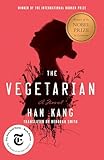
The novel that made Han Kang internationally famous — a spare, disturbing account of a woman whose refusal to eat meat provokes violence from everyone around her. Told in three parts from three different perspectives, the novel is about what happens when a woman insists on autonomy over her own body and the way that small refusals are experienced as catastrophic provocations by those with power over her. Won the Man Booker International Prize in 2016. The best starting point for Han Kang.
Human Acts — Han Kang (2014)
Han Kang’s most politically direct novel — a memorial to the victims of the 1980 Gwangju Uprising, in which the South Korean military killed hundreds of civilians who were protesting against the authoritarian government. Multiple perspectives, multiple time periods, a sustained investigation of how political violence continues to wound survivors across decades. The most important Korean historical novel available in English.
The White Book — Han Kang (2016)
Han Kang’s most formally experimental work — a meditation on grief, whiteness, and the death of an infant sister who did not survive her first hours of life. The novel is structured as a list of white things (snow, rice, white bird, shroud) and is as much prose poetry as fiction. The most demanding of Han Kang’s books and the most beautiful.
The Korean Diaspora
Pachinko — Min Jin Lee (2017)
The most widely read Korean novel of recent years — four generations of a Korean family in Japan, from the Japanese colonial period through the late twentieth century, examining the discrimination faced by Zainichi Koreans and what it means to build a life in a country that refuses to accept you as its own. Written in English by an American author of Korean descent; the most accessible entry point into Korean literature and history for international readers.
The History Behind the Fiction
Contemporary Korean literature is unusually inseparable from twentieth-century Korean history, and a little context multiplies what these novels can give you. The arc runs roughly: Japanese colonial occupation from 1910 to 1945, during which the Korean language and Korean names were suppressed; the division of the peninsula and the Korean War of 1950–53, which destroyed the country and split millions of families; decades of military authoritarian rule in the South, punctuated by massacres like Gwangju in 1980; and then a compressed, vertiginous transformation into a wealthy democracy within a single generation. Every book on this list sits somewhere on that arc. Pachinko begins under the occupation and follows the people it displaced; Human Acts stands at Gwangju, the moral hinge of South Korea’s democratization; even The Vegetarian, which mentions none of this history directly, is legible as a novel about the violence latent in a society organized around obedience — to fathers, husbands, and institutions.
This is why Korean fiction so often pairs formal beauty with extraordinary brutality, a combination that surprises readers coming from other literatures. The compression of historical trauma into a few generations means the past is not past; the grandmother who survived the war, the parent who marched in 1980, and the child raised in digital-age Seoul share a single household. The literature carries that compression in its bones.
Han Kang’s Nobel and What It Recognized
Han Kang’s 2024 Nobel Prize in Literature — the first for a South Korean writer — was awarded, in the Academy’s phrase, for “intense poetic prose that confronts historical traumas and exposes the fragility of human life,” and the citation is an accurate map of the three books listed here. What makes her achievement distinctive is the way the violence in her work is always paired with an almost unbearable tenderness of attention; she writes atrocity in the same hushed, precise register she uses for snow falling or a sleeping child, and the dissonance is the point. Her refusal to dramatize is what makes the books devastating.
Reading her three major works in sequence also reveals a deliberate progression: The Vegetarian locates violence in the family, Human Acts locates it in the state, and The White Book strips away event altogether to sit with pure grief. The same questions — what the body can refuse, what witness is worth, whether gentleness can survive history — are turned over at three different scales. Few living novelists have built so coherent a project, and the Nobel effectively recognized the project rather than any single book.
Korean Literature in Translation: What to Know
Most Korean fiction reaches English readers through a small group of translators, and translation has been part of the story of this literature’s global rise — Deborah Smith’s rendering of The Vegetarian shared the Man Booker International Prize with Han Kang and also sparked a genuine debate about fidelity versus effect in translation, after Korean-speaking critics catalogued its departures from the original. The controversy is worth knowing about not as a scandal but as a window into what translated literature is: every version involves choices, and Smith’s, whatever its liberties, created the English voice that carried Korean fiction to a world audience.
It is also worth understanding what this list’s four books do not cover. Korean literature in translation now spans far more than literary trauma narratives — genre-bending speculative fiction, crime writing, and the enormously popular healing-fiction wave have all found English readers. The books above are the essential foundation because they carry the historical and emotional core of the tradition, but they are a beginning rather than a boundary, and readers who connect with them will find an unusually rich and fast-growing shelf waiting beyond.
Reading Order
Start accessible: Pachinko → The Vegetarian → Human Acts.
Han Kang focus: The Vegetarian → Human Acts → The White Book.
Complete: The Vegetarian → Human Acts → The White Book → Pachinko.
Frequently Asked Questions
What is the best Korean novel to start with?
The Vegetarian (2007) by Han Kang is the best starting point — a spare, unsettling novella-in-three-parts about a woman who stops eating meat and the violence her decision provokes in her family. Han Kang won the Man Booker International Prize for this novel and the Nobel Prize in Literature in 2024 — her work is the most internationally celebrated Korean fiction of the current era. Pachinko (2017) by Min Jin Lee is the most accessible starting point for readers new to Korean literature — a multigenerational saga following a Korean family in Japan across the twentieth century, written in English by an American author of Korean descent.
What is The Vegetarian about?
The Vegetarian (2007) by Han Kang follows Yeong-hye, a South Korean housewife who one day refuses to eat meat after a disturbing dream. The decision, apparently minor, provokes escalating violence from her family and husband — her father tries to force-feed her at a family gathering; her husband feels his life is disrupted; her brother-in-law, an artist, becomes obsessed with her. The novel is told in three parts from three different perspectives (never Yeong-hye's own), and it is about the violence that a woman's refusal — her insistence on occupying her own body on her own terms — provokes in those around her.
What is Human Acts about?
Human Acts (2014) by Han Kang is set in Gwangju in 1980, during and after the Gwangju Uprising — a pro-democracy protest that was violently suppressed by the South Korean military government, killing hundreds of civilians. The novel follows multiple characters — a boy searching for his friend's body in the makeshift morgue, a prisoner tortured after the uprising, a survivor thirty years later — and is both a memorial to those who died and an investigation of how political violence propagates through time. Han Kang's most politically direct work and the one that most directly engages Korean history.
What is Pachinko about?
Pachinko (2017) by Min Jin Lee follows a Korean family through four generations in Japan, from 1910 to 1989. Beginning with Sunja, a young Korean woman who becomes pregnant by a married fish broker and marries a kind minister instead, the novel traces her descendants as they navigate the specific discrimination faced by Korean residents in Japan — Zainichi Koreans, who are legally resident but never accepted as Japanese. The novel is about identity, belonging, survival, and the way historical injustice propagates through generations. One of the most important novels about the Korean experience in the twentieth century.