Where to Start with Han Kang: A Reading Guide
Where to start with Han Kang — whether to begin with The Vegetarian, Human Acts, or Greek Lessons. A complete reading guide to the Nobel Prize-winning Korean novelist.
Han Kang (born 1970) is the South Korean novelist who won the Nobel Prize in Literature in 2024 — the first South Korean and first Asian woman to receive the award. Her novels are intensely literary, formally innovative, and concerned with the relationship between bodily experience and historical trauma: what it means to inhabit a body that has been subjected to violence (political, familial, social), and how consciousness survives or fails to survive that experience. She works in prose of great lyrical beauty, and her translator Deborah Smith has made the English versions of her work into something that stands independently as literature.
Where to Start: The Vegetarian (2007)
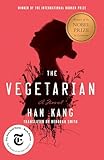
The essential Han Kang — winner of the International Booker Prize in 2016 and the novel that introduced her to English-language readers worldwide. Yeong-hye, an ordinary Korean housewife, stops eating meat after a violent dream and refuses to resume. This refusal, initially an irritating eccentricity, escalates: she stops eating more broadly; she becomes obsessed with becoming plant-like; she withdraws from the social world that demands her performance of femininity and deference. Each of the novel’s three parts is narrated by someone else — her husband, her brother-in-law, her sister — because Han Kang never gives us Yeong-hye’s interior directly.
The novel asks what it means to refuse to be what others need you to be, and it renders the social world’s response to that refusal (bewilderment, irritation, clinical diagnosis, institutionalisation) with cold precision. Short, intense, and unforgettable.
Human Acts (2014)
Han Kang’s most politically engaged novel — a response to the Gwangju Uprising of May 1980, in which the South Korean military killed hundreds of civilian protesters over ten days. Each chapter focuses on a different survivor, witness, or victim — a boy helping to identify bodies; a young woman imprisoned and tortured; a publisher working thirty years later to restore suppressed testimony — and asks how people continue to live after having witnessed or endured atrocity. Han Kang uses the second person (‘you’) for some sections, implicating the reader directly in the experience of violence and survival.
The novel is Han Kang’s most direct engagement with Korean historical trauma and her most explicit political statement. It is also — alongside The Vegetarian — her most emotionally sustained work.
Greek Lessons (2011)
Han Kang’s most formally intimate novel — a story of two people meeting in a classroom: a woman who has gradually lost the ability to speak, and a man who is losing his sight. The woman is taking ancient Greek lessons as a way of moving through silence; the teacher finds in her presence something that interrupts his own withdrawal from the world. The novel is Han Kang’s most lyrical and most concerned with language itself — what it means to lose words, to find them again, to touch another person across the barriers that experience erects.
Shorter and more meditative than her other work — an excellent choice for readers who want to understand the range of her voice beyond the political intensity of Human Acts.
Why The Vegetarian Is the Ideal First Book
For a reader new to Han Kang, the Nobel Prize-winning Korean novelist, The Vegetarian is the ideal first book because it is her international breakthrough and a powerful expression of her distinctive gifts, the spare and haunting prose, the unsettling imagination, and the profound engagement with the body, violence, and the desire to escape. The Vegetarian follows a woman whose decision to stop eating meat becomes a radical, disturbing withdrawal from the demands of family and society, told in three parts from different perspectives. As an entry point it is ideal, for it is her most famous work and a perfect example of her strange, beautiful, and disturbing fiction. It welcomes the newcomer with its arresting premise, its haunting prose, and its profound depths, drawing the reader into her distinctive vision. It is among her major works and a fine representation of her gifts, so the new reader encounters Han Kang at her most characteristic. For the newcomer, then, The Vegetarian is the natural and ideal starting point, on dark and unsettling subject matter.
What to Expect as a New Reader
As a new reader, you can expect The Vegetarian to be a spare, haunting, and unsettling novel. You can expect an arresting premise, for the novel follows a woman whose decision to stop eating meat becomes a radical, disturbing withdrawal from the demands of family and society. You can expect a three-part structure, for the novel is told in three parts from different perspectives, none her own. You can expect spare, haunting prose, for Han Kang writes with restraint, precision, and a strange beauty. You can expect profound and disturbing themes, for the novel engages the body, violence, control, desire, and the wish to escape the human and the social. You can expect an unsettling, dreamlike, and ambiguous quality. You should be prepared for dark and disturbing material. Expect, in short, a spare, haunting, and unsettling novel, a powerful introduction to Han Kang’s gifts.
Going Deeper After Your First Book
Once The Vegetarian has introduced you to Han Kang’s gifts, the reader who wishes to go deeper can explore her other novels, which continue her spare, haunting prose and her profound engagement with violence, history, the body, and human fragility. Her acclaimed novel of a brutal historical massacre confronts collective trauma and the limits of language, while her other works explore grief, memory, and the boundaries of the human with the same restraint and haunting power. Reading these after The Vegetarian deepens your appreciation of Han Kang’s distinctive gifts, the spare and haunting prose, the unsettling imagination, and the profound engagement with the body, violence, and human fragility. Her characteristic concerns run through her work. Building your reading journey through Han Kang is a matter of following her fiction from The Vegetarian into her other novels. The reader who begins here and continues will encounter one of the most powerful and distinctive contemporary novelists, and a Nobel laureate.
Reading Han Kang
Han Kang’s fiction is unified by a preoccupation with the body as the site of history, power, and resistance: her characters are defined by what has been done to their bodies (through political violence, social norms, illness, loss) and by what their bodies refuse or desire. Her prose — spare, precise, lyrical — is among the most distinctive in contemporary world literature. Begin with The Vegetarian for the most accessible introduction and the most concentrated demonstration of her vision; move to Human Acts for the most historically grounded; approach Greek Lessons when you want the most meditative and linguistically self-conscious. All three repay rereading.
Frequently Asked Questions
Where should I start with Han Kang?
The Vegetarian (2007, translated 2015) is both the most widely read and the essential starting point — the novel in which Yeong-hye, an ordinary Korean housewife, stops eating meat after a violent dream, and the refusal escalates into something more radical and more disturbing: a withdrawal from the human world itself. It won the International Booker Prize in 2016 (jointly with translator Deborah Smith) and introduced Han Kang to English-language readers with considerable force. Human Acts is the best alternative for readers who want Han Kang's most directly political and most historically grounded novel; Greek Lessons for her most formally intimate.
What is The Vegetarian about?
The Vegetarian (2007) is structured in three parts, each narrated by a different character in the life of Yeong-hye: first her husband, an ordinary Korean businessman who finds her vegetarianism an irritating eccentricity that becomes an embarrassment; then her brother-in-law, an artist who becomes obsessed with painting flowers on Yeong-hye's body; then her sister In-hye, who watches Yeong-hye disappear into madness and starvation. Each narrator fails to understand Yeong-hye; Han Kang refuses to give us Yeong-hye's perspective directly. The novel is about what happens to a woman who refuses to perform the social roles assigned to her — and about how the people around her interpret that refusal as illness rather than statement.
What is Human Acts about?
Human Acts (2014, translated 2016) is set in Gwangju, South Korea, in the aftermath of the 1980 pro-democracy uprising in which hundreds of students and civilians were killed by government forces. Each of its chapters focuses on a different character — a student, a factory worker, a prisoner, a publisher, a woman traumatized by surviving — in different years between 1980 and 2013, and each chapter asks how people continue to live in the aftermath of collective violence, how memory is suppressed and recovered, and what it means to bear witness. It is Han Kang's most politically engaged and historically grounded novel, and her most direct engagement with Korean history.
Has Han Kang won the Nobel Prize?
Yes — Han Kang was awarded the Nobel Prize in Literature in 2024, becoming the first South Korean writer and the first Asian woman to win the prize. The Nobel Committee cited her 'intense poetic prose that confronts historical traumas and exposes the fragility of human life.' She is also a winner of the International Booker Prize (for The Vegetarian, 2016) and is widely regarded as one of the most significant novelists of the twenty-first century.