Gillian Flynn Books in Order: Complete Reading Guide
All three Gillian Flynn novels in order — Sharp Objects, Dark Places, and Gone Girl. Reading guide for the author who defined the domestic thriller genre.
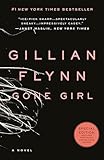
Gillian Flynn has published three novels and essentially defined the domestic psychological thriller as a literary genre. Her books feature female protagonists who are unreliable, morally compromised, and brilliantly drawn — a corrective to decades of passive female victims in crime fiction.
Gillian Flynn Novels in Publication Order
| # | Title | Year |
|---|---|---|
| 1 | Sharp Objects | 2006 |
| 2 | Dark Places | 2009 |
| 3 | Gone Girl | 2012 |
1. Sharp Objects — 2006
The literary case. Camille Preaker, a Chicago journalist with a history of self-harm, returns to her small Missouri hometown to cover the murders of two girls — and confronts the mother who may have damaged her beyond repair. Flynn’s debut is psychologically her most serious and her most disturbing.
➡ Full review → | Buy on Amazon →
2. Dark Places — 2009
Libby Day was eight when her mother and two sisters were murdered — supposedly by her brother Ben, whose conviction rested on her testimony. Twenty-five years later, a true crime club pays her to reinvestigate. Less perfectly constructed than Sharp Objects or Gone Girl but containing Flynn’s best secondary characters.
➡ Full review → | Buy on Amazon →
3. Gone Girl — 2012
Start here. Nick Dunne comes home on his fifth wedding anniversary to find his wife Amy missing. As the police investigation deepens, the two narrators — Nick’s present tense, Amy’s diary entries — reveal increasingly different versions of the marriage. The most formally inventive thriller of its decade.
➡ Full review → | Buy on Amazon →
Reading Order and Recommendation
Gone Girl first for the thriller experience and the structural revelation — then Sharp Objects for Flynn’s deepest psychological writing. Dark Places fills out the picture but is the least essential of the three.
The Critic Who Became a Phenomenon
Gillian Flynn came to fiction from journalism, working as a critic before turning to novels and becoming, with Gone Girl, one of the most influential authors in contemporary popular fiction. Flynn’s background as a writer and critic informed her fiction, giving her a sharp understanding of narrative, character, and the conventions of genre that she would later subvert and transform. Her early novels, Sharp Objects and Dark Places, established her as a writer of dark, psychologically intense thrillers, marked by damaged characters, grim subject matter, and an unflinching engagement with the darker realities of human nature. But it was her third novel, Gone Girl, that made her a phenomenon, becoming a massive international bestseller, a cultural touchstone, and one of the most influential thrillers of its era, adapted into a successful film and imitated by countless writers. The success of Gone Girl transformed Flynn from a respected writer of dark thrillers into a major cultural figure and one of the most influential authors in contemporary popular fiction, whose work reshaped the psychological thriller. For readers, Flynn offers dark, intelligent, and psychologically intense thrillers, marked by her distinctive engagement with the darker realities of human nature and her sharp subversion of genre conventions. The critic who became a phenomenon, Flynn came to fiction from journalism and became, with the massively successful Gone Girl, one of the most influential authors in contemporary popular fiction, whose dark and intelligent thrillers reshaped the genre.
Dark Women and Unreliable Narrators
What distinguishes Gillian Flynn’s fiction, and what made it so influential, is her creation of dark, complex, and morally ambiguous female characters, and her brilliant use of unreliable narration to unsettle and manipulate the reader. Flynn is celebrated for her refusal to write likable or conventional female characters, creating instead women who are dark, damaged, manipulative, and capable of cruelty and violence, women who defy the conventional expectations of how female characters should be portrayed. This creation of dark and complex women is central to Flynn’s achievement and her influence, for it challenged the conventions of the thriller and of popular fiction, insisting on the full complexity and capacity for darkness of female characters, and refusing the sentimental or limited ways that women had often been portrayed. Flynn is equally celebrated for her use of unreliable narration, her brilliant manipulation of the reader through narrators who cannot be trusted, whose accounts deceive and mislead, and whose unreliability is gradually and shockingly revealed. Gone Girl in particular is famous for its use of unreliable narration, its shocking revelations and reversals achieved through the manipulation of the reader’s trust, and this technique is central to the novel’s power and its influence. The combination of dark, complex women and brilliant unreliable narration is the signature of Flynn’s fiction, and it is what made her work so distinctive and so influential. For readers, Flynn offers the unsettling pleasures of her dark female characters and her manipulative unreliable narration, which deceive, surprise, and challenge. Dark women and unreliable narrators are the signature of Flynn’s fiction, her creation of complex and morally ambiguous female characters and her brilliant manipulation of the reader through narrators who cannot be trusted, and these elements are central to her distinctive achievement and her considerable influence.
Redefining the Psychological Thriller
The success and influence of Gone Girl reshaped the landscape of popular fiction, redefining the psychological thriller and spawning a wave of imitators that demonstrated the extent of Flynn’s impact on the genre. Before Gone Girl, the psychological thriller had its conventions and its established forms, but Flynn’s novel transformed the genre, introducing a new darkness, a new moral complexity, and a new use of unreliable narration and shocking reversal that countless subsequent thrillers would imitate. The novel’s enormous success and influence are evident in the wave of thrillers that followed in its wake, many of them featuring unreliable female narrators, dark domestic settings, and the shocking twists and reversals that Gone Girl made fashionable, a whole subgenre of domestic and psychological thrillers shaped by Flynn’s example. This influence testifies to the extent to which Flynn redefined the psychological thriller, establishing new conventions and possibilities that reshaped the genre and influenced a generation of writers. The transformation she effected was not merely commercial but artistic, for she brought to the thriller a new darkness, complexity, and sophistication, demonstrating that the genre could engage serious themes of marriage, gender, and the darker realities of human nature with intelligence and ambition. For readers, Flynn’s influence means that Gone Girl and her other novels offer not merely effective thrillers but works that reshaped their genre, introducing the darkness, complexity, and unreliable narration that would define the psychological thriller after her. Redefining the psychological thriller is the measure of Flynn’s influence, for the enormous success of Gone Girl reshaped the genre, introducing a new darkness, moral complexity, and use of unreliable narration that countless imitators would follow, and demonstrating that the thriller could engage serious themes with intelligence and ambition.
What Flynn Changed
Before Flynn, psychological thriller protagonists were overwhelmingly passive victims. Flynn’s women — Camille, Libby, Amy — are active agents of their own destruction and others’. Amy Dunne in particular represented something genuinely new: a female villain whose intelligence and fury are presented as comprehensible from the inside.
Affiliate disclosure: Links to Amazon on this page are affiliate links. We earn a small commission at no extra cost to you.
Frequently Asked Questions
What Gillian Flynn book should I read first?
Start with Gone Girl — it is her most famous and most structurally brilliant novel. If you have already read Gone Girl, Sharp Objects is the natural second — it is arguably her best writing, if less plot-driven. Dark Places is the weakest of the three but still excellent.
Is Sharp Objects better than Gone Girl?
Many literary critics consider Sharp Objects the better novel — it has more complex psychological depth and a protagonist whose damage is more carefully rendered. Gone Girl is the better plot machine and more satisfying as a thriller. They do different things well.
Is Gillian Flynn writing a fourth novel?
As of 2026, no fourth Flynn novel has been published. She has worked primarily in television (Sharp Objects for HBO, Utopia for Amazon) since the publication of Gone Girl in 2012. A new novel has been rumoured but not announced.


