Han Kang Books in Order: Complete Reading Guide
All Han Kang novels in order — The Vegetarian, Human Acts, The White Book, Greek Lessons, We Do Not Part. Complete guide to the 2024 Nobel Prize winner.
Han Kang is a South Korean author who won the Nobel Prize in Literature in 2024. She has published six novels in Korean, of which five have been translated into English. Her work is distinguished by its formal precision, its engagement with Korean historical trauma, and its unflinching attention to the violence done to human bodies by both intimate and political force.
Han Kang Novels in English (Publication Order of Translations)
| # | Title | Year |
|---|---|---|
| 1 | The Vegetarian | 2007 |
| 2 | Human Acts | 2014 |
| 3 | The White Book | 2016 |
| 4 | Greek Lessons | 2011 |
| 5 | We Do Not Part | 2021 |
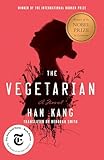
1. The Vegetarian — 2007 Korean / 2015 English
Start here. Yeong-hye stops eating meat after a dream. The decision, seemingly small, has consequences that destroy her family and eventually herself. Told from three perspectives — husband, brother-in-law, sister — the novel is about female autonomy, violence, and the body’s refusal of the world’s demands. Won the 2016 International Booker Prize.
➡ Full review → | Buy on Amazon →
2. Human Acts — 2014 Korean / 2016 English
The 1980 Gwangju Uprising — a pro-democracy protest in which South Korean military forces killed hundreds of civilians — told through multiple perspectives across different time periods. One of the most important political novels in contemporary literature.
➡ Full review → | Buy on Amazon →
3. The White Book — 2016 Korean / 2017 English
A meditation on white things — snow, swaddling, rice, blank paper — structured around the death of the author’s sister before birth. Part novel, part essay, part elegy.
➡ Full review → | Buy on Amazon →
4. Greek Lessons — 2011 Korean / 2023 English
A woman who has gone mute takes an ancient Greek class from a man who is losing his sight. A meditation on language, loss, and connection at the edge of communication.
➡ Full review → | Buy on Amazon →
5. We Do Not Part — 2021 Korean / 2024 English
A novelist travels to Jeju Island in a snowstorm and confronts the buried history of the 1948 Jeju massacre, in which tens of thousands were killed by South Korean forces.
➡ Full review → | Buy on Amazon →
Reading Order Recommendation
The Vegetarian → Human Acts → We Do Not Part covers the essential Kang and shows the full range of her work — from intimate psychological violence to historical atrocity to the processing of collective trauma. The White Book and Greek Lessons are rewarding additions for readers who want the full picture.
A Nobel Laureate of Korea
Han Kang is among the most significant writers in contemporary world literature, a South Korean novelist whose intense, poetic, and unflinching fiction earned her the Nobel Prize in Literature and brought Korean literature to global prominence. Han’s achievement, recognized by the Nobel Prize, is of the highest order, and her fiction is distinguished by its intensity, its poetic power, and its unflinching confrontation with difficult and painful subjects, from violence and trauma to the body and history. The Nobel recognition brought wide international attention to Han’s work and to Korean literature, confirming her stature as one of the most significant writers in contemporary world literature and bringing her intense, poetic, and powerful fiction to a global readership. Han’s fiction confronts difficult and painful subjects, violence, trauma, suffering, and the body, with an intensity and a poetic power that distinguish her work, and her achievement has secured her a place among the most significant contemporary writers. For readers, Han offers fiction of the highest distinction, a Nobel laureate’s intense, poetic, and unflinching confrontation with difficult and painful subjects, and a powerful introduction to Korean literature. A Nobel laureate of Korea, Han Kang is among the most significant writers in contemporary world literature, a South Korean novelist whose intense, poetic, and unflinching fiction earned her the Nobel Prize and brought Korean literature to global prominence.
The Body, Violence, and Resistance
Central to Han Kang’s fiction are the intertwined themes of the body, violence, and resistance, her exploration of the body as a site of suffering, control, and resistance, and her unflinching confrontation with the realities of violence. Han’s fiction is deeply concerned with the body, with the body as a site of suffering, control, vulnerability, and resistance, and her work explores the experiences inflicted upon and expressed through the body with intensity and insight. Her celebrated The Vegetarian, for instance, explores a woman’s refusal of meat as an act of bodily resistance and autonomy, and through this exploration it confronts questions of control, violence, and the body, while her other fiction similarly engages the body, violence, and resistance. Han’s fiction confronts the realities of violence, both intimate and historical, with an unflinching intensity, exploring the suffering inflicted by violence and the body’s experience of it, as well as the possibility of resistance. These intertwined themes, the body, violence, and resistance, are central to Han’s fiction, which explores the body as a site of suffering and resistance and confronts the realities of violence with poetic intensity. Her treatment of these themes gives her fiction its distinctive power and its unflinching confrontation with difficult realities. For readers, Han offers a powerful exploration of the body, violence, and resistance, the body as a site of suffering and resistance and the realities of violence confronted with poetic intensity. The body, violence, and resistance are central themes of Han Kang’s fiction, her exploration of the body as a site of suffering, control, and resistance, and her unflinching confrontation with the realities of violence, both intimate and historical.
History, Trauma, and Memory
A profound dimension of Han Kang’s fiction is its engagement with history, trauma, and memory, particularly the traumatic history of Korea, which she confronts with unflinching honesty and poetic power. Han’s fiction engages deeply with history and its traumas, particularly the painful and violent history of Korea, and with the workings of memory and the necessity of confronting and remembering historical trauma. Her novel Human Acts, for instance, confronts a violent and traumatic episode in Korean history, bearing witness to its horror and exploring its lasting trauma and the necessity of memory, while her fiction more broadly engages with history, trauma, and the work of remembrance. Han’s engagement with history and trauma is marked by its unflinching honesty and its poetic power, for she confronts the painful and violent realities of historical trauma directly, bearing witness to suffering and insisting on the necessity of memory against forgetting. This engagement with history, trauma, and memory gives Han’s fiction a profound moral and historical dimension, for she confronts the traumatic history of Korea with unflinching honesty, bearing witness to historical suffering and exploring the necessity and difficulty of memory. Her fiction insists on the importance of confronting and remembering historical trauma, bearing witness to suffering and resisting the forgetting that would erase it. For readers, Han offers a profound engagement with history, trauma, and memory, the traumatic history of Korea confronted with unflinching honesty and poetic power. History, trauma, and memory are a profound dimension of Han Kang’s fiction, her engagement with the traumatic history of Korea, confronted with unflinching honesty and poetic power, and her insistence on the necessity of bearing witness and remembering.
Han Kang’s Translators
Most of Kang’s English translations are by Deborah Smith, whose 2015 translation of The Vegetarian won the Booker alongside the author. We Do Not Part was translated by e. yaewon and Paige Aniyah Morris.
Affiliate disclosure: Links to Amazon on this page are affiliate links. We earn a small commission at no extra cost to you.
Frequently Asked Questions
What Han Kang book should I read first?
Start with The Vegetarian — it is her most acclaimed and most accessible work, and the novel most readers encounter first. It is also the one that won the International Booker Prize. After The Vegetarian, Human Acts is the natural second read.
What did Han Kang win the Nobel Prize for?
Han Kang won the 2024 Nobel Prize in Literature, becoming the first Korean writer and first Asian woman to win the prize. The Swedish Academy cited her intense poetic prose that confronts historical traumas and exposes the fragility of human life.
Do Han Kang's novels connect to each other?
They are thematically connected — all deal with violence against the body, political atrocity, and the difficulty of bearing witness — but they are entirely separate narratively. Each can be read independently.