Homer Books in Order: Complete Reading Guide
Homer's two epics in order — The Iliad and The Odyssey. Which to read first, which translation to choose, and what to read after.

Homer is the name attached to the two great epics of ancient Greek literature — The Iliad and The Odyssey — composed in the 8th century BCE. Whether Homer was one person or a tradition is debated; the poems themselves are among the founding texts of Western literature.
Homer’s Two Epics
1. The Iliad — c. 8th century BCE
The Trojan War in its tenth year — specifically, the rage of Achilles and its consequences. Not a complete account of the war (it does not cover the fall of Troy or the Trojan Horse) but an extended meditation on the cost of heroism, the relationship between men and the gods who direct them, and the specific horror of war. One of the great poems in any language.
➡ Full review → | Buy on Amazon →
2. The Odyssey — c. 8th century BCE
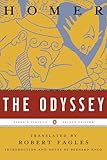
Odysseus’s ten-year journey home from Troy — through Cyclops, Circe, Scylla and Charybdis, and the island of the dead — while his wife Penelope holds off suitors and his son Telemachus grows up. A quest narrative, a homecoming story, and one of the most influential structures in Western literature.
➡ Full review → | Buy on Amazon →
Best Homer Translations: A Quick Guide
| Translation | Best For |
|---|---|
| Emily Wilson (Iliad 2023, Odyssey 2017) | Most readers — contemporary, precise, excellent |
| Robert Fagles (both, 1990–1996) | Accessible and widely available |
| Richmond Lattimore (both, 1951–1967) | Scholarly use, closest to Greek |
| Alexander Pope (18th century) | Historical interest; very different reading experience |
At the Foundation of Western Literature
Homer stands at the very foundation of Western literature, the figure to whom are attributed the two great epics, the Iliad and the Odyssey, that begin the Western literary tradition and that have influenced virtually everything that followed. These epics are not merely old but foundational, the earliest major works of Western literature and the source from which much of the subsequent tradition flows, and their influence on the literature, culture, and imagination of the Western world is incalculable. To read Homer is to encounter the origin of the Western literary tradition, the foundational works that established many of the forms, themes, and figures that would occupy literature for the following millennia, and that have been read, imitated, translated, and reinterpreted continuously for nearly three thousand years. The Iliad and the Odyssey are the fountainhead of Western literature, works of such foundational significance that the entire tradition can be understood as flowing from them, and their characters, stories, and themes have permeated Western culture so thoroughly that they are familiar even to those who have never read them. For readers, Homer offers an encounter with the very foundation of Western literature, the earliest and most influential works of the tradition, whose power and significance have endured for nearly three thousand years. At the foundation of Western literature, Homer stands as the figure to whom the Iliad and the Odyssey are attributed, the two great epics that begin the Western literary tradition and that have influenced virtually everything that followed, and to read them is to encounter the origin and fountainhead of Western literature.
War and Homecoming
The two Homeric epics complement each other as the great poems of, respectively, war and homecoming, the Iliad depicting the rage and tragedy of war and the Odyssey the long and perilous journey home, and together they encompass two of the most fundamental and enduring subjects of human experience. The Iliad is the great poem of war, focusing on an episode of the Trojan War and on the rage of its central hero, and through this story it explores the glory and the horror of war, the workings of heroism and fate, the tragedy of mortality, and the human cost of conflict, rendering the experience of war with a power and a depth that have never been surpassed. The Odyssey is the great poem of homecoming, following its hero on his long and perilous journey home from the war, and through this story it explores the trials of the journey, the longing for home, the testing of endurance and cunning, and the meaning of return, rendering the universal human experiences of journey, trial, and homecoming with enduring power. Together the two epics encompass war and homecoming, two of the most fundamental subjects of human experience, and they have given Western literature its foundational treatments of these great themes. For readers, the two epics offer the foundational poems of war and homecoming, the Iliad’s tragic vision of war and the Odyssey’s tale of the long journey home, encompassing two of the most enduring subjects of human experience. War and homecoming are the great subjects of the two Homeric epics, the Iliad depicting the rage and tragedy of war and the Odyssey the long and perilous journey home, and together they encompass two of the most fundamental and enduring subjects of human experience.
The Living Power of the Epics
For all their antiquity, the Homeric epics retain a living power and continue to be read, translated, and reimagined, their enduring vitality testifying to the universality and depth of the human experiences they render. Though they are nearly three thousand years old, the Iliad and the Odyssey are not museum pieces but living works, continuously translated anew, adapted and reimagined in countless forms, and read with pleasure and profit by readers across the ages. This enduring vitality reflects the universality and depth of the experiences the epics render, the war and homecoming, the heroism and mortality, the journey and the longing for home, that remain as meaningful to readers today as they were to the ancient Greeks. The epics continue to speak to readers across the millennia because they engage the fundamental and enduring realities of human experience, rendered with a power and a depth that transcend their ancient origins. The continuous tradition of new translations, each generation rendering Homer anew for its own time, testifies to the living power of the epics and to the ongoing desire to encounter them, while their endless adaptation and reimagining in new forms demonstrate their continuing hold on the imagination. For readers, the living power of the epics means that Homer offers not a remote antiquity but a vital and rewarding encounter with foundational works that retain their power across the millennia. The living power of the epics testifies to the universality and depth of the human experiences they render, for the Iliad and the Odyssey, though nearly three thousand years old, continue to be read, translated, and reimagined, their enduring vitality a measure of their foundational significance and their continuing hold on the human imagination.
What to Read After Homer
The Song of Achilles by Madeline Miller — A retelling of the Iliad from Patroclus’s perspective; the most accessible modern engagement with the material.
Circe by Madeline Miller — The witch from The Odyssey gets her own novel; a better book than The Song of Achilles and a beautiful engagement with the original.
The Aeneid by Virgil — The Roman response to Homer: Aeneas, a Trojan who escapes Troy and founds Rome. Essential reading after the Homeric epics.
Affiliate disclosure: Links to Amazon on this page are affiliate links. We earn a small commission at no extra cost to you.
Frequently Asked Questions
Should I read The Iliad before The Odyssey?
The Iliad comes first chronologically (it covers events during the Trojan War; The Odyssey covers Odysseus's journey home after the war). Most scholars recommend The Iliad first. However, The Odyssey is more accessible as a narrative — it has a clear protagonist and a quest structure. Many readers start with The Odyssey and find it easier.
What is the best translation of The Iliad?
Emily Wilson's 2023 translation is the current critical favourite — precise, contemporary, and exceptional on the violence and pathos of the poem. Robert Fagles's 1990 translation remains highly readable and is widely used in schools. Richmond Lattimore's is the most literal and best for scholarly use.
What is the best translation of The Odyssey?
Emily Wilson's 2017 translation was the first by a woman and is widely regarded as the best modern version — readable, accurate, and with a superb introduction. Fagles is the reliable second choice.