James Baldwin Books in Order: Complete Bibliography & Best Starting Points
James Baldwin's complete bibliography in order — from Go Tell It on the Mountain and Giovanni's Room to The Fire Next Time and If Beale Street Could Talk. Essential guide to Baldwin's work.

James Baldwin is the finest essayist in American literature and one of its most important novelists. He was born in Harlem in 1924, the eldest of nine children, and left New York for Paris at twenty-four with forty dollars and a novel in progress. He spent most of the rest of his life between Paris and the American South, returning to be arrested during civil rights demonstrations, to write, to bear witness.
His voice — in essays and fiction alike — combines the cadences of the Black church in which he was raised with the analytical rigour of a writer who had read everything and forgiven nothing. The essays are among the most beautiful and most clear-eyed prose in American literature. The novels are formally diverse and emotionally unflinching. Together they constitute an account of American life that has lost none of its urgency.
Where to Start
The Fire Next Time (1963)
The book that placed Baldwin at the centre of the civil rights movement and remains his most widely read work. Two essays: the first, “My Dungeon Shook,” is a letter to his teenage nephew on the hundredth anniversary of Emancipation, explaining with devastating precision what America has planned for young Black men and what he must do to survive and surpass it. The second, “Down at the Cross,” is a memoir of his years with the Black church and his meeting with Elijah Muhammad, which forced him to understand both the appeal and the inadequacy of the Nation of Islam’s response to American racism.
Under 100 pages. The most concentrated expression of Baldwin’s moral vision and his prose powers.
Giovanni’s Room (1956)
The most emotionally immediate of his novels, and the most unusual: his only novel with no Black characters. David, an American in Paris engaged to a woman he is waiting for, falls in love with Giovanni, an Italian bartender. The novel is about the specific cowardice of David’s refusal to love honestly — the way he destroys Giovanni because he cannot accept what he feels. Baldwin wrote about a homosexual white man rather than a Black man, he said, because he wanted to separate the question of sexual identity from the question of race and examine it directly.
At under 180 pages, it is the most accessible entry to his fiction.
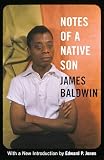
Notes of a Native Son (1955)
His first essay collection and the one that established him as the most important Black American critic of his generation. The title essay — about his father’s death and the Harlem race riots that coincided with it — is his most personal, most direct account of what it meant to be Black and American in the 1940s. The other essays cover American literature, European perceptions of Black Americans, and the specific experience of a Black man living in Paris.
Complete Bibliography in Order
Novels
| Title | Year | Note |
|---|---|---|
| Go Tell It on the Mountain | 1953 | Debut; Harlem church; semi-autobiographical |
| Giovanni’s Room | 1956 | Paris; homosexuality; essential |
| Another Country | 1962 | New York; race and sexuality; long |
| Tell Me How Long the Train’s Been Gone | 1968 | Black actor; political; less acclaimed |
| If Beale Street Could Talk | 1974 | Love and injustice; essential |
| Just Above My Head | 1979 | Gospel music; final novel; long |
Essay Collections
| Title | Year | Note |
|---|---|---|
| Notes of a Native Son | 1955 | Essential; first collection |
| Nobody Knows My Name | 1961 | America and Europe; essential |
| The Fire Next Time | 1963 | Essential; start here |
| No Name in the Street | 1972 | Civil rights era memoir |
| The Devil Finds Work | 1976 | Film criticism; underrated |
| The Price of the Ticket | 1985 | Collected non-fiction; definitive |
The Essential Novels
Go Tell It on the Mountain is Baldwin’s most formally ambitious novel and his most autobiographical — John Grimes’s conversion experience in a Harlem church, set against his father’s history and his own understanding of what the church offers and what it costs. The novel’s structure (the opening chapter from John’s perspective, then long flashbacks to the stories of three adults, then a return to John) allows Baldwin to situate the individual life within the generational accumulation of damage and survival.
If Beale Street Could Talk is Baldwin’s most directly political novel and the most accessible. Tish Rivers, nineteen years old and pregnant, narrates the story of her fiancé Fonny’s unjust imprisonment and the family’s efforts to free him before their baby is born. The novel is about love — the practical love of families who support each other against a system designed to break them — as much as it is about injustice.
A Voice of Moral Power
James Baldwin was one of the most eloquent and morally powerful voices in American literature, a writer whose fiction and essays alike confront the realities of race, identity, and American life with an unflinching honesty, a profound moral insight, and an extraordinary eloquence. Baldwin wrote with an eloquence and a moral power rarely equaled in American letters, confronting the realities of race, identity, sexuality, and American life with an unflinching honesty and a profound moral insight. His fiction and his celebrated essays alike bring to their subjects an extraordinary eloquence and a searching moral seriousness, and his voice, at once passionate and precise, prophetic and intimate, is among the most powerful in American literature. This moral power is central to Baldwin’s achievement, for he confronted the realities of race and American life with an unflinching honesty, a profound moral insight, and an extraordinary eloquence that have made him one of the most important voices in American letters. His moral seriousness, his eloquence, and his unflinching honesty give his work its enduring power and significance. For readers, Baldwin offers a voice of moral power, the realities of race, identity, and American life confronted with unflinching honesty, profound moral insight, and extraordinary eloquence. A voice of moral power, Baldwin confronted the realities of race, identity, and American life with an unflinching honesty, a profound moral insight, and an extraordinary eloquence that have made him one of the most important voices in American literature.
Race, Identity, and America
The central subject of James Baldwin’s work is the reality of race in America, the experience of being Black in a racist society, and the deeper questions of identity, belonging, and the meaning of America that this reality raises. Baldwin confronted the reality of race in America with unflinching honesty, exploring the experience of being Black in a racist society, the damage and the rage that racism inflicts, and the deeper questions of identity, belonging, and the meaning of America that this reality raises. His fiction and essays alike examine the realities of racism and its consequences, the experience and the inner life of Black Americans, and the moral and spiritual condition of an America shaped by racism. This engagement with race, identity, and America is central to Baldwin’s work, for he confronted the reality of race in America with unflinching honesty and explored the deeper questions of identity, belonging, and the meaning of America that this reality raises. His work illuminates the experience of being Black in a racist society and the moral condition of America, demanding an honest reckoning with the realities of race. For readers, Baldwin offers a profound engagement with race, identity, and America, the experience of being Black in a racist society and the deeper questions of identity and the meaning of America. Race, identity, and America are the central subject of Baldwin’s work, the reality of race in America, the experience of being Black in a racist society, and the deeper questions of identity, belonging, and the meaning of America that this reality raises.
The Eloquence of the Essay
While James Baldwin is a major novelist, he is equally celebrated as one of the supreme masters of the essay, whose searching, passionate, and eloquent essays on race, identity, and American life are among the most powerful in the language. Baldwin was a supreme essayist, and his essays, on race, identity, American life, and the moral condition of his country, are among the most eloquent, passionate, and powerful in the English language. His essays combine a searching moral seriousness, an unflinching honesty, and an extraordinary eloquence, bringing to their subjects a passion and a precision, a prophetic power and an intimate immediacy, that have made them landmarks of the form. This eloquence of the essay is central to Baldwin’s achievement, for his searching, passionate, and eloquent essays on race, identity, and American life are among the most powerful in the language, equaling and perhaps surpassing his fiction in their impact and influence. His mastery of the essay, his combination of moral seriousness, unflinching honesty, and extraordinary eloquence, makes him one of the supreme essayists in American literature. For readers, Baldwin offers the eloquence of the essay, searching, passionate, and eloquent essays on race, identity, and American life that are among the most powerful in the language. The eloquence of the essay is central to Baldwin’s achievement, for his searching, passionate, and eloquent essays on race, identity, and American life are among the most powerful in the language, making him one of the supreme masters of the form.
Reading Order Recommendations
New to Baldwin: The Fire Next Time → Giovanni’s Room → If Beale Street Could Talk.
Essay reader: Notes of a Native Son → The Fire Next Time → Nobody Knows My Name → No Name in the Street.
Complete Baldwin: Go Tell It on the Mountain → Notes of a Native Son → Giovanni’s Room → The Fire Next Time → Another Country → If Beale Street Could Talk.
Frequently Asked Questions
What is the best James Baldwin book to start with?
The Fire Next Time (1963) is the most frequently recommended starting point — it is two essays (one written to his nephew, one a memoir of his experience with the Nation of Islam) that together constitute the most important document of Black American consciousness produced during the civil rights era. Under 100 pages, it demonstrates Baldwin's powers as a prose stylist and moral thinker in the most concentrated form. For fiction, Giovanni's Room is the most accessible and emotionally immediate of his novels.
What makes Baldwin's writing distinctive?
Baldwin's prose is defined by its combination of moral seriousness and rhythmic beauty — he came from the Black church tradition, and his sentences have a preacher's cadence without a preacher's evasiveness. He is also notable for his capacity to hold contradictions without resolving them: he could describe America's racial crimes with absolute clarity while also insisting, with equal clarity, that love was the only viable response to hatred. His essays are the best American prose of the twentieth century.
Is Giovanni's Room appropriate for all readers?
Giovanni's Room is explicitly about homosexuality and a same-sex love affair set in Paris — Baldwin's account of David, an American in Paris who falls in love with an Italian bartender named Giovanni. It was controversial in 1956 (Baldwin's publisher refused it; he had to find another). Today it is considered a landmark of LGBTQ+ literature. The content is not sexually explicit by contemporary standards, but parents of young readers should be aware of its themes.
What is The Fire Next Time about?
The Fire Next Time (1963) consists of two essays: 'My Dungeon Shook' (a letter to Baldwin's fourteen-year-old nephew on the hundredth anniversary of Emancipation, warning him about what America has prepared for him) and 'Down at the Cross' (a memoir of Baldwin's involvement with the Black church and his meeting with Elijah Muhammad, leader of the Nation of Islam). Together they constitute a comprehensive examination of Black life in America — its spiritual resources, its political situation, and what love might mean in the face of institutionalised hatred.
Did Baldwin write primarily fiction or essays?
Both. Baldwin produced six novels, a collection of short stories, several plays, and an extraordinary body of essays. His essays are arguably his most important work — The Fire Next Time, Notes of a Native Son, and Nobody Knows My Name are among the greatest essay collections in American literature. His fiction — particularly Go Tell It on the Mountain, Giovanni's Room, and If Beale Street Could Talk — is equally significant. He is one of the few American writers of the twentieth century who achieved genuine mastery in both forms.