Ralph Ellison Books in Order: Complete Bibliography & Best Starting Points
Ralph Ellison's complete bibliography in order — from Invisible Man to Juneteenth and Shadow and Act. Best starting points for new readers.
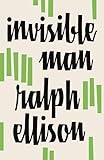
Ralph Ellison (1914–1994) published one novel — Invisible Man (1952) — and it was enough. The novel won the National Book Award and was chosen in a 1965 Book Week poll as the most distinguished American novel published in the previous twenty years. Ellison spent the rest of his life working on a second novel that he could not finish; the fragments published after his death are substantial but not what he was attempting.
His achievement rests on a single book, but that book is one of the most important in American literature.
Where to Start
Invisible Man (1952)
The only starting point — an unnamed Black man’s journey from Southern optimism to Northern disillusion, narrated from a basement apartment he has filled with stolen light bulbs. The novel is a Bildungsroman, a political satire (the Brotherhood chapters are a devastating portrait of how the left uses Black people as instruments without regard for their humanity), a surrealist comedy (the paint factory sequence), and a meditation on what it means to be rendered invisible by a society that looks at you but does not see you. One of the essential American novels.
Juneteenth (1999)
The posthumously published fragment of Ellison’s second novel — assembled from manuscripts by his literary executor. The relationship between Bliss, a light-skinned man who may be Black (and who becomes a race-baiting senator), and Hickman, the Black preacher who raised him, contains some of Ellison’s finest prose. Not a complete novel, but essential for understanding the direction Ellison was pursuing.
Shadow and Act (1964)
Ellison’s collected essays — the most important by any American writer of his period. The essays on the blues, on African American oral tradition, on T.S. Eliot and Hemingway as formative influences on his own work, and on the relationship between Black experience and American culture constitute the most sophisticated literary-cultural criticism of the midcentury.
Complete Bibliography
| Title | Year | Note |
|---|---|---|
| Invisible Man | 1952 | Masterpiece; National Book Award |
| Shadow and Act | 1964 | Essays; music; literature; culture |
| Going to the Territory | 1986 | Second essay collection |
| Juneteenth | 1999 | Posthumous novel fragment |
| Three Days Before the Shooting… | 2010 | Fuller version of second novel |
The Author of a Defining American Novel
Ralph Ellison secured a permanent and exalted place in American literature with a single novel, Invisible Man, a work of such power, originality, and significance that it is widely regarded as one of the defining American novels of the twentieth century. Ellison’s reputation rests fundamentally on Invisible Man, the novel he published to enormous acclaim and that has come to be regarded as one of the great American novels of its century, a work of extraordinary power, originality, and significance. The novel won major recognition and has secured Ellison a permanent place among the most important American writers, its exploration of Black experience and American identity, its formal and stylistic brilliance, and its profound significance making it a defining work of American literature. That Ellison should have achieved such significance with a single completed novel is remarkable, a testament to the extraordinary power and importance of Invisible Man, which stands as one of the defining American novels of the twentieth century. Ellison published other work, including a celebrated collection of essays, and a second novel was published after his death, but his reputation rests fundamentally on Invisible Man, the single defining novel that secured his place in American literature. For readers, Invisible Man is Ellison’s essential and defining achievement, one of the great American novels of the twentieth century, a work of extraordinary power, originality, and significance. The author of a defining American novel, Ellison secured a permanent place in American literature with Invisible Man, a work of such power, originality, and significance that it is widely regarded as one of the defining American novels of the twentieth century.
Invisibility and American Identity
The central and defining theme of Ralph Ellison’s Invisible Man is the invisibility of the Black individual in American society, the condition of being unseen, unrecognized, and denied one’s full humanity and individuality, and through this powerful metaphor the novel explores the deepest questions of Black experience and American identity. The novel’s central metaphor of invisibility, the condition of the Black individual who is not seen, not recognized, and denied his full humanity and individuality by a society that refuses to truly see him, is among the most powerful and resonant in American literature. Through this metaphor, Ellison explores the profound realities of Black experience in America, the denial of recognition and humanity, the struggle for identity and visibility, and the deeper questions of what it means to be Black and to be American. The novel’s exploration of invisibility and American identity is its central and defining achievement, for it illuminates, through the powerful metaphor of invisibility, the profound realities of Black experience and the deepest questions of American identity, individuality, and recognition. Ellison’s treatment of these themes is not merely a protest against racism but a profound exploration of identity, individuality, and the struggle for recognition and humanity, rendered through the powerful and resonant metaphor of invisibility. For readers, Invisible Man offers a profound exploration of invisibility and American identity, the condition of being unseen and the struggle for recognition, individuality, and humanity. Invisibility and American identity are the central themes of Ellison’s Invisible Man, which explores, through the powerful metaphor of the unseen Black individual, the profound realities of Black experience and the deepest questions of American identity, individuality, and recognition.
Literary Ambition and the Blues
Ralph Ellison’s Invisible Man is distinguished not only by its themes but by its extraordinary literary ambition and its incorporation of the rhythms, forms, and sensibility of Black American music, particularly jazz and the blues, into the texture and structure of the novel. Ellison was a writer of great literary ambition and sophistication, and Invisible Man is a formally and stylistically rich and ambitious work, drawing on a wide range of literary influences and traditions and achieving a formal and stylistic brilliance that match the power of its themes. The novel is also deeply informed by Black American music, by the rhythms, forms, and sensibility of jazz and the blues, which Ellison, himself trained in music, incorporated into the texture, structure, and spirit of his fiction. This incorporation of the blues and jazz sensibility gives the novel a distinctive richness and resonance, for Ellison drew on the forms and spirit of Black American music to shape his fiction, infusing it with the improvisation, the call-and-response, and the blues sensibility of the music he loved. The combination of literary ambition and the influence of the blues distinguishes Invisible Man, for Ellison achieved a work of great formal and stylistic sophistication while drawing deeply on the forms and sensibility of Black American music. For readers, Invisible Man offers extraordinary literary ambition combined with the rich incorporation of the blues and jazz sensibility, a formally brilliant work infused with the spirit of Black American music. Literary ambition and the blues distinguish Ellison’s Invisible Man, its extraordinary formal and stylistic sophistication combined with its incorporation of the rhythms, forms, and sensibility of jazz and the blues into the texture and structure of the novel.
Reading Order Recommendations
New to Ellison: Invisible Man → Shadow and Act → Juneteenth.
Essays first: Shadow and Act → Invisible Man → Going to the Territory.
Complete: Invisible Man → Shadow and Act → Going to the Territory → Juneteenth.
Frequently Asked Questions
What is the best Ralph Ellison book to start with?
Invisible Man (1952) is the only possible starting point — one of the ten or fifteen most important American novels of the twentieth century, and Ellison's sole completed novel. The unnamed Black narrator moves from a Southern university to New York, through the Brotherhood (a Communist organization that uses and discards him), to a basement in Harlem where he has retreated to think. The novel is simultaneously a Bildungsroman, a political satire, a surrealist set piece, and a sustained meditation on what it means to be Black in a country that refuses to see you.
What is Invisible Man about?
Invisible Man (1952) follows an unnamed Black man from the South — a promising student at a Black college who is expelled under murky circumstances, makes his way to New York, becomes a speaker for the Brotherhood (a thinly veiled version of the Communist Party), is used and betrayed by the organization, and retreats to a basement apartment in Harlem where he lines the walls with stolen light bulbs. The novel's central metaphor — invisibility as the condition of being Black in America, seen but not perceived as fully human — is one of the most powerful in American literature. Won the National Book Award.
What happened with Ellison's second novel?
Ellison spent the last forty years of his life working on a second novel but never completed it. A substantial portion of the manuscript was destroyed in a fire at his Massachusetts home in 1967; he continued working on what remained until his death in 1994. His literary executor John F. Callahan assembled a version from the manuscripts, published as Juneteenth in 1999 — a much shortened version of what Ellison had been attempting. A fuller version, Three Days Before the Shooting..., was published in 2010. Neither version satisfies as a complete novel, but both contain extraordinary writing.
What is Shadow and Act about?
Shadow and Act (1964) collects Ellison's literary and cultural essays from the 1940s to the 1960s — on American literature (particularly the influence of T.S. Eliot and Ernest Hemingway on his work), on jazz and the blues (Ellison was a serious musician who studied at Tuskegee), and on the relationship between African American experience and American culture more broadly. The essays are some of the most important literary criticism produced by any American writer of the period; the essay on the blues as an art form is particularly essential.


