Viet Thanh Nguyen Books in Order: Complete Reading Guide
All Viet Thanh Nguyen books in order — The Sympathizer, The Committed, The Refugees, and his non-fiction. Reading guide for the Pulitzer Prize-winning Vietnamese-American author.

Viet Thanh Nguyen is a Vietnamese-American author and scholar who won the Pulitzer Prize for Fiction for his debut novel The Sympathizer in 2016. He is the most important literary voice on the Vietnamese-American experience and on how the Vietnam War looks from the Vietnamese perspective.
Viet Thanh Nguyen Books in Publication Order
| # | Title | Year |
|---|---|---|
| 1 | The Sympathizer | 2015 |
| 2 | The Refugees | 2017 |
| 3 | Nothing Ever Dies: Vietnam and the Memory of War | 2016 |
| 4 | The Committed | 2021 |
1. The Sympathizer — 2015
Start here. A communist spy embedded in the South Vietnamese military writes his confession after being captured. The narrator — unnamed throughout — has split loyalties, a dual consciousness, and no clean political home. One of the most important American novels about the Vietnam War. Pulitzer Prize for Fiction 2016.
➡ Full review → | Buy on Amazon →
2. The Refugees — 2017
A short story collection about Vietnamese refugees and Vietnamese-Americans across several generations — published between the two Sympathizer novels. Each story examines a different aspect of the refugee experience: ghost-haunting, family estrangement, memory loss, cultural displacement.
➡ Full review → | Buy on Amazon →
3. Nothing Ever Dies: Vietnam and the Memory of War — 2016
Non-fiction — an examination of how the Vietnam War is remembered and misremembered across different national and political traditions. Essential context for understanding Nguyen’s fiction.
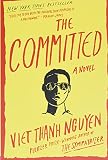
4. The Committed — 2021
The direct sequel to The Sympathizer — the narrator arrives in Paris in the early 1980s, becomes embedded in the French-Vietnamese criminal underworld, and continues examining colonialism, this time through the lens of France’s relationship with its former Vietnamese colony.
➡ Full review → | Buy on Amazon →
The Pulitzer and the Double Agent
Viet Thanh Nguyen announced himself as a major literary voice with his debut novel The Sympathizer, which won the Pulitzer Prize for Fiction and established him as one of the most significant writers to emerge from the Vietnamese-American experience. The Sympathizer is a remarkable achievement, a novel narrated by a communist double agent, a man of divided loyalties embedded among South Vietnamese refugees in America while secretly reporting to the North, and through this figure of doubleness and division the novel explores the Vietnam War and its aftermath from a perspective rarely heard in American literature. The choice of the double agent as narrator is central to the novel’s brilliance, for it allows Nguyen to explore the divided loyalties, the doubleness of identity, and the multiple perspectives that characterize the Vietnamese experience of the war and its aftermath, and to subject both sides of the conflict, and the American understanding of it, to searching and often satirical scrutiny. The novel is at once a spy story, a political and historical reckoning, and a profound exploration of identity, loyalty, and the legacy of war and colonialism, written with intellectual ambition, stylistic verve, and biting irony. Its Pulitzer Prize recognized a debut of exceptional power and originality, and it established Nguyen as a major voice bringing the Vietnamese-American experience and a critical perspective on the Vietnam War into American literature. The Pulitzer and the double agent mark Nguyen’s powerful arrival, The Sympathizer announcing a major literary voice through its brilliant choice of a divided narrator and its searching exploration of the Vietnam War, identity, and loyalty.
Writing the Refugee Experience
Central to Viet Thanh Nguyen’s work is the experience of the refugee, the displaced person forced to flee war and upheaval and to build a new life in a foreign land, an experience Nguyen knows intimately and renders with depth, complexity, and political force. Himself a refugee from Vietnam who came to America as a child, Nguyen brings to this subject the authority of lived experience and a determination to represent the refugee experience in its full human complexity, against the simplifications and erasures it usually suffers. His story collection The Refugees focuses directly on this experience, exploring the lives of Vietnamese refugees in America, the dislocations and difficulties of displacement, the work of building new lives, and the persistence of memory and loss. Nguyen insists on the dignity and complexity of the refugee, refusing both the reduction of refugees to objects of pity and their erasure from the stories that nations tell themselves, and asserting the full humanity, agency, and complex experience of the displaced. His treatment of the refugee experience is also politically charged, connecting the displacement of refugees to the wars, colonialism, and great-power politics that produce them, and insisting that the refugee be understood not as a problem or an object of charity but as a person whose displacement was caused by historical forces and whose experience demands recognition. For readers, Nguyen’s writing on the refugee experience offers a powerful and complex representation of displacement, grounded in lived experience and charged with political and moral force. Writing the refugee experience is central to Nguyen’s work, rendering displacement with depth and complexity, insisting on the dignity and full humanity of the refugee, and connecting individual displacement to the larger historical forces that produce it.
Memory, War, and the Other Side
A defining concern of Viet Thanh Nguyen’s work, fiction and nonfiction alike, is the politics of memory, the question of how wars are remembered and whose perspectives are included or erased in the stories that nations tell about them. Nguyen is preoccupied with the way that the Vietnam War has been remembered, particularly in America, where it is usually told as an American tragedy, centered on American experiences and perspectives, while the Vietnamese, on whose land the war was fought and who suffered its greatest losses, are marginalized or erased. His nonfiction work Nothing Ever Dies addresses this politics of memory directly, examining how the Vietnam War is remembered and arguing for a more just and inclusive memory that acknowledges all sides and all perspectives, particularly those that dominant memory erases. This concern with memory runs through his fiction as well, which insists on representing the war and its aftermath from Vietnamese perspectives, on giving voice to the side that American memory marginalizes, and on complicating the simplified and self-serving stories that nations tell about their wars. Nguyen’s attention to memory and the other side reflects a deep moral and political conviction, that justice requires an inclusive and honest memory that acknowledges all perspectives, particularly those of the marginalized and erased, and that the stories nations tell about their wars must be challenged and complicated. For readers, this concern offers a searching examination of how wars are remembered and a powerful insistence on the perspectives that dominant memory erases. Memory, war, and the other side are defining concerns of Nguyen’s work, examining the politics of how wars are remembered, insisting on the perspectives that dominant memory marginalizes, and arguing for a more just and inclusive memory.
Reading Order Recommendation
The Sympathizer → The Committed for the complete narrative arc. The Refugees can be read independently or between the two novels. Nothing Ever Dies is ideal context for readers who want the full intellectual picture.
Affiliate disclosure: Links to Amazon on this page are affiliate links. We earn a small commission at no extra cost to you.
Frequently Asked Questions
Should I read The Sympathizer before The Committed?
Yes. The Committed is a direct sequel to The Sympathizer — it picks up immediately where the first novel ends. The Sympathizer needs to be read first for The Committed to make sense.
What is The Sympathizer about?
The Sympathizer is narrated by a communist spy embedded in the South Vietnamese military who evacuates to the United States after the fall of Saigon. Writing his confession under duress, he examines the war from both sides and neither side at once — a novel about dual consciousness, colonialism, and the impossibility of a clean political identity.
Has The Sympathizer been adapted?
Yes. The Sympathizer was adapted as an HBO series in 2024, directed by Park Chan-wook and starring Hoa Xuande. The adaptation is generally faithful to the novel's premise and tone.